
Medical care on Koh Lipe — the realistic picture
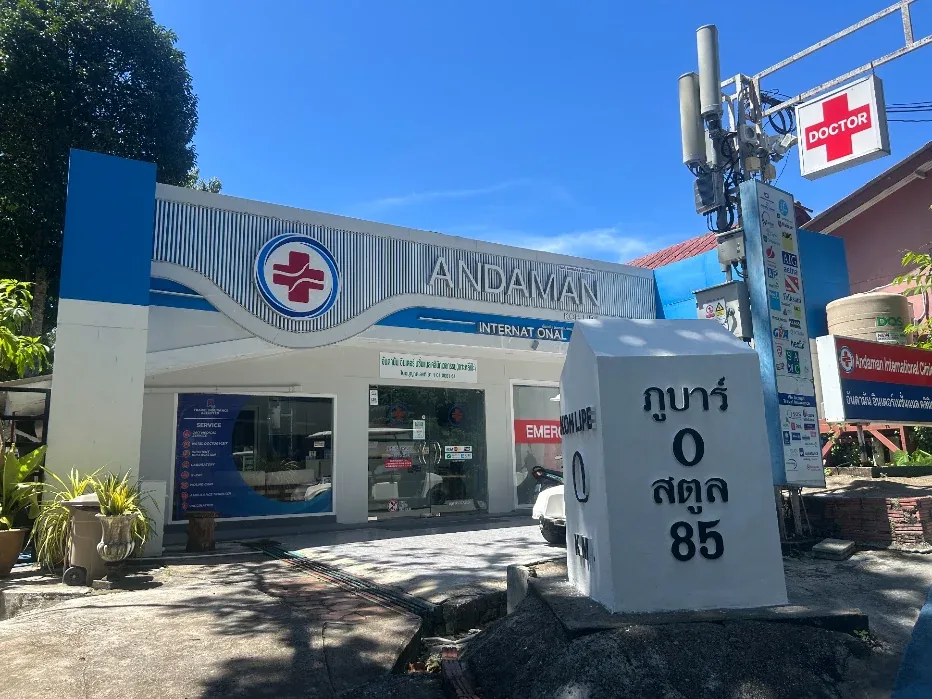
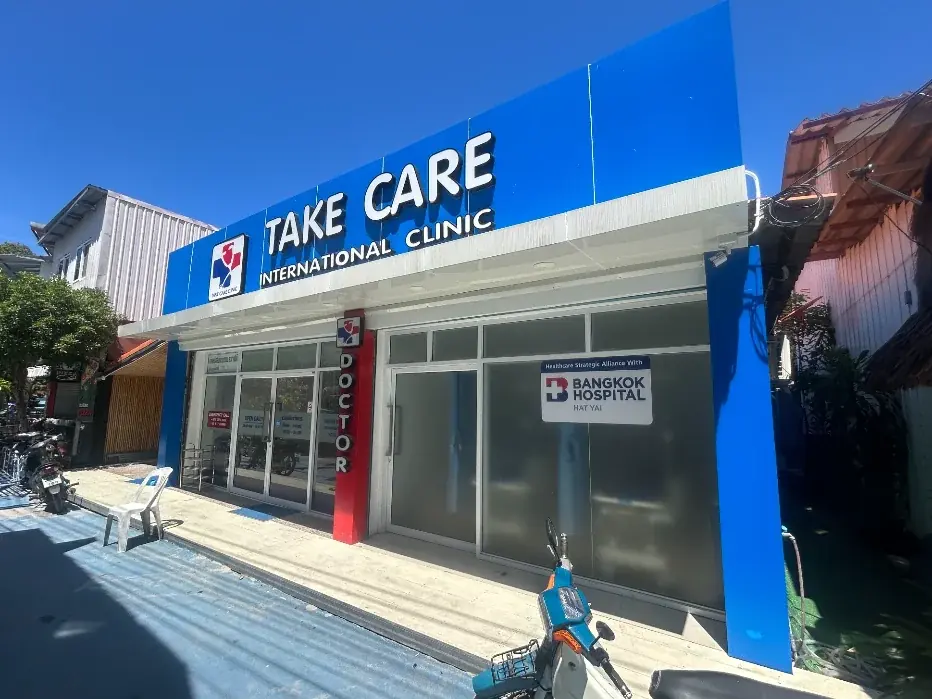
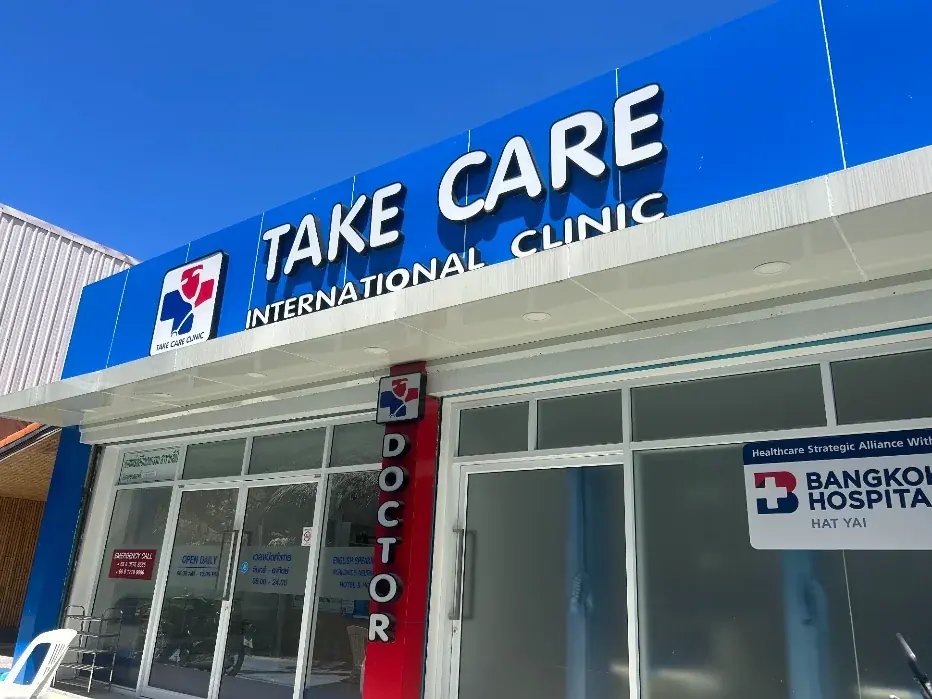
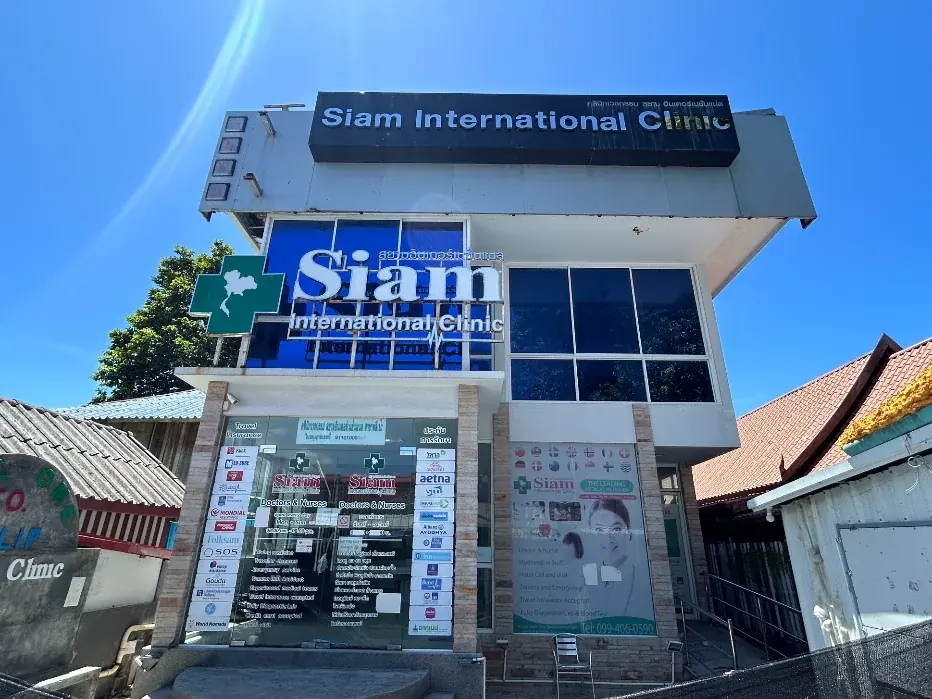
Let me start with the most important thing: Koh Lipe does not have a real hospital. There is a facility on the island that calls itself Koh Lipe Hospital, but officially it cannot classify itself as a hospital because it doesn’t have the necessary equipment to qualify. What Koh Lipe actually has is clinics — a couple of them — staffed by qualified doctors and nurses but operating at a primary-care level only.
This isn’t a problem for most visitors most of the time. But it’s important to set expectations.
What the clinics can handle
The clinics on Koh Lipe can deal with most of the day-to-day issues a visitor will run into:
- Stitches for cuts and lacerations
- Minor burns
- Basic first aid
- Oxygen for emergencies (including diving emergencies)
- Standard infections and prescriptions
- Minor stings, bites, and allergic reactions
- Wound cleaning and dressings
- Routine medical advice
They can also keep you stable for evacuation if something more serious happens — which is genuinely the most important thing they do for severe cases.
Full clinic page → · Full hospital page (Koh Lipe “Hospital”) →
What needs to go to the mainland
Anything beyond primary care needs evacuation to Hat Yai, which is about 5 hours door to door by speedboat and road transfer. This includes:
- Major surgery of any kind
- Broken bones requiring casting (the clinics can splint, but proper casting is mainland)
- Decompression sickness (no hyperbaric chamber on Koh Lipe — see below)
- Heart issues, stroke symptoms, severe respiratory distress
- Serious infections requiring IV antibiotics
- Childbirth complications
- Major dental work (the clinics handle basic only — see dentist page)
- Anything involving advanced imaging — CT scans, MRIs, even most X-rays
A personal example. My daughter Olivia broke her leg on the way to Koh Lipe — we were heading there for a two-week stay. We had to detour to Hat Yai hospital to get the cast on properly, then continue to Lipe with her in a wheelchair. Wheeling a kid around Koh Lipe is challenging. It’s not built for accessibility — potholes everywhere, puddles in rainy season, and getting on and off the speedboat ferries with a wheelchair is a real undertaking. We also had to make the 5-hour return journey to Hat Yai mid-stay for an X-ray follow-up. If she’d been seriously injured rather than just casted, the journey would have been miserable.
Medical evacuation — the practical reality
Two evacuation options exist for serious cases:
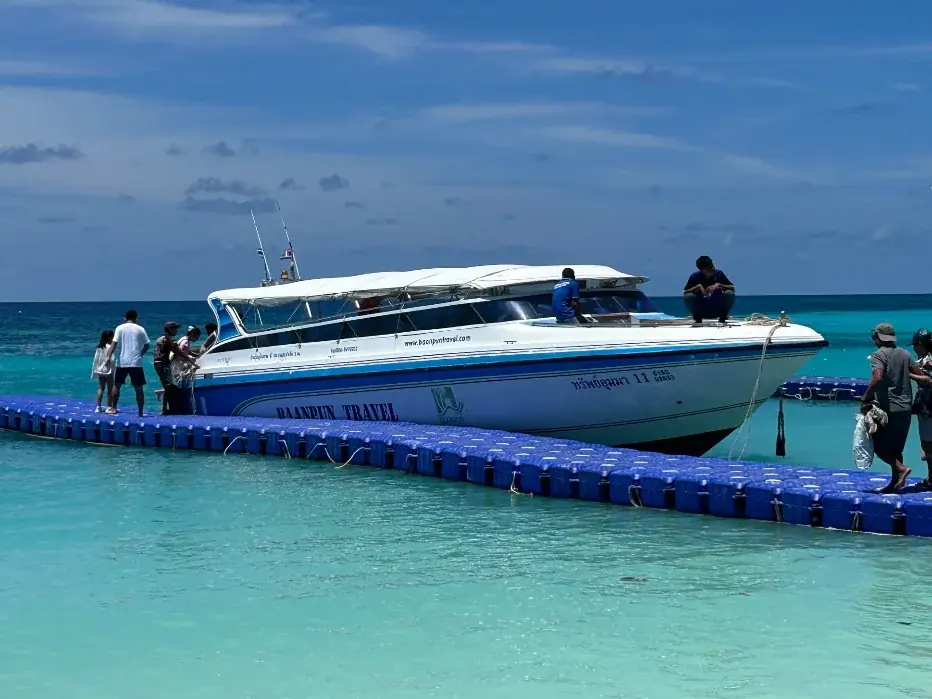
Speedboat evacuation. The standard route. The island has an emergency speedboat on standby. Total time to Hat Yai hospital is about 5 hours when everything works smoothly. This is genuinely uncomfortable for someone who’s seriously injured.
Helicopter evacuation. For the most severe cases, helicopters can be arranged door-to-door in around 30 minutes. Crucial caveat: helicopters cannot evacuate decompression sickness (DCS) patients because of the altitudes they fly at — pressure changes during flight make a DCS case dramatically worse.
The cost of medical evacuation can run up to $10,000 USD, before any of the actual hospital treatment in Hat Yai. This is the single biggest reason to have proper travel insurance for a Koh Lipe trip. Cheap-and-cheerful policies often exclude evacuation or cap it at amounts that won’t cover what you’ll actually need. Read the small print, particularly the diving and watersports clauses if you’re planning to do either.
Diving emergencies and decompression sickness
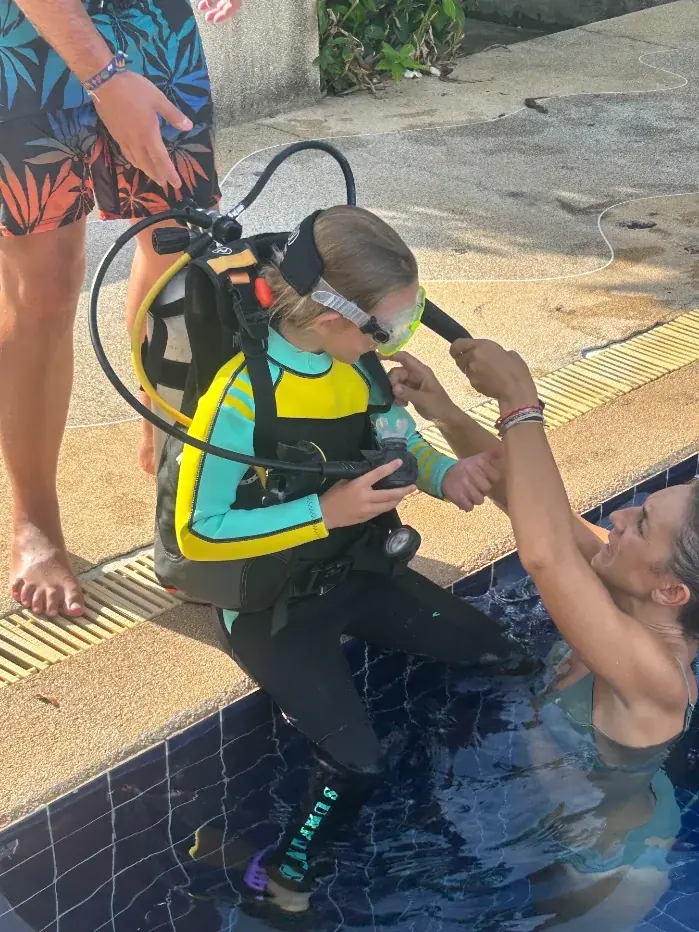
I run a dive operation and this gets asked a lot. Here’s the honest version:
- There is no hyperbaric chamber on Koh Lipe. The nearest is in Hat Yai.
- The good news: if a DCS case is treated within 24 hours, the survival rate is extremely high.
- The complication: because helicopters can’t be used for DCS patients (altitude makes pressure issues worse), evacuation is by the dedicated emergency speedboat at low altitude.
- What to do: any reputable Koh Lipe dive operation has DCS protocol drilled — oxygen on the boat, immediate evacuation if needed, call to DAN (Divers Alert Network) for guidance during transport.
- Insurance: standard travel insurance often does not cover diving incidents. Get DAN insurance or equivalent specifically for the dive trip. It’s cheap. It pays for itself the one time you need it.
Common visitor medical issues
The realistic frequency of what actually goes wrong:
Cuts and reef scrapes. Common. Tropical water means even small cuts can get infected fast — clean and dress them properly the same day, don’t wait until they look angry. The clinics carry decent antiseptic. Bring your own basic first aid kit anyway.
Sunburn. Constant. The Andaman sun is stronger than people think and you’re often on the water. Reef-safe sunscreen is mandatory under marine park law (fines up to 100,000 THB). Cover up with a UV rash guard.
Food poisoning. Less common than people fear, but it happens. Stick to busy restaurants where the turnover is fast, especially for seafood in low season when displays sit longer. Pharmacies stock the standard rehydration salts.
Jellyfish stings. Occasional but not common around Koh Lipe. The good news: dangerous jellyfish are rare and easy to spot when present. The protocol: vinegar to neutralise the sting as soon as possible — don’t use fresh water (it makes nematocysts fire). Most beach bars and dive shops keep vinegar on hand.
Dehydration. Sneaks up on people, especially after a few hours snorkelling or diving. Drink more water than you think you need.
Scooter accidents. Less of an issue here than other Thai islands purely because tourists can’t rent scooters. But locals on scooters do exist and minor walking-meets-scooter incidents happen. Watch the back roads.
After-hours emergencies
If something happens at 2am, you have options. Someone is on call at the clinics 24 hours a day. The fastest route to help:
- Ask your hotel reception — they’ll have current numbers and will make the call.
- Refer to the numbers above for the up-to-date list of emergency services.
- All emergency services on Koh Lipe speak good English — communication isn’t usually an issue.
Save the numbers in your phone before you need them, not while you’re panicking.
Pharmacies
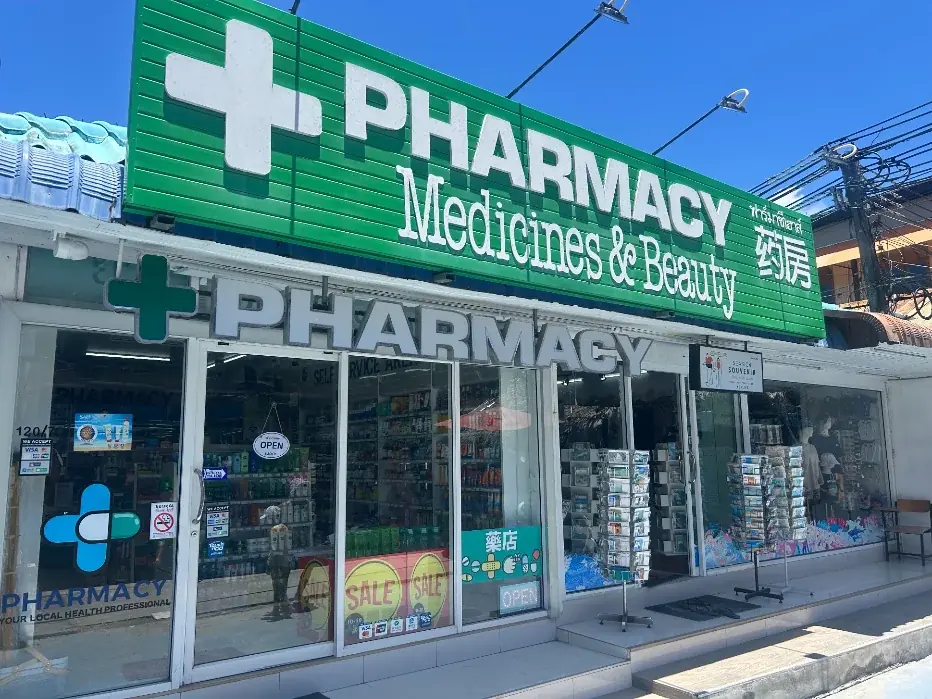
Koh Lipe has several well-stocked pharmacies on Walking Street and around the main accommodation areas. They carry the common stuff — painkillers, antihistamines, cold and flu medication, rehydration salts, basic antibiotics, contraception, sun and skin care.
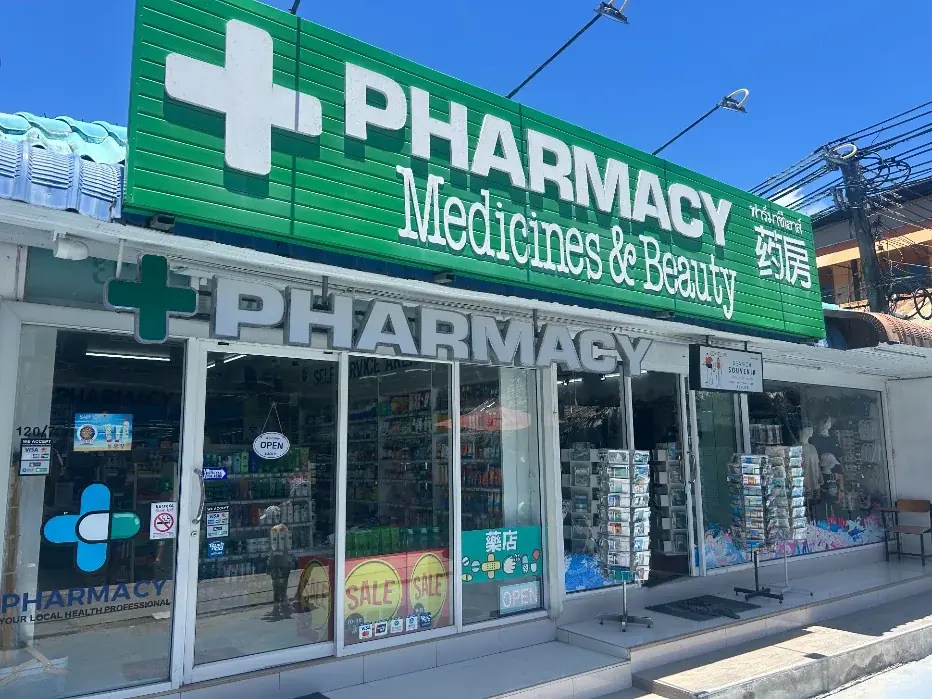
What they don’t reliably carry: specialised prescriptions, brand-specific medications you might rely on at home, anything unusual.
The rule for travellers on regular medication: bring more than you need, and split the supply across two bags so you don’t lose all of it if a bag goes missing. Don’t rely on Koh Lipe pharmacies for refilling specialised prescriptions.
Money — ATMs, cash, and currency
Koh Lipe has multiple ATMs spread around Pattaya Beach and Walking Street. Most of the time they work fine. There are two situations to plan around.
When ATMs run dry
ATMs on Koh Lipe are generally well stocked, but they can run empty during specific peak windows:
- Thai public holidays (especially Songkran in April and the long weekend stretches)
- Christmas and New Year
- Chinese New Year
- Weekends in the busiest weeks of high season
The pattern is consistent: huge demand, slower restocking, and the ATMs go dry by Saturday afternoon and don’t come back until Monday morning. If you’re travelling during any of these windows, arrive with substantially more cash than you think you’ll need.
Fees and limits
A few practical numbers:
- ATM transaction fees for international cards run up to 250 THB per transaction. This is on top of whatever your home bank charges.
- Maximum withdrawal is typically 25,000 THB per transaction at most ATMs.
- Plan ahead to minimise the number of withdrawals. Three big pulls cost meaningfully less in fees than nine small ones.
Card payments and cash-back
Many businesses accept cards (most resorts, dive centres, larger restaurants), but Walking Street smaller spots are cash-preferred or cash-only. Some hotels will let you pay by card and give you cash back, for a fee — useful if the ATMs are dry.
How much cash to bring
For a 4–5 day trip, arriving with 5,000–10,000 THB in cash covers most situations even if your card has issues. For longer stays, factor a couple of larger ATM withdrawals in early so you’re not exposed to a holiday-weekend cash crunch later.
Currency exchange
Limited on Koh Lipe — you’ll get better rates exchanging at the airport in Bangkok, Hat Yai, or Langkawi. Some hotels and small shops on the island will exchange USD or EUR but rates are noticeably worse than mainland.
Immigration
The Koh Lipe immigration office is on Pattaya Beach and handles the international border crossing for ferries to and from Langkawi during the high season, plus visa extensions and other tourist visa services for travellers already on the island.
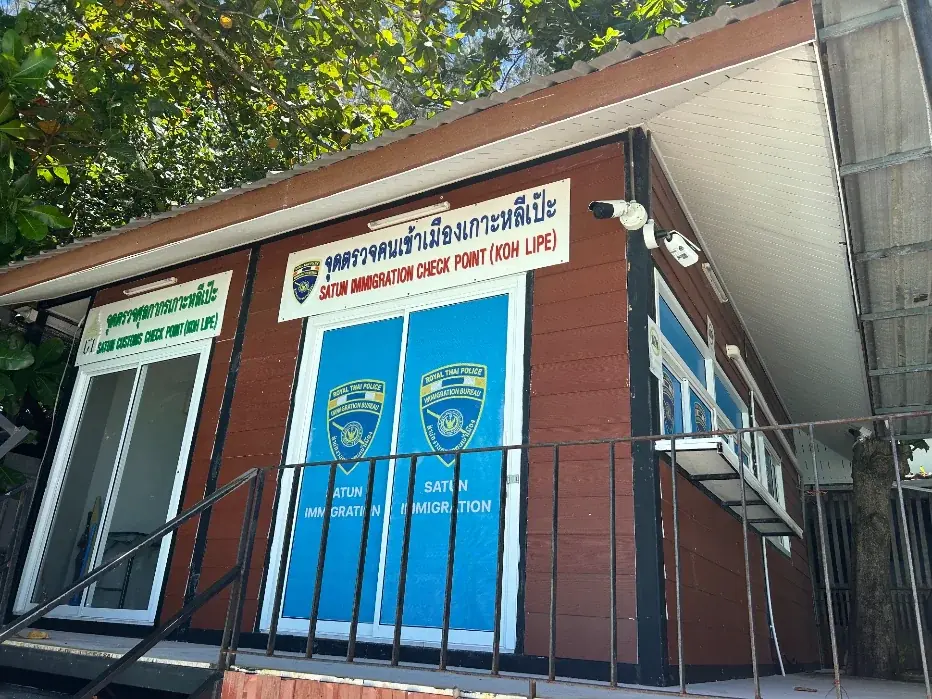
Important note: Thai immigration regulations, fees, opening hours, and the operational status of the Koh Lipe office itself change more often than this article will be updated. For anything visa-related — extensions, overstay rules, current opening hours, exact fees, document requirements — please refer directly to the Thai immigration online portal and the dedicated immigration page on this site, which is updated more regularly. Don’t rely on a hub page or third-party blog for the rules that govern whether you can legally remain in Thailand.
The travel article also covers the seasonal nature of the Koh Lipe immigration office and the broader implications for the Langkawi route.
Tourist police, regular police, and safety
Koh Lipe is one of the safer islands in Thailand, and there’s a structural reason for it that other islands don’t share.
Why crime is rare on Koh Lipe
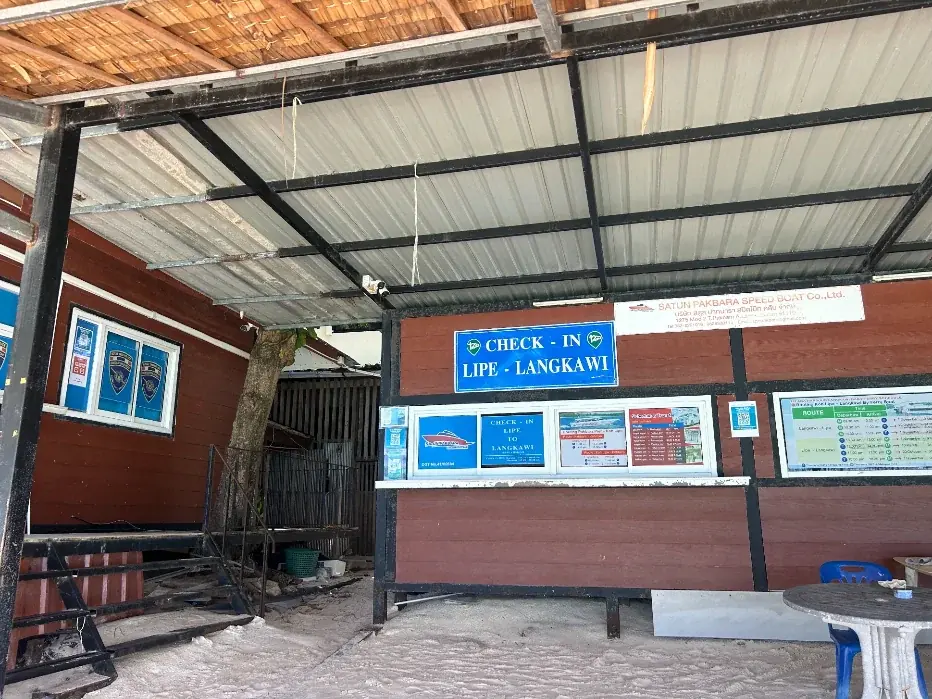
The island is small, with limited entry and exit points. There are essentially three ways off — the speedboats from Pattaya Beach, the speedboats from Sunrise Beach in low season, and the international ferry to Langkawi in high season. That’s it.
That geography matters for crime. If something happens, the tourist police can effectively control the exit points and pick up an offender before they leave the island. It’s too risky for opportunistic crime — the chances of getting caught at the boat in the morning are high. As a result, theft, assault, and most petty crime are genuinely rare here compared to mainland tourist destinations.
When you’d actually call them
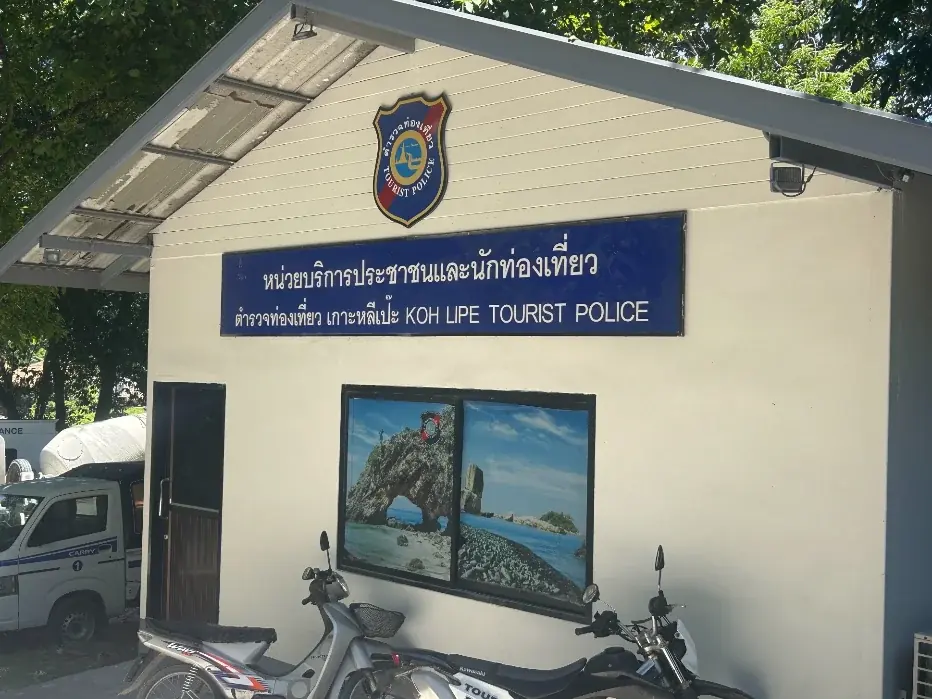
The tourist police office is on the back road behind Walking Street, so they can be on the scene quickly. They handle:
- Petty theft and lost belongings (with police report for insurance)
- Disputes between tourists and businesses
- Disputes between tourists and other tourists
- Lost passport reports
- Anything that needs an English-speaking officer
I once called them over an argument between two tourists about a comment one made about people from a certain country. They were on the scene within 10 minutes and de-escalated the situation calmly. That’s the level of response time you can typically expect.
The regular police station is also on Pattaya Beach near the immigration office. The two work together; the tourist police are the right first call for English-speaking visitor issues.
For genuine emergencies, the numbers near the top of this page have everything you need.
Connectivity — WiFi, mobile, and SIM cards
Koh Lipe’s connectivity is functional but not great. Set expectations accordingly, especially if you need it for work.
WiFi
Most hotels and restaurants have WiFi, and it works most of the time. Don’t plan on serious video calls — the bandwidth is rarely strong enough. For browsing, messaging, and basic streaming, it’s usually fine.
Mobile signal — go with AIS
In my experience, AIS is the best mobile network on Koh Lipe. I run my whole digital life on AIS here and it consistently outperforms the alternatives.
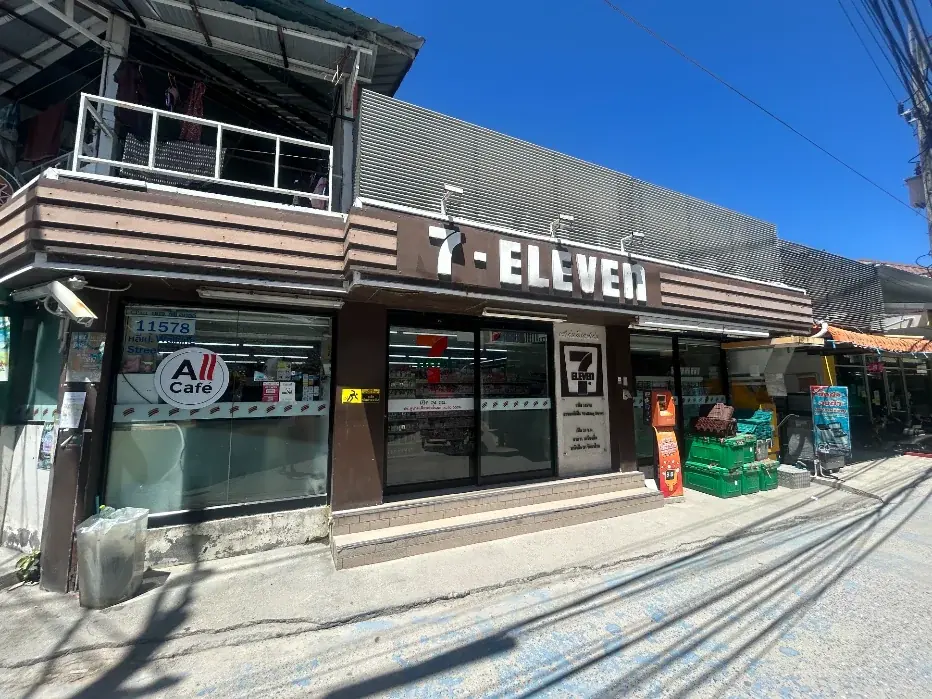
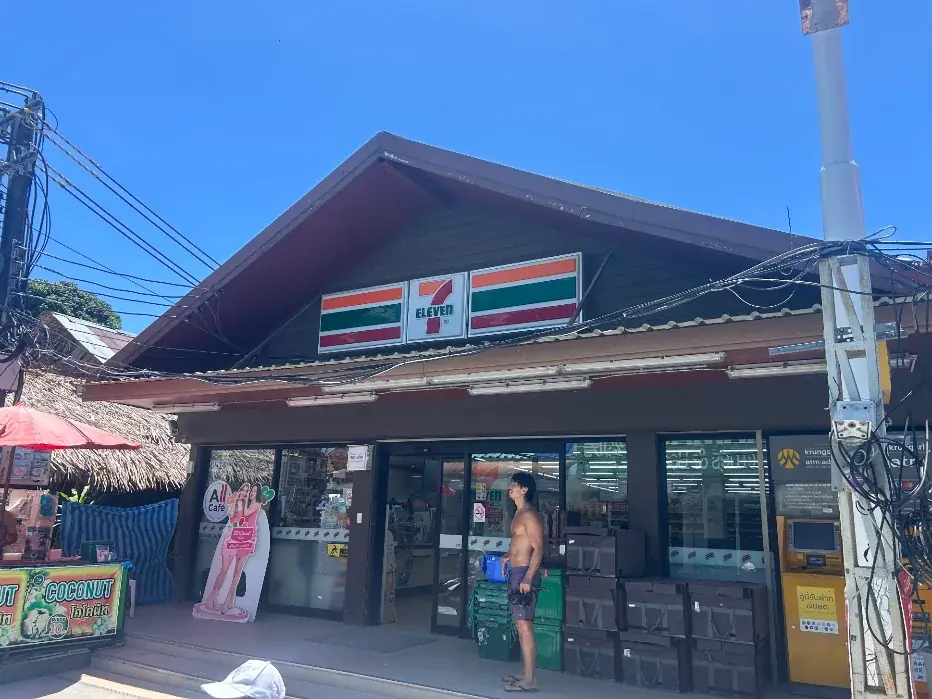
Tourist SIM cards from 7-Eleven are convenient — but they’re typically on the True network, which is noticeably less reliable on the island than AIS. If you’ve already bought a True tourist SIM and arrived, you’ll cope, but next time get an AIS one.
eSIMs work fine for most modern phones — make sure you provision an eSIM tied to AIS specifically, not just whichever package looks cheapest.
Realistic strategy
My setup, for what it’s worth:
- AIS SIM as the primary mobile data source
- Hotel WiFi as the backup
- AIS hotspot as the backup-to-the-backup when the hotel WiFi fails
For digital nomad context, I covered the realistic remote-work picture in the lifestyle article — Koh Lipe isn’t a great primary base for remote work, but for a few hours of catch-up emails and the occasional call, the above setup is enough.
Power, water, and daily-life practicalities
Power cuts
I’ve experienced several power cuts during my time on Koh Lipe. They’re not frequent but they’re not rare either.
Practical preparation:
- Charge a power bank before you arrive and keep it topped up.
- A small rechargeable lamp or reading light is genuinely useful — large hotels usually have torches in rooms or at reception, but hostels and smaller places often don’t.
- Keep your phone charged — when the power goes, it’s also the moment your accommodation contact info matters most.
Plug type is the standard Thai — Type A/B/C/F, mostly compatible with European and American plugs. Voltage is 220V, 50Hz.
Water — not drinkable
Tap water on Koh Lipe is not drinkable. Don’t even brush your teeth with it as a rule. Always use bottled or filtered water.
Refill stations are widely available across the island:
- La Bombona Diving has a large free water dispenser available for anyone who wants to fill up.
- Most hotels have water dispensers in reception.
- Many cafes and restaurants will refill a bottle for a small fee or free.
This connects to a broader point about plastic on the island.
The plastic ban
Koh Lipe has a single-use plastic ban in effect. You will not get a plastic bag at 7-Eleven. Bottled water is exempt from the ban (it has to be), but plastic shopping bags, single-use cutlery, and similar items are out.
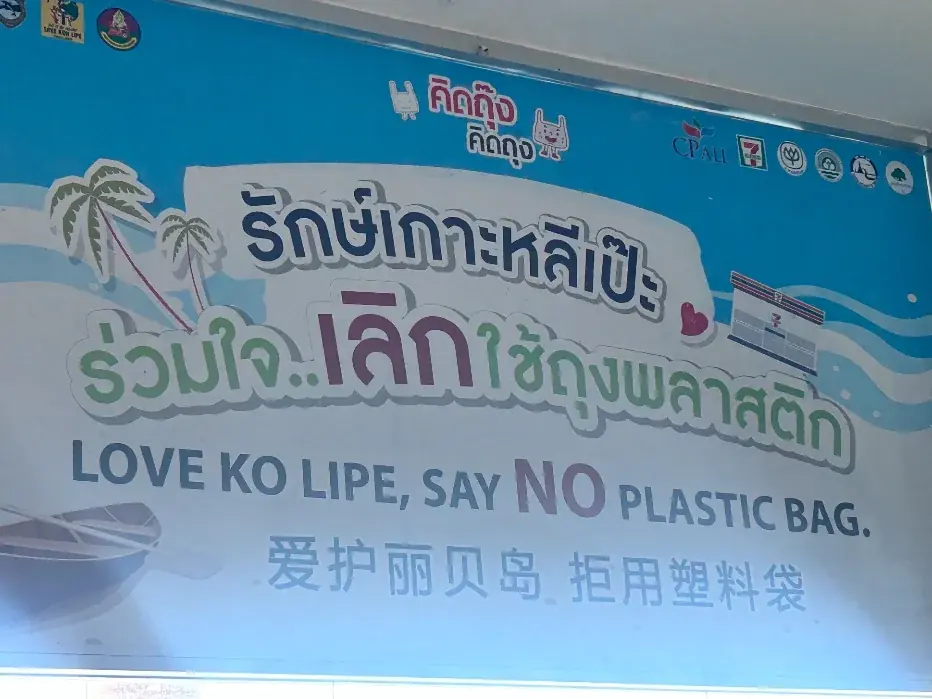
What this means practically:
- Bring a reusable shopping bag. You’ll use it constantly.
- Bring a reusable water bottle — it pays for itself in the first day given how many free refill stations exist.
- Embrace it. The ban exists because the plastic problem in this marine park is genuinely serious. The reefs you came to see are downstream of it.
Post, shipping, and online deliveries
No post office
Koh Lipe doesn’t have a post office. You can’t send a postcard from here.
Receiving online orders — the Street Hostel hack
This is one of the genuinely useful insider tips for longer stays.
Lazada, Amazon, and other Thai online retailers will deliver to Koh Lipe. The trick is:
- Mark your delivery address as care of “The Street Hostel, Koh Lipe.”
- Packages get shipped to the mainland, then the Street Hostel coordinates the last leg of the delivery.
- Take your passport to The Street Hostel to collect, and pay a small extra delivery fee for the local handling.
- Add a couple of days to whatever the platform’s estimated delivery time says. The estimate is to mainland Thailand; the island leg is extra.
- You cannot opt for cash on delivery. Pay online when you order.
This works for anything from electronics to clothes to specialty pharmacy items you want shipped from Bangkok.
Bulky items — Bang Deng cargo
For larger items (furniture, dive equipment, anything that won’t fit in a parcel), there’s a cargo service called Bang Deng cargo that runs boats every second day in and out of Koh Lipe. It’s mostly used by businesses on the island for stock and supplies, but you can contact them directly if you need to ship something large. Worth knowing about for anyone setting up here longer-term.
Getting around — and what’s not available
No scooter or bicycle rentals for tourists on Koh Lipe. Tourists are limited to:
- Walking — the main mode. The island is small enough that you can cross it in 20–25 minutes.
- Seleng taxis — small open-sided pickups, flat 50 THB per person to anywhere on the island.
- Longtail boats — for getting between beaches or out to nearby islands.
Honestly, I’ve never found the need for either taxis or boats unless I had a lot of luggage. Walking is genuinely the best way to experience the island. The covering article on the Koh Lipe lifestyle has more on this.
For longer stays, bicycle rental is sometimes available through specific accommodations — but again, the small footprint means you don’t really need wheels.
Lost belongings, passports, and luggage
Lost passport
If you lose your passport, your hotel will usually arrange to have it forwarded to your next destination if it turns up. The realistic process for a genuinely lost passport:
- File a report at the tourist police — needed for the embassy.
- Contact your country’s embassy in Bangkok — they handle emergency travel documents.
- You’ll need to travel to Bangkok to get a replacement; no embassies process passports on Koh Lipe.
Build in significant time and cost — an emergency passport replacement can take 3–7 days even with priority processing.
Lost luggage on the ferry
This actually happens to me occasionally — a suitcase ends up on the wrong speedboat. The good news is the boats run a competent system at the pier for tagging and routing, and all the speedboats leaving at similar times go to the same destination. If your bag isn’t on your boat, it’s usually waiting for you at the destination, or it turns up on the next speedboat 30 minutes later.
My practical advice: keep an eye on your luggage during the boat-loading process and make sure it gets onto the right boat. The routing system works, but watching the loading saves the 30-minute panic at the other end.
Lost items in restaurants or on the beach
Things turn up. The community is small enough that lost-and-found culture works informally — a phone left on a beach is often found by the next person, returned to the nearest hotel or bar, and recoverable through asking around. Walking Street businesses keep an eye out for each other’s lost-and-found queries.
The Thai school on Koh Lipe
Worth mentioning briefly because it’s part of what makes Koh Lipe a real place rather than purely a tourist resort.
There’s a Thai school on the island that hosts around 100 kids in total across all years. Many classes are mixed-age. The school is on Sunrise Beach — and when you see the location, it speaks for itself. What a place to go to school. The kids you’ll see on the beaches in the late afternoon and on weekends are mostly from this school, and they’re a meaningful part of the island’s year-round community.
It’s a small detail, but it’s the sort of thing that shifts how you see the place. This isn’t a built-from-scratch resort destination. There are families here, kids growing up here, teachers committed to the place.
Religion, holidays, and business hours
Koh Lipe is a Muslim-majority island (as covered in the food and drink article), which shows up in a few practical ways for visitors:
- Friday afternoons — some Muslim-owned businesses close for prayers. Plan around it.
- Ramadan — running times for some restaurants shift, and a few close during the day. Not all businesses observe; the island’s mixed expat and Buddhist Thai community keeps most things running.
- Songkran (mid-April) is the big Thai national festival and the island gets busy and slightly disrupted — accommodation prices spike, ATMs run dry, and some operators close briefly.
Mosquitoes and bugs
Mosquitoes exist on Koh Lipe, especially around dusk and in lush vegetation areas inland from the beaches. They’re not as bad as some Thai islands but worth taking precautions:
- Bring repellent with DEET or picaridin. Available locally but more expensive.
- Long sleeves and trousers at dusk, especially if you’re inland.
- Air-conditioned rooms keep mosquitoes out better than fan rooms — a real consideration if you’re sensitive.
Dengue fever does occur in southern Thailand, though it’s not common on Koh Lipe specifically. The CDC and your home country travel health advice are the right places for current guidance.
A final thought {#all-info}
Koh Lipe is a small island a long way from major medical and infrastructure resources. That’s part of why it feels the way it feels — quieter, slower, less touristified than the bigger Thai islands. It’s also the reason a small amount of preparation pays off disproportionately here.
The two things that catch people out the most: underestimating the medical situation (the clinics are good for what they are, but they’re not a hospital), and underestimating the cash and connectivity gaps (ATMs do run dry, WiFi does fail). Both are easy to plan for.
If you’ve got proper travel insurance, an AIS SIM card, a power bank, and a few thousand baht in cash, you’re 90% of the way to a smooth trip. The other 10% is enjoying the island.