
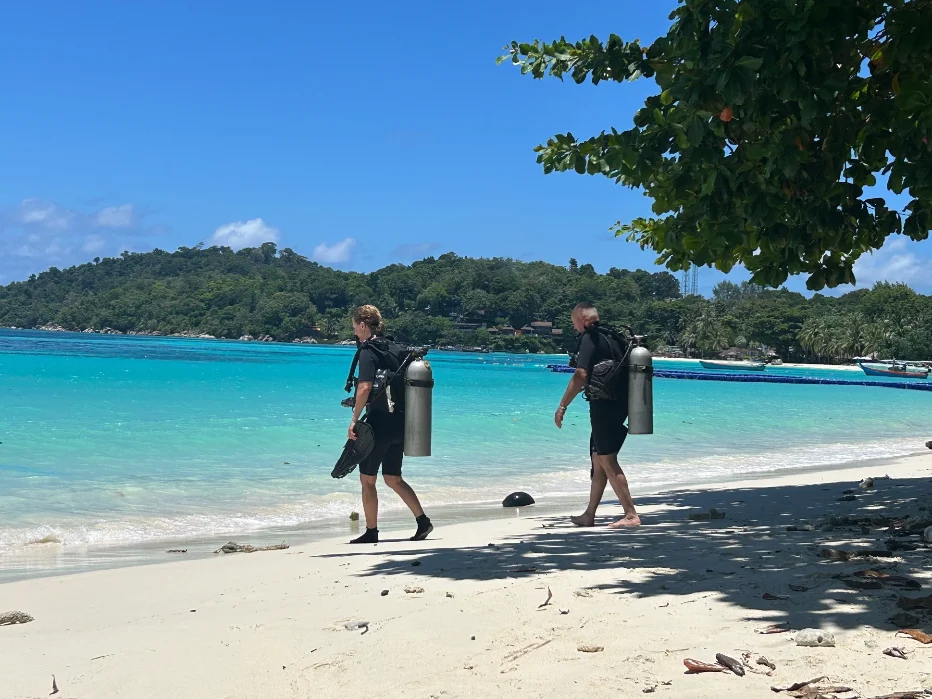
Why I’d choose Koh Lipe over Koh Tao for diving
I’ve run dive operations on both islands, and people ask me this all the time. The honest answer is Koh Lipe, every time. Here’s why.
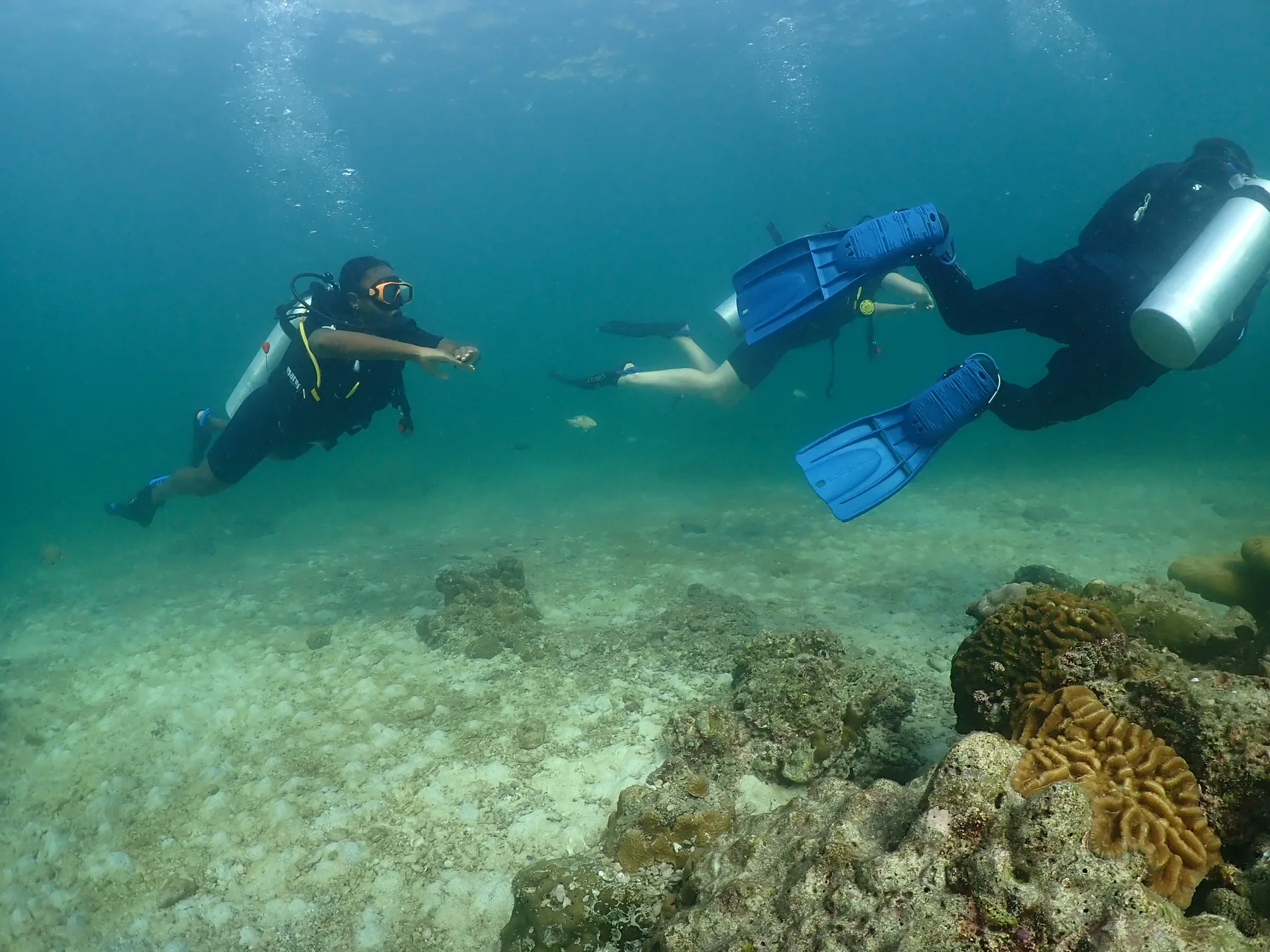
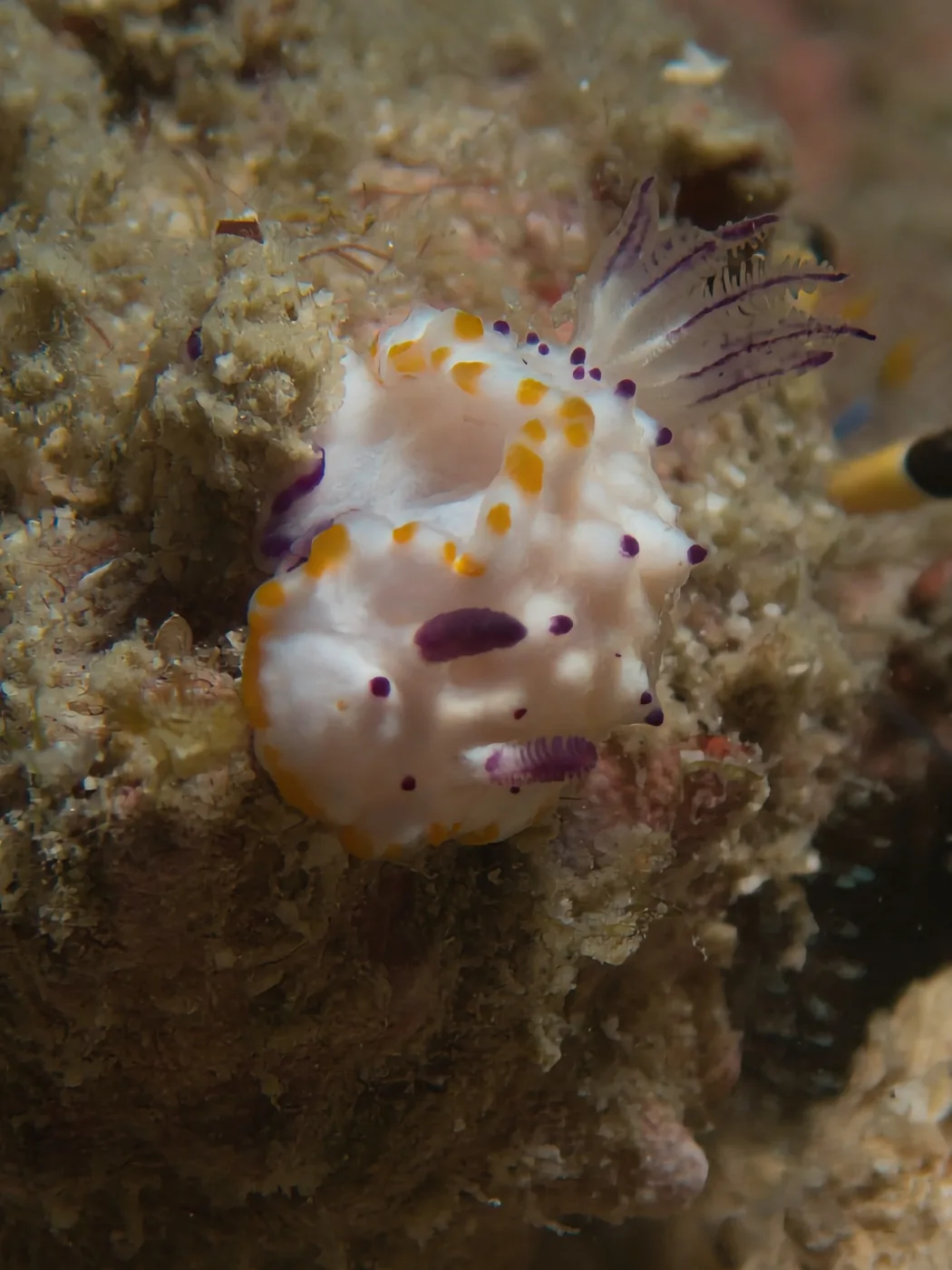 A small thing on a healthy reef — Tarutao corals look like this because diver volume here is a fraction of what’s on Koh Tao or Phi Phi.
The reefs are simply healthier. The volume of divers visiting Koh Lipe is a fraction of what you see on Koh Tao. Less traffic means less coral damage, less stressed marine life, and a noticeably better-looking reef on average. This isn’t a small difference — you can see it the moment you drop in.
The currents grow bigger fish. Koh Lipe has stronger currents than the gulf-side dive sites, and that has two consequences worth knowing. First, it promotes soft coral growth — the colours and density of soft corals on sites like Stonehenge or 8 Mile Rock genuinely surprise people. Second, it grows larger fish. Compare the average size of a trevally on Koh Lipe versus Koh Tao and there’s no contest. The same goes for groupers, schooling barracuda, and the predator species generally. Current = food = bigger fish.
Open ocean variety. Koh Tao sits in the Gulf of Thailand. Koh Lipe sits in the open Andaman Sea, with bigger water moving through it. That changes what shows up. You get more pelagic action, more macro variety, and a wider species count generally — including things like frogfish and Indian walkmen that you’d struggle to find anywhere else in Thailand.
Fewer divers underwater. This sounds like an obvious one, but it’s worth saying. The waiting-your-turn-at-the-wall experience that’s common on busier Thai sites doesn’t really happen on Koh Lipe. You get the dive site to yourself far more often than not.
I’d put the diving here up there with some of the best dive destinations in the world. That’s not a sales pitch — it’s the reason I built a centre here.
What you’ll actually see
The marine life on Koh Lipe falls into three loose buckets, and most divers care about at least one of them:
The big stuff. Schooling barracuda, big-eye trevally, whitetip reef sharks resting in the sand channels, and (in season) occasional whale sharks and manta rays at the further-out pinnacles. February through April is the strongest window for pelagic encounters.
The structure. Healthy hard coral gardens, dense soft coral on the current-exposed pinnacles, sea fans the size of small cars, and granite walls covered in life. Visibility is regularly 20–30m through the dry season.
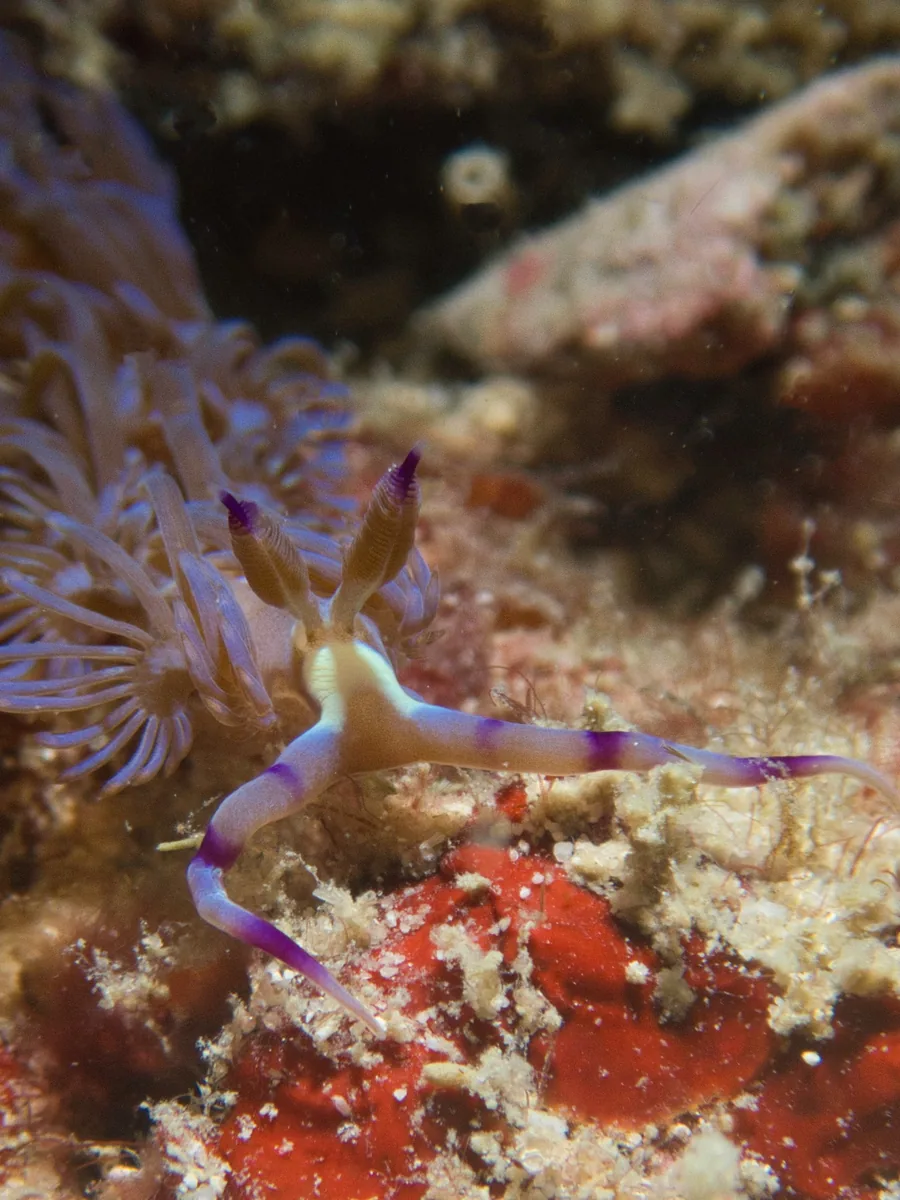
The weird stuff. This is what people often don’t expect. The macro scene on Koh Lipe is genuinely excellent — nudibranchs in colours you’ll struggle to photograph properly, frogfish in three or four species, ghost pipefish, ornate seahorses, and the rarely-seen Indian walkman (a small, scorpionfish-like creature that walks on its pectoral fins). For divers with a camera and patience, the macro alone justifies the trip.
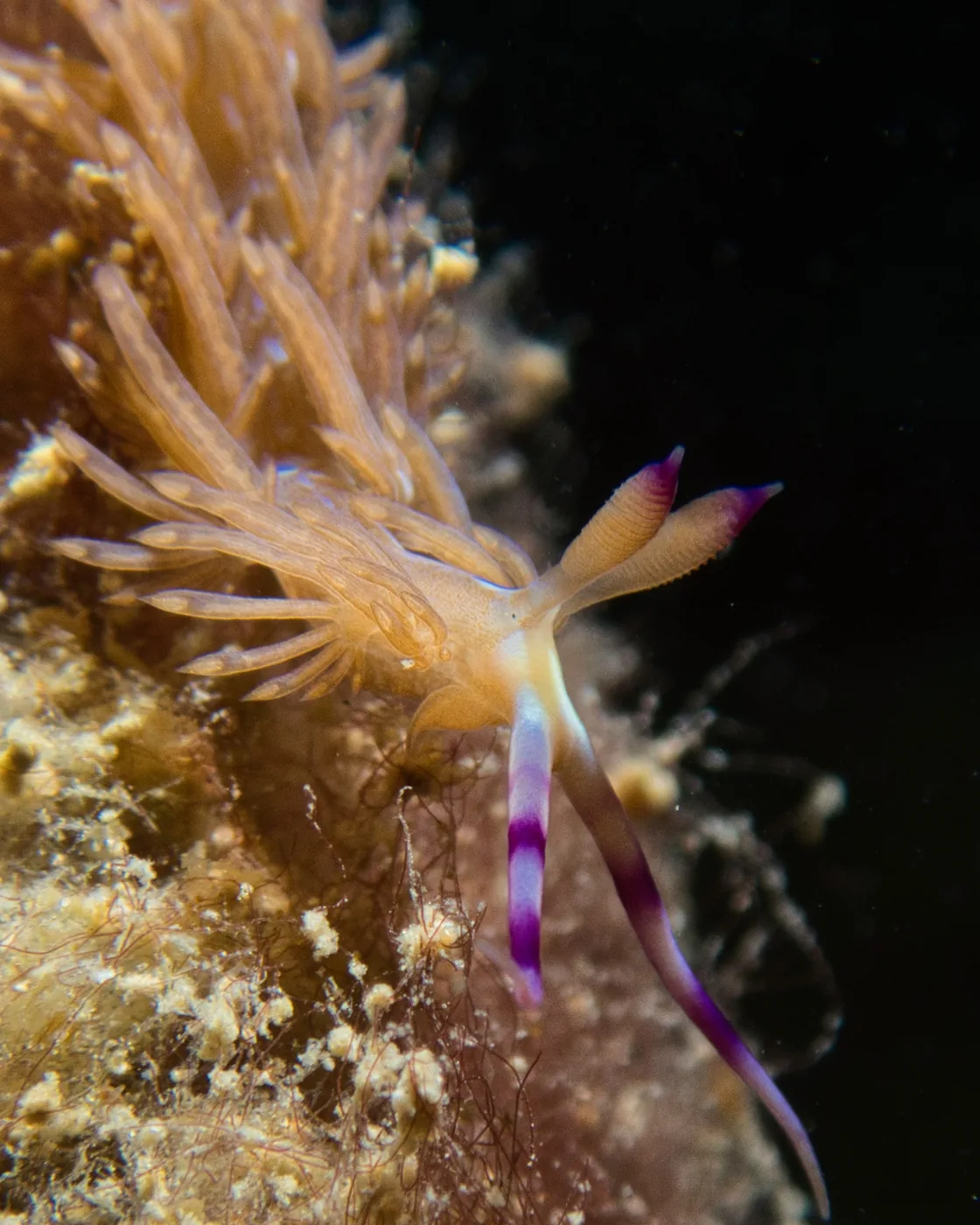 Purple dragon nudibranch, Lipe Macro. The macro scene here genuinely surprises people who came for the big animals.
The reefs sit inside Tarutao National Marine Park, which was established as Thailand’s first marine national park on April 19, 1974 and was named one of the inaugural ASEAN Heritage Parks in 1984. The protection matters — and it shows.
The dive sites in brief
Full breakdowns of each site live on their own pages, but for orientation:
- 8 Mile Rock — the signature advanced pinnacle. AOW required. The site to do if you’re only doing one.
- Stonehenge — the other advanced pinnacle, dense soft coral, similar pelagic energy.
- Yong Hua shipwreck — the only proper wreck in the area.
- Honeycomb Reef — dense hard-coral maze in the Adang-Rawi archipelago.
- Koh Yang — the bread and butter sites for variety, east and west sides.
- Koh Usen — two sloping coral gardens, good for all levels.
- Hin Ngam — easy, photogenic, family-friendly.
- Talang Steps — shallow shore-side reef, soft coral and calmer water — also a popular snorkel spot.
The full list of sites is on the fun diving overview page.
Which path is right for you
The people who walk into a dive shop on Koh Lipe fall into a few rough categories. Here’s my honest take on each.
The complete beginner
Koh Lipe can be challenging for beginners — there’s no point pretending otherwise. The currents are real, the open-ocean conditions don’t always cooperate, and the boat rides are longer than what you’d get on a more sheltered island.
But the reward is high. And the practical reality is that for a first dive, we can almost always find a quiet, calm bay to complete the necessary skills before taking you anywhere harder. Talang Steps and the sheltered side of Koh Yang are both forgiving spots to learn.
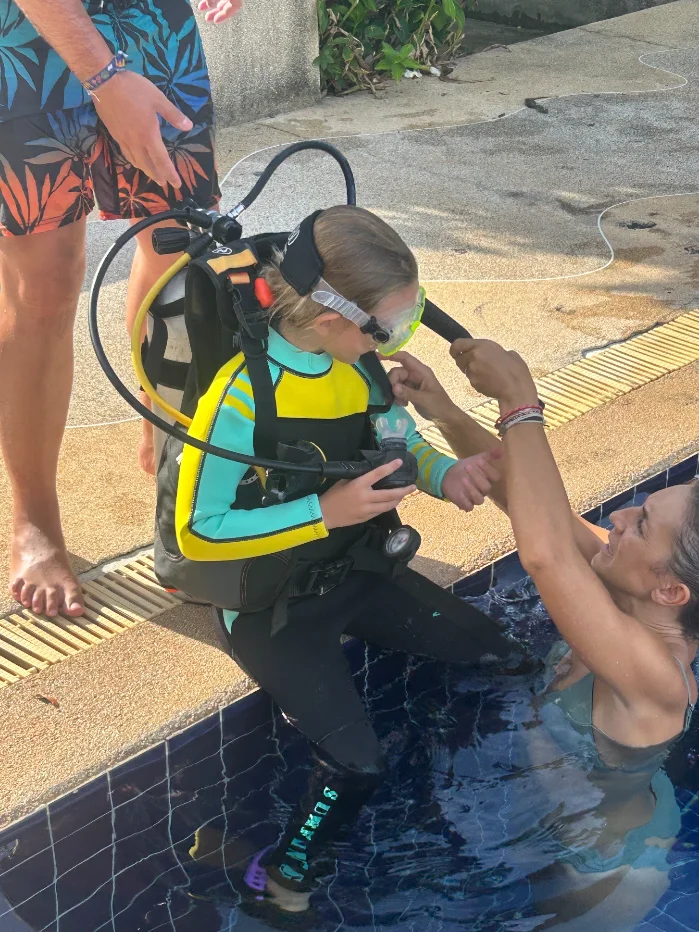
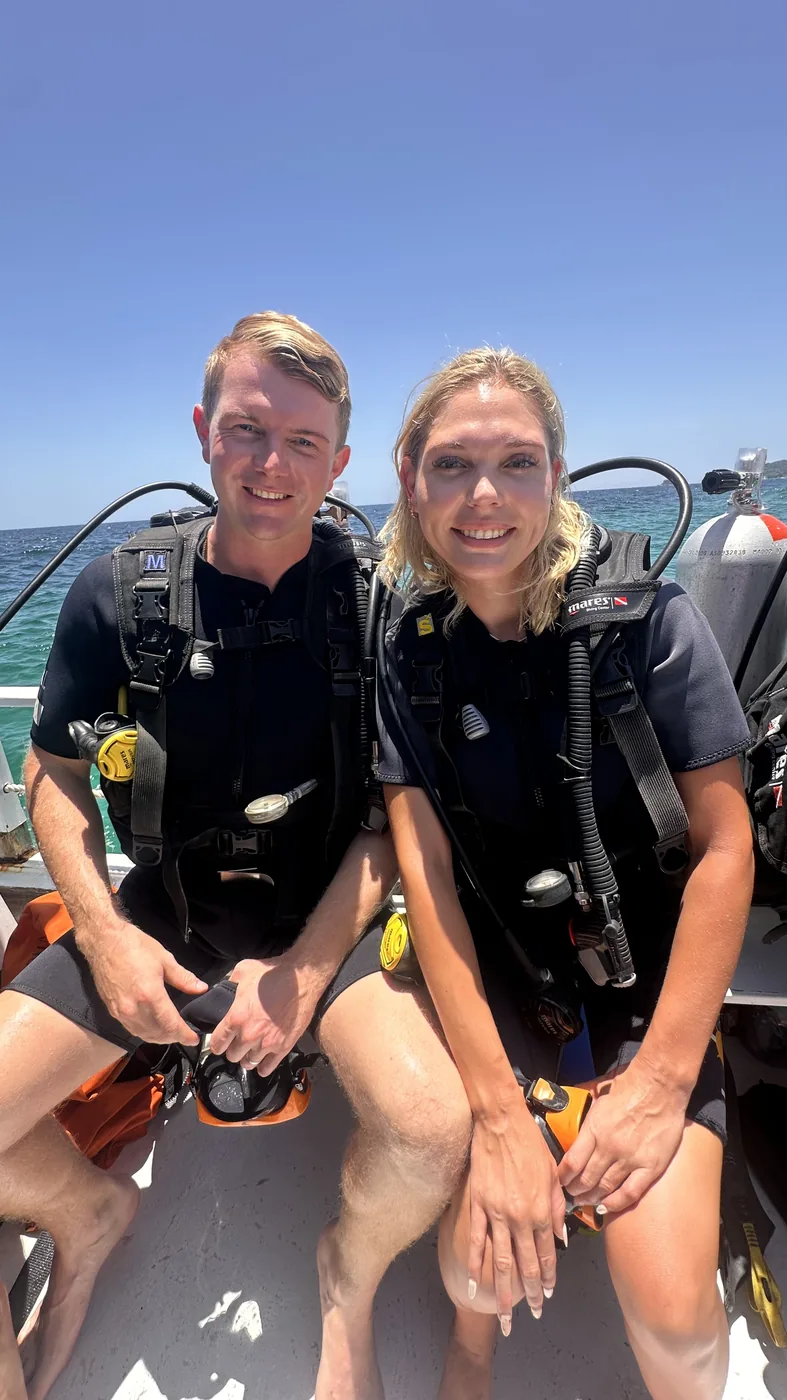 Real first-timers, dry and grinning. The breathing-underwater anxiety usually wears off in the first 20 minutes.
If you’re curious but nervous, do a try dive first. It’s a single supervised dive, no commitment, and it tells you immediately whether you actually want to scuba dive or whether snorkelling will scratch the same itch. If you love the try dive, sign up for the Open Water course — four days, certifies you to dive anywhere in the world to 18 metres.
What I wish more beginners understood before they showed up: the breathing-underwater anxiety is real for almost everyone, it goes away within the first 20 minutes of your first session, and an instructor who knows what they’re doing will make that 20 minutes painless.
The certified-but-rusty diver
If you got Open Water on holiday five years ago and haven’t been in the water since, you need a refresher. That’s not negotiable for your own safety, regardless of what you remember.
The honest reality, though: most rusty divers who come to Koh Lipe have already done their refresher elsewhere. Koh Lipe is usually a second or third stop on a dive trip — people refresh in Phuket, Langkawi, or Koh Lanta and arrive ready to dive properly. If you’re starting your trip on Koh Lipe and you’re rusty, build a refresher into day one. Don’t try to skip it.
The certified, current diver
This is who Koh Lipe was built for, frankly. We get a higher proportion of experienced divers than most Thai islands, and they come here because they want something different from the standard Andaman tourist circuit.
For a 3–4 day trip, here’s the sequence I’d recommend:
- Day 1: A check-out dive at Koh Yang or Hin Ngam to dial in buoyancy and weight, then a second dive at one of the walls to ease in.
- Day 2: Out to 8 Mile Rock — two dives if conditions allow. This is the site to prioritise.
- Day 3: Stonehenge or Honeycomb Reef for the soft coral and pelagic energy, then a macro-focused afternoon at Koh Usen or Koh Yang.
- Day 4 (if you have it): The Yong Hua wreck, or whichever site the boat captain says is firing.
You won’t dive every site on the list. That’s fine — you’ll have a reason to come back.
The dive pro
Get in touch directly. Conditions on the day matter more than any pre-set itinerary, and the further-out sites (Honeycomb Reef, the wall systems out past Koh Adang) are worth coordinating around weather windows.
What a day with La Bombona looks like
We do two trips a day, with two dives on each trip — one in the morning, one in the afternoon. Most other Koh Lipe operators run a single three-dive trip per day, which sounds efficient but has real downsides: you’re committed to the boat for most of the day even if you only want to do two dives, and you can’t break out for lunch on the island.
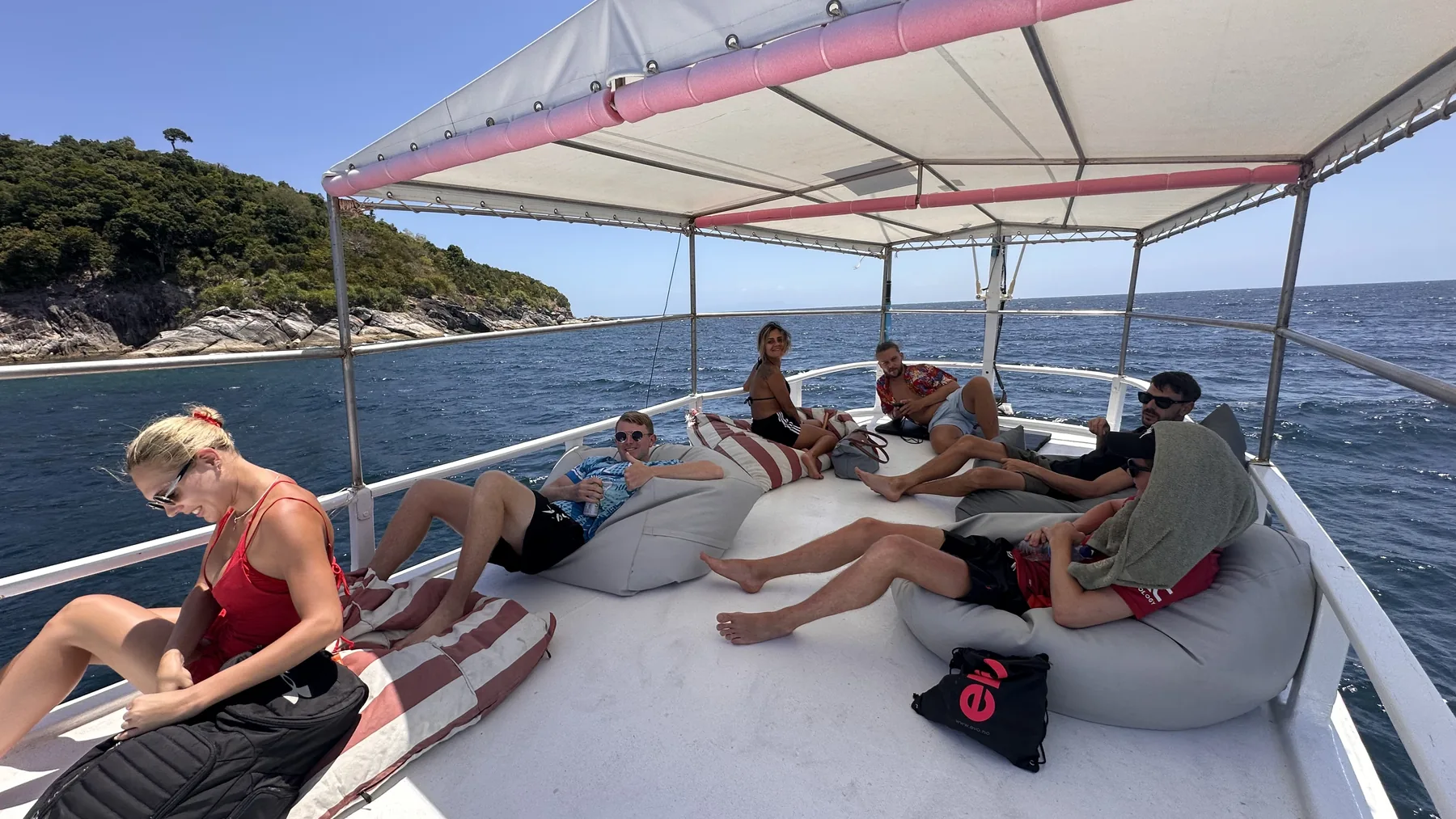 Surface interval, between dives. Proper boat, shade, bean bags, room to move — none of which a longtail gives you.
The two-trip model gives you flexibility:
- Early riser? Book the morning trip, be back on land by lunch, and have the rest of the day for the beach, Walking Street, or a nap.
- Slow holiday mornings? Book the afternoon trip, eat a proper breakfast at your hotel, and ease into the day.
- Two dives, not three? You’re not stuck on the boat for hours after you’ve finished diving.
A typical morning trip looks roughly like this: pickup from your accommodation around 07:30, gear-up at the centre, boat departs by 08:00, first dive briefing on the way out, two dives with a surface interval of around an hour between them, and back at the centre for lunch. Afternoon trips run on a similar shape, finishing around 17:00.
Group sizes are a maximum of two divers per guide. That’s the standard reputable operators on Koh Lipe follow, in line with marine park guidelines. If a shop is putting four or more divers on a single guide, ask why.
What’s included with us: tanks, weights, dive guide, boat transfer, water, fruit between dives, marine park fees. Bring your own swimsuit, towel, and reef-safe sunscreen. Full equipment rental is available if you don’t travel with your own.
How to choose an operator (the honest version)
There are several dive shops on Koh Lipe and the quality range is wider than the marketing suggests. Here’s what I’d actually look at if I were choosing a shop here as a customer:
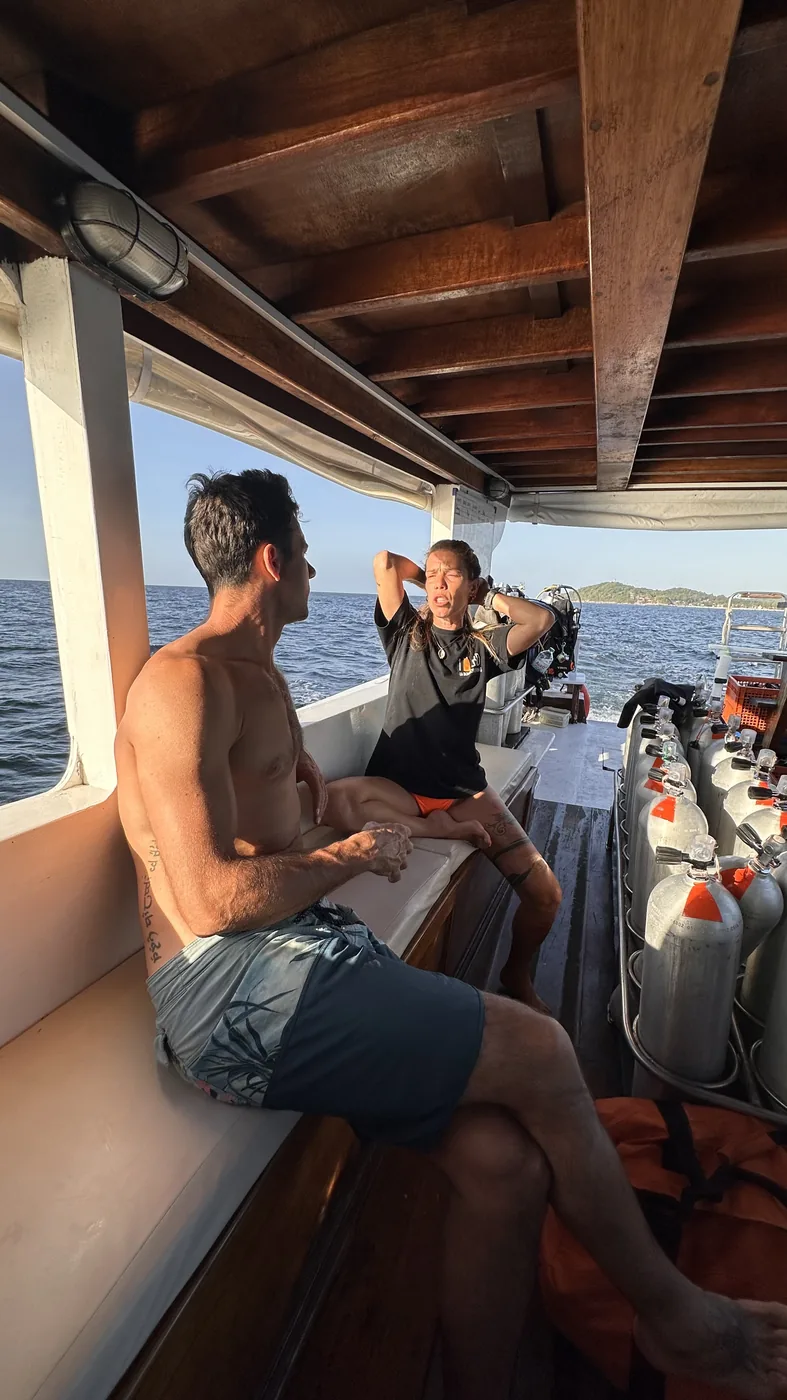 Pre-dive briefing on the boat. The tanks lined up behind aren’t decoration — clean, maintained, racked properly is what good gear discipline looks like.
Look at the equipment. Walk into the centre before you book. Is the gear well-maintained? Are the regulators clearly serviced regularly? Are the BCDs in decent shape? Frayed straps, mouldy mouthpieces, and obviously old gear are a red flag. Good operators are happy to show you their kit room.
Ask what kind of boat they dive from. This matters more than people think. A bigger purpose-built dive boat is comfortable, has shade, has a proper marine ladder, and — crucially — has a toilet. A longtail boat does not. Diving from a longtail on Koh Lipe is uncomfortable on a long day, especially if the surface conditions get bumpy, and the no-toilet thing becomes a real issue on a four-hour trip.
Group sizes. As above — two per guide is the local standard. Don’t accept four-plus.
Briefings. A proper pre-dive briefing covers depth, time, expected conditions, current direction, marine life, and emergency procedures. If a briefing is rushed or skipped, that tells you something about the operation generally.
Staff turnover. Dive shops that retain their instructors and divemasters across seasons tend to run a tighter operation than ones that churn through staff. Ask how long the instructor you’re diving with has been on Koh Lipe.
A note on safety culture overall: the standard on Koh Lipe is genuinely high. The dive centres on the island communicate regularly with each other about any safety concerns or near-misses, so lessons get shared and mitigations get put in place. It’s a small enough community that everyone is invested in keeping the diving here safe. That’s not the case everywhere in Thailand.
Conditions, currents, and the bits people don’t always think about
Currents. Koh Lipe currents range from gentle to genuinely strong, especially around the pinnacles and on a shifting tide. This is part of what makes the diving good — but it also means buoyancy and trim matter more here than on a sheltered site. Beginners get briefed thoroughly. Certified divers should be honest with themselves about whether they’re current-ready before doing 8 Mile Rock.
Distances. The further sites — 8 Mile Rock especially — are 30–45 minutes by boat in good conditions, longer if it’s choppy. Bring something for seasickness if you’re prone, take it before you board, and skip the heavy breakfast on rough mornings.
Marginal weather. Some days, the sea is too rough for the further sites and the call gets made to dive closer in. That’s the right call. A good operator will reroute to a sheltered site rather than push through. If a shop is taking boats out in conditions other shops are cancelling on, that’s a flag, not a flex.
Season. Diving runs roughly October to mid-May. Outside that window, Tarutao National Marine Park enters its monsoon closure (though Koh Lipe itself stays open), most operators close, and the diving effectively pauses. The best months are February through April for visibility and pelagics.
A final thought
Koh Lipe diving rewards effort. The boats are longer, the currents are stronger, and the conditions need more respect than a sheltered Gulf-side reef. In exchange, you get reefs that look the way Thai reefs are supposed to look, fish that have grown to their proper size, and dive sites you’ll often have to yourself.
If you’ve been diving Thailand for years and never made it down to Koh Lipe, you’re missing the best of what Thai diving has to offer. That’s the honest truth.