
Why Koh Lipe still feels like a real island
I’ve lived in Thailand for 12 years, and I’ve run dive operations on both Koh Tao and Koh Lipe. People ask me which I’d choose, and for the diving I pick Koh Lipe every time — but the reason I keep coming back goes well beyond the diving. It’s the pace.
You can’t rent a scooter as a tourist on Koh Lipe. That isn’t marketing copy — it’s the rule. So unless you walk, you take a seleng taxi: a small open-sided pickup with bench seats. Anywhere on the island costs 50 baht per person. The whole place is small enough that walking from one beach to the next takes 15 to 20 minutes.
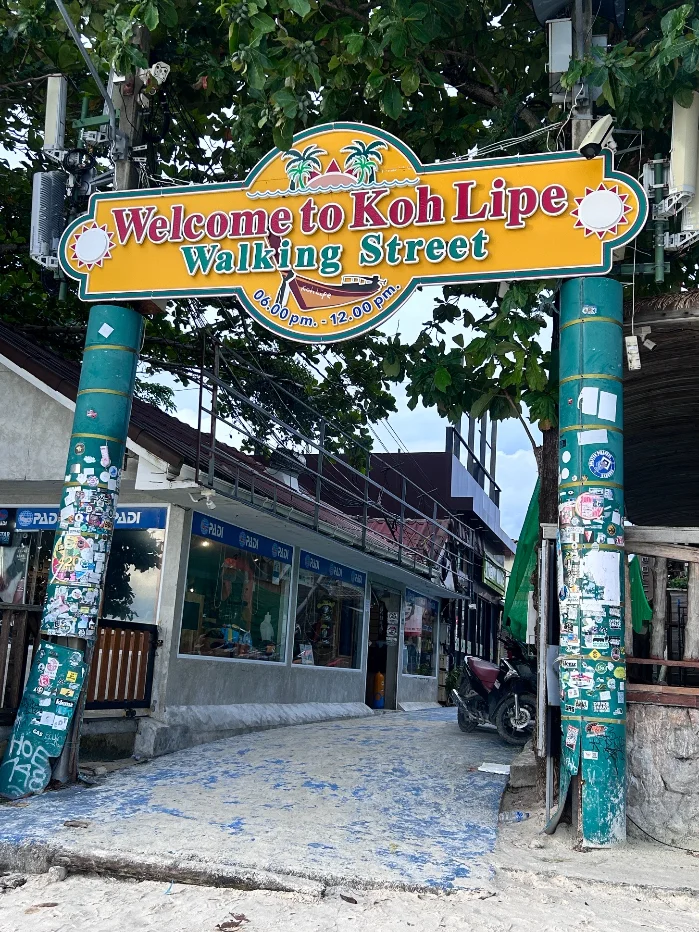
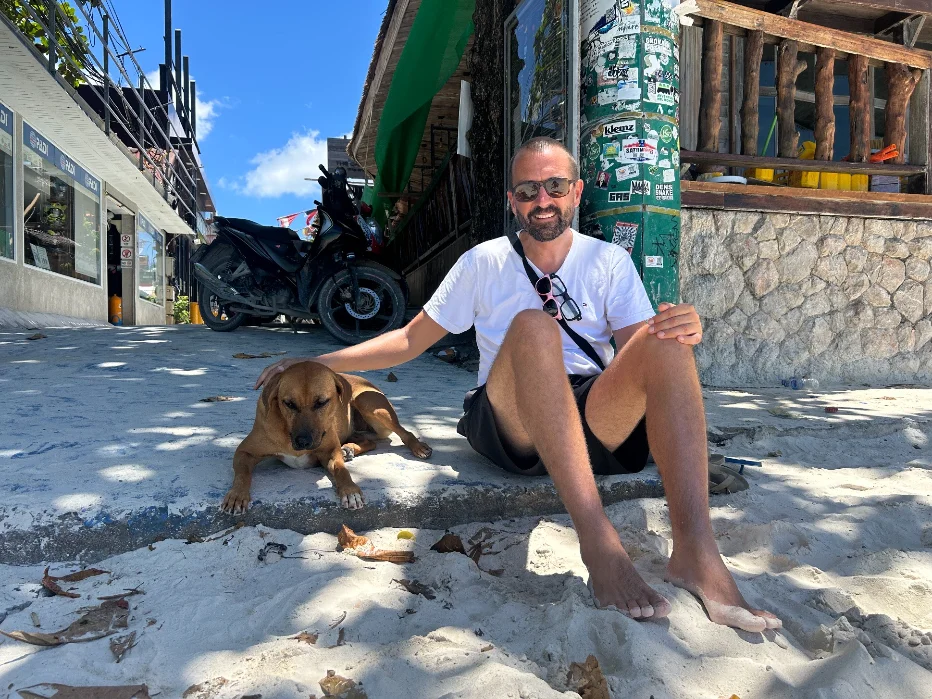 Walking Street, Koh Lipe — the dog is the traffic.
The knock-on effect is that nothing feels rushed. There’s no constant scooter traffic, no horns, no fumes. Walking Street — the main pedestrian strip — actually functions as a pedestrian street. Children play out front of the shops. Dogs sleep in the middle of the road. It’s the kind of island atmosphere people remember Thailand having 20 years ago, mostly because the geography here makes it harder to lose.
The people, and Madame Yoohoo
The locals on Koh Lipe are some of the friendliest I’ve met in the country. Most speak excellent English, which makes a real difference when you’re working out ferry times or asking a restaurant what’s good today. People take the time to actually answer.
You’ll probably meet Madame Yoohoo before anyone tells you who she is. She walks the beaches selling homemade Thai doughnuts, calling out “yoohoo, yoohoo… doughnuts!” in a voice you can hear from a hundred metres away. She’s built a small brand around the catchphrase, and she’s a genuine character — worth saying hello to even if you’re not buying.
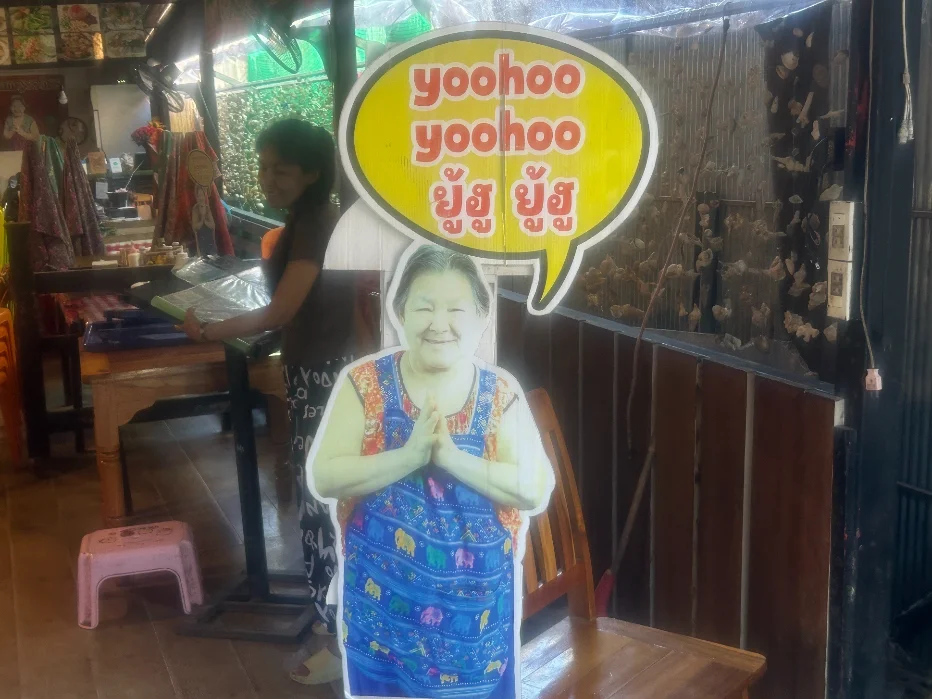 The Yoohoo Lady’s restaurant on Koh Lipe — the cardboard cutout has become a small island brand in its own right.
It’s also worth saying clearly: there’s no rip-off culture on Koh Lipe. Some things cost a bit more than mainland Thailand, but that’s logistics — fuel, fresh produce, building materials, all of it has to be brought in by boat. Add in the short operating season (most businesses run 7–8 months a year and have to make rent for 12), and the prices make sense. I’ve never seen a vendor or driver inflate a price on a tourist here.
What’s actually worth doing
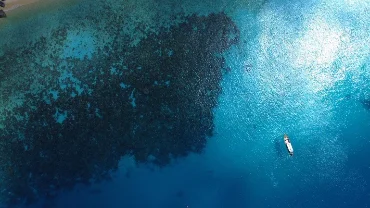
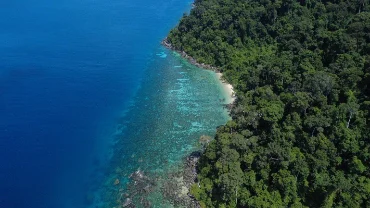
I’m biased, but I’d start with diving. The reefs around Koh Lipe sit inside Tarutao National Marine Park, which was established as Thailand’s first marine national park on April 19, 1974 and was named one of the inaugural ASEAN Heritage Parks in 1984. Visibility is generally excellent through the high season, and the dive sites range from gentle shallow reefs suitable for first-time divers to advanced pinnacles like 8 Mile Rock and Stonehenge for certified divers chasing pelagics.
 Whale shark at 8 Mile Rock — an advanced pinnacle inside the marine park, about 40 minutes by speedboat from Koh Lipe.
Beyond diving, two activities are genuinely underrated:
A full-day fishing trip. It’s reasonably priced, fun even if you’ve never fished before, and the boat crew prepares BBQ fish and sashimi from your catch as a beach picnic on Koh Adang.
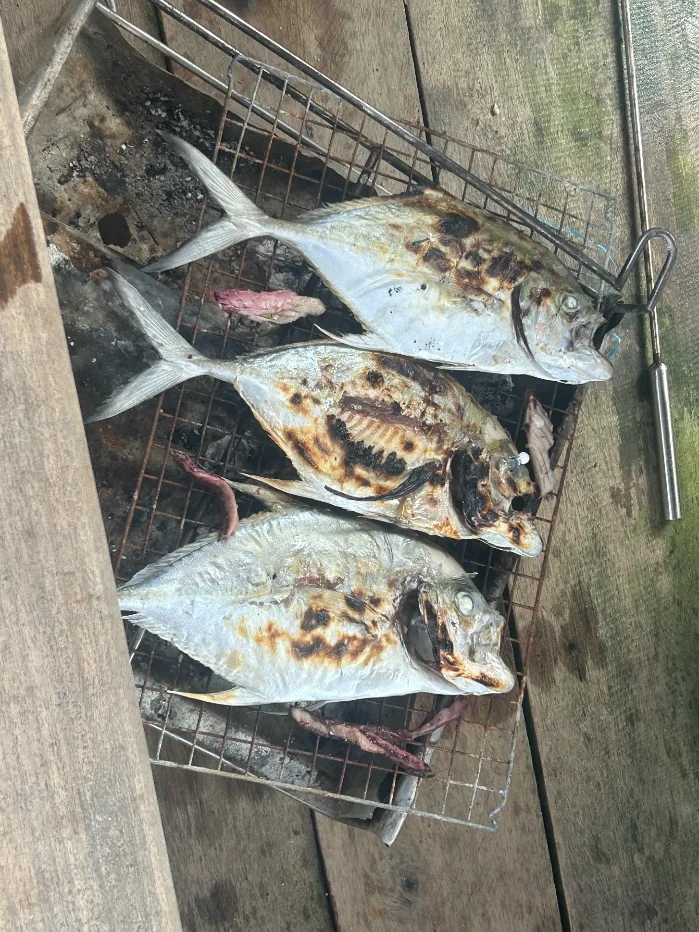 BBQ fish from the morning’s catch, prepared on the boat and served on Koh Adang.
Heads up: the picnic spot has a healthy monkey population that does not respect personal space.
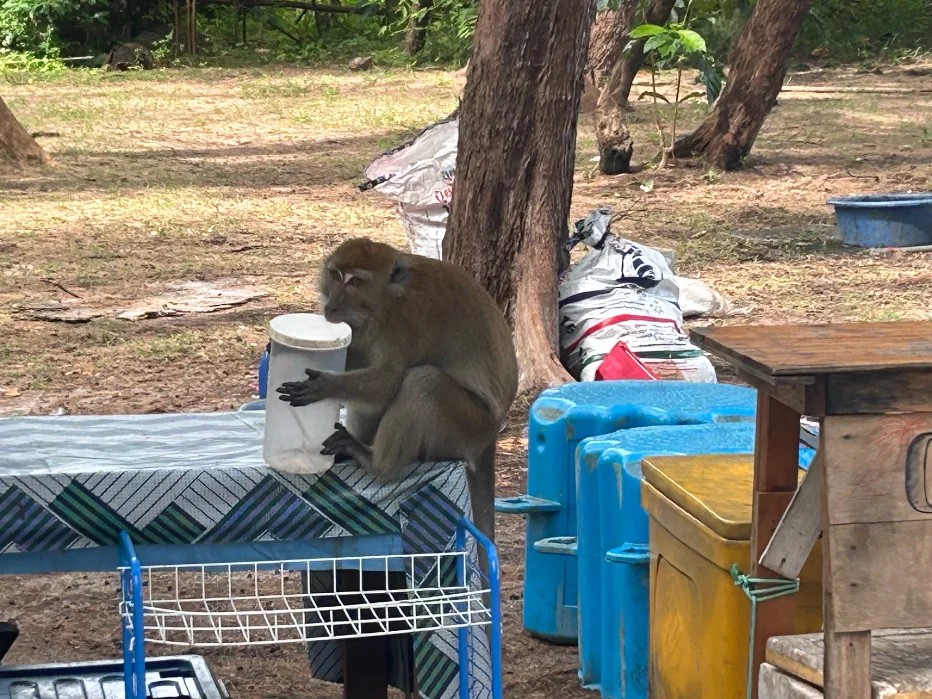 Koh Adang’s resident macaques — opportunists, not pets. We ate ours on the boat after one too many close encounters.
Bring proper sun protection — you’ll be on the water for six or seven hours.
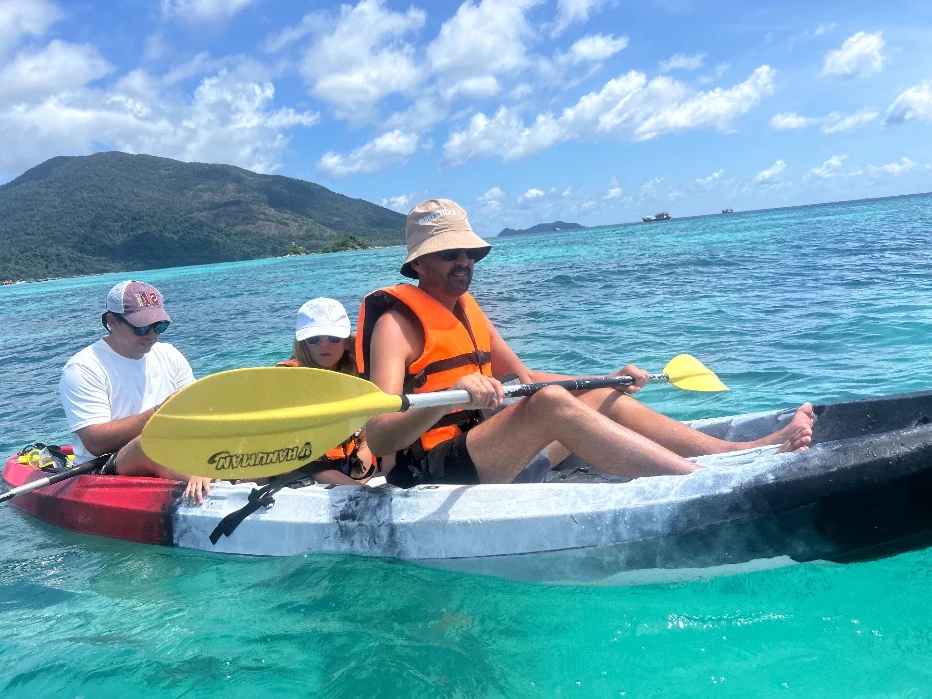
Kayak or paddleboard to the small islands off Sunrise Beach. The little uninhabited islands a short paddle from Sunrise have better marine life in their shallow water than the snorkelling directly off Koh Lipe itself, in my opinion. Take a mask, snorkel, and fins. Watch the currents — they pick up significantly when the tide is shifting, and a strong outgoing current with no fins is not a good time. Go in the morning or late afternoon when the water is calmer and the sun is softer.
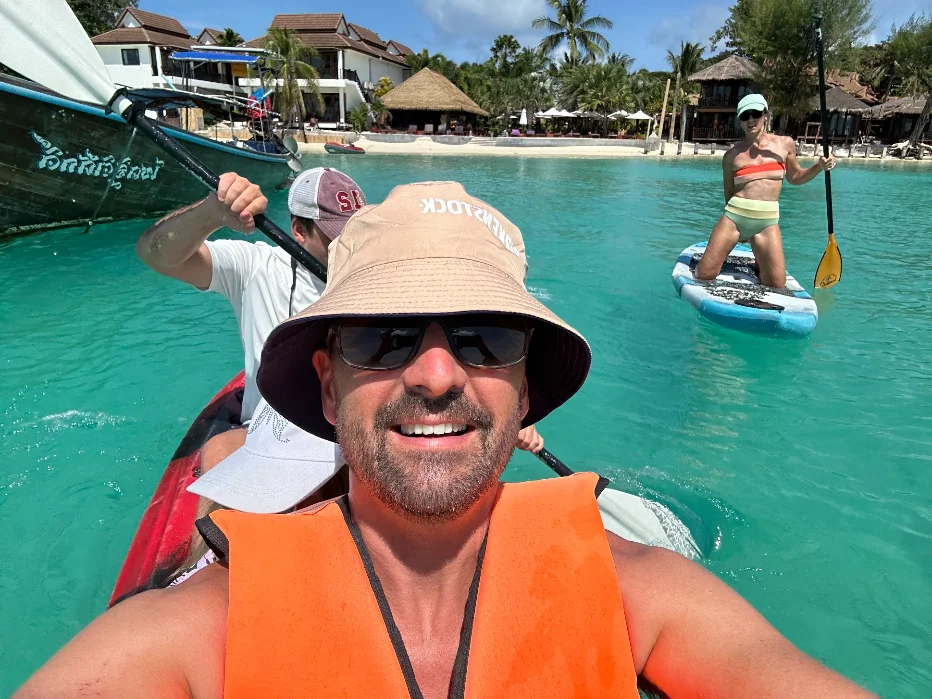 Heading out from Sunrise Beach — the small islands offshore are an easy paddle and snorkel better than the home reef.
Other things worth doing if you have the time: a half-day snorkel trip around the closer reefs, a sunrise walk along Sunrise Beach when it’s just you and the longtail boats, and a meal on Walking Street at one of the family-run Thai places (skip the obvious tourist menus). For a longer day on the water, the full-day snorkel trip covers six reefs across the Adang–Rawi archipelago.
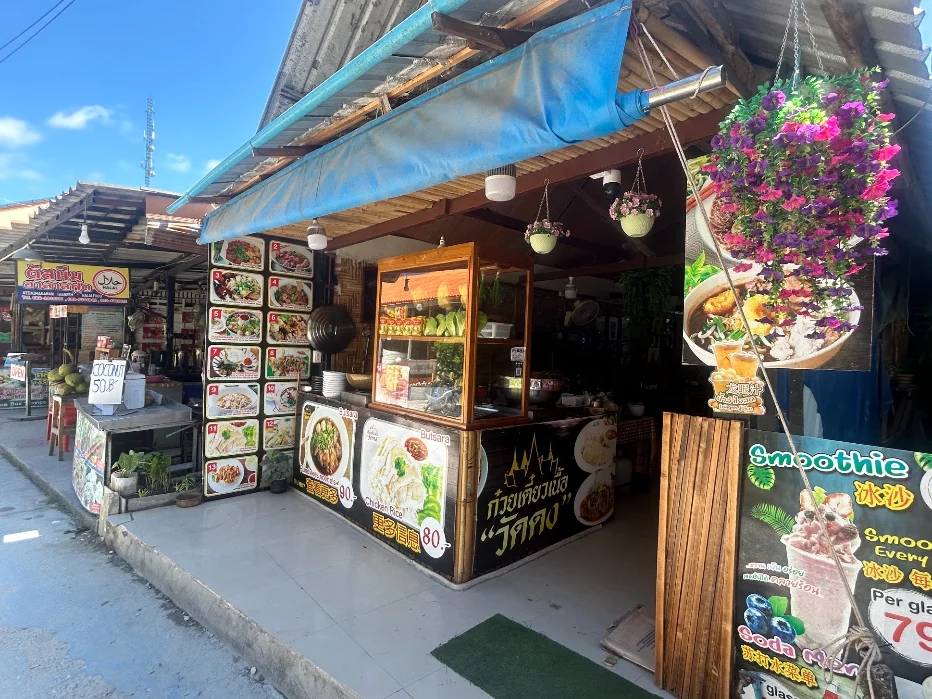 Butsara, Walking Street — the kind of place that’s better than the tourist menus on either side of it.
The diving, briefly
The reason I’d pick Koh Lipe over Koh Tao for diving comes down to the variety and the marine park protection. The reefs are healthier, the dive sites are more spread out, and there’s enough range to keep certified divers interested while still offering accessible sites for first-time divers and Open Water students.
Some sites are genuinely advanced — 8 Mile Rock and Stonehenge both demand AOW certification and decent buoyancy because of current and depth. Others, like Hin Ngam or parts of Koh Yang, are gentle enough for someone on their first ever fun dive. Anyone considering certifying while they’re here — the standard Open Water course takes about four days and is fair value compared to other parts of Thailand.
When to go (and when not to)
Most guides will tell you the high season is November to April. That’s accurate, but it isn’t the whole story.
My honest recommendation: aim for the shoulder months — October, or May into early June. Ocean conditions are still good, visibility is still strong, accommodation is meaningfully cheaper, and the crowds are noticeably thinner. You get the same island, often better, for less money.
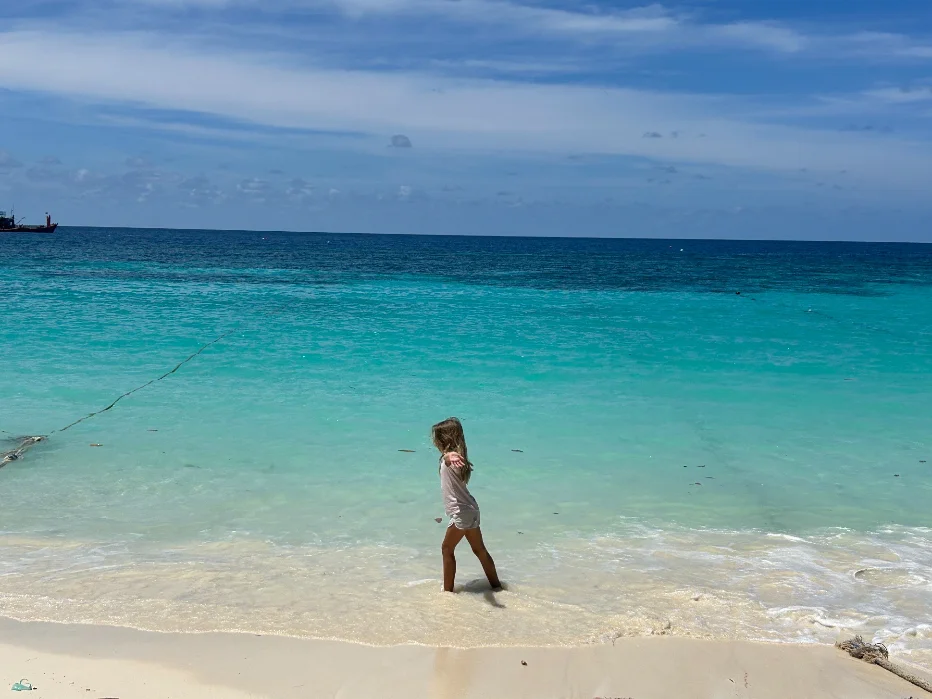 Pattaya Beach in high season — calm water, longtails on the sand, business as usual.
The window I’d actively steer people away from is July and August. Getting to the island becomes stressful. The seas are rough, the ferries from Langkawi and Phuket stop running entirely, and you can only reach Koh Lipe via Pak Bara pier on the Thai mainland, on a much-reduced schedule. If you do make it, the island is genuinely peaceful — many businesses are closed, but enough stay open to get by — and that’s a fine trip if you know what you’re walking into. Most people don’t.
A factual note that often gets confused: the Tarutao National Marine Park monsoon closure typically runs from mid-May through September 30, aimed at tourist safety and marine rehabilitation during the four-month monsoon season. Importantly, Koh Lipe itself is exempt and stays open year-round — it’s the only major island in the park that does. The closure affects most of the surrounding park islands (Koh Tarutao’s main accommodation, Koh Adang, and others) and shuts down most park-area dive and snorkel trips, which is why a July visit feels so different from a March one. Always check current closure dates before booking flights — exact dates are set annually by the Department of National Parks.
A quick note on costs
Koh Lipe is more expensive than mainland Thailand. Expect to spend more on accommodation, food, and transport than you would on, say, Koh Lanta or in Krabi. Two reasons:
- Logistics. Everything from drinking water to construction materials to cooking gas comes in by boat. The cost of bringing it shows up in every price.
- The short season. Operators have 7–8 months a year to cover 12 months of rent, salaries, and overheads.
That said, it isn’t a luxury island either. There’s a wide range of accommodation from basic fan bungalows to mid-range beach resorts, and the same restaurant on Walking Street can serve you an 80-baht plate of pad krapow or a 600-baht seafood plate depending on what you order.
Getting around once you’re here
To repeat the most common surprise: there are no rental motorbikes for tourists. Your options are:
- Walking. End to end is a 25-minute walk. Beach to beach is 10 to 15 minutes.
- Seleng taxi. Flat 50 baht per person, anywhere. They wait at the main beaches and along Walking Street.
- Bicycles. Some accommodations offer them, though sandy paths and the small size of the island make walking just as easy.
- Longtail boats. For getting between beaches at sunset or out to the small islands offshore, a longtail charter is reasonable.
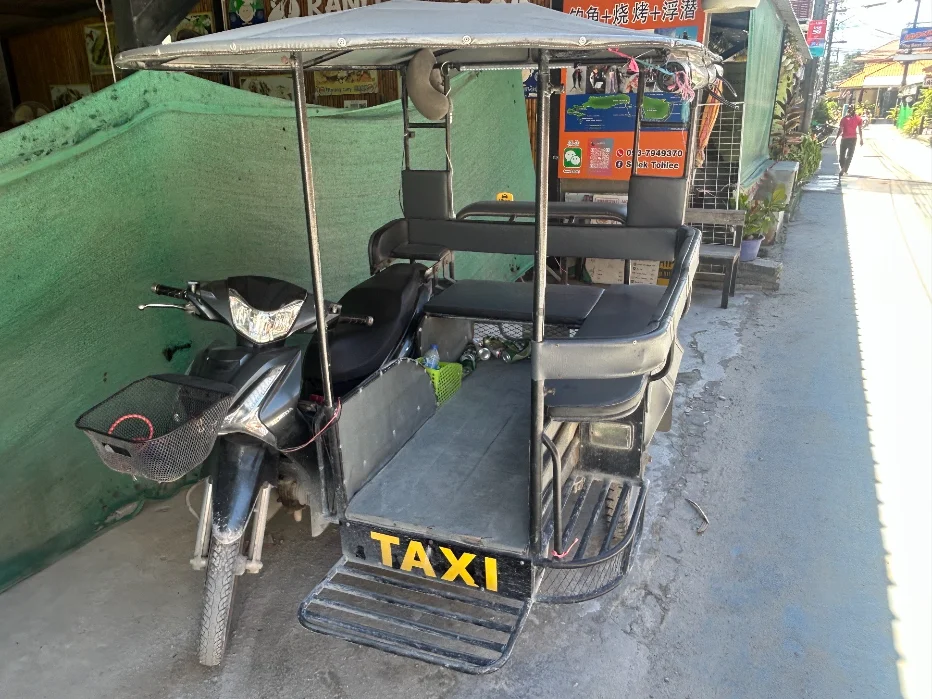 The seleng — open-sided pickup, bench seats, 50 baht anywhere on the island.
Pack accordingly: closed shoes for the rocky paths, sandals for everything else, and a rain layer if you’re travelling at the edge of the season.
Practical bits before you go
A few things people consistently get wrong before they arrive:
You can’t fly directly. The closest airports are Hat Yai (Thai mainland) or Langkawi (Malaysia). From either, it’s a transfer to a pier and then a ferry. Plan for a half-day of travel from Bangkok at minimum, and a full day if connections are tight. The most common route is a flight from Bangkok to Hat Yai, a 2-hour minivan to Pak Bara pier, then a 1.5-hour ferry to Koh Lipe.
There are ATMs, but bring cash anyway. The ATMs charge international cards a heavy fee, run out during peak season, and occasionally just don’t work. Land on the island with at least a few thousand baht in cash.
The mobile signal is patchy. Most accommodations have WiFi that works most of the time. Don’t plan on serious video calls.
The island runs on its own time. Restaurants close when the chef is tired. Boats leave when the captain says they leave. Roll with it — it’s part of the appeal.
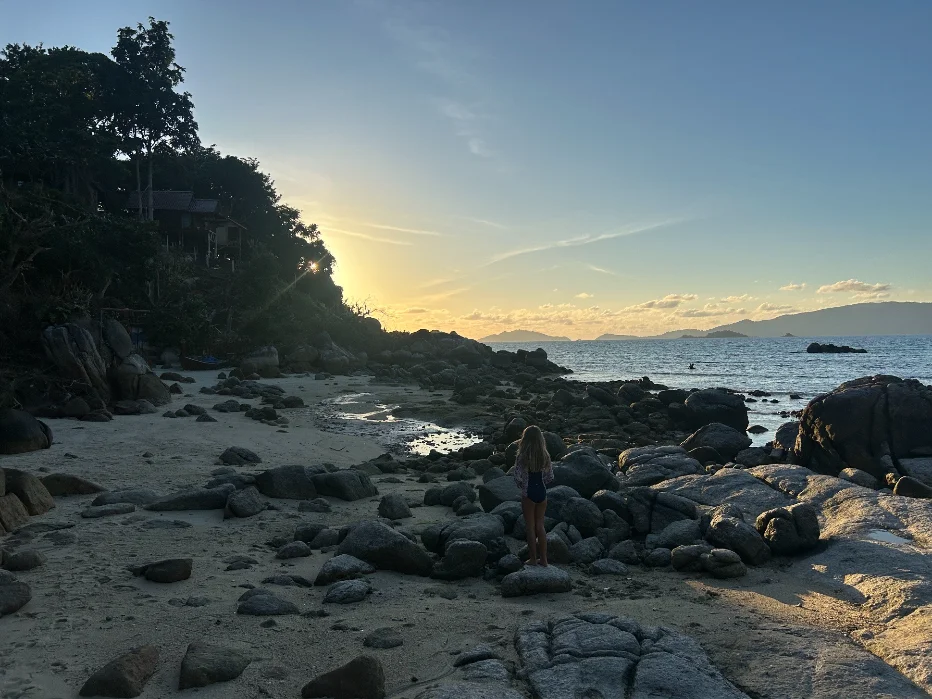
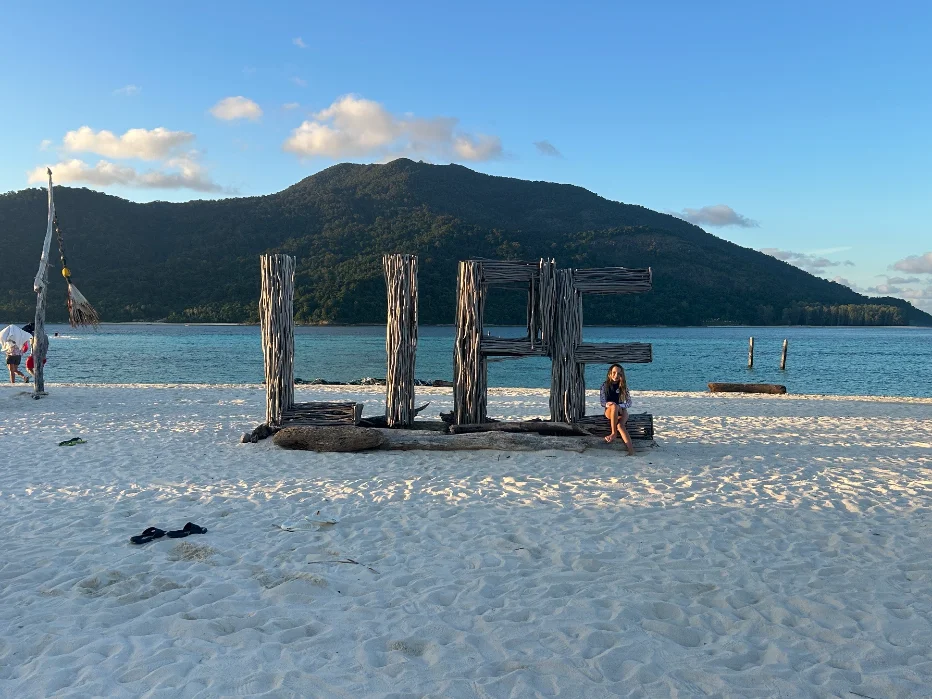
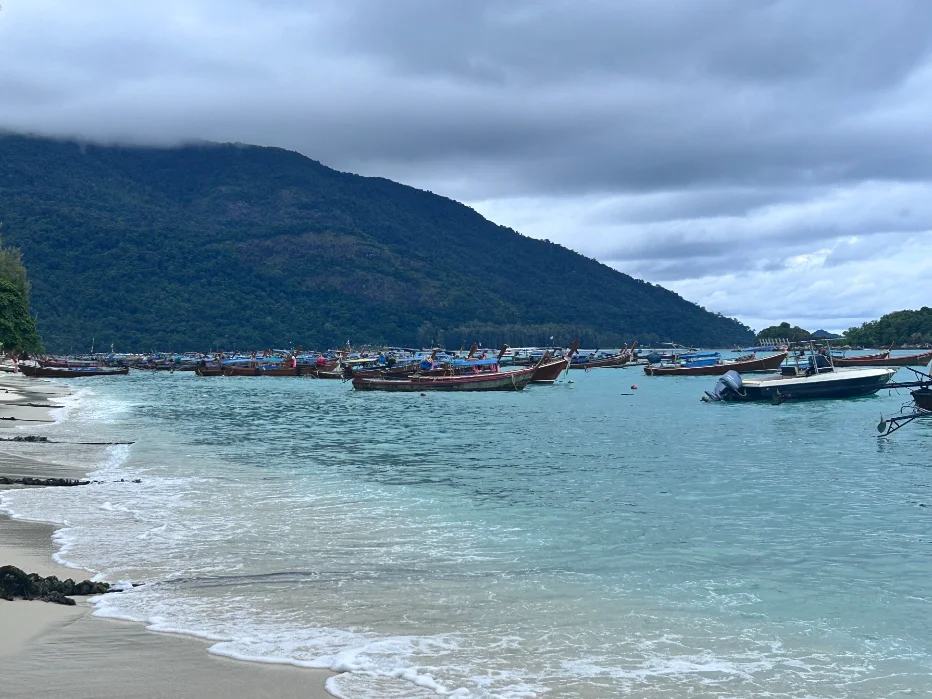 Sunrise Beach, just after first light — worth the early alarm if you want it to yourself.
A final thought
Koh Lipe isn’t the right island for everyone. If you want nightclubs, jet-ski rentals, and 24-hour 7-Elevens on every corner, you’ll be happier somewhere else. But if you want an island that’s small enough to walk across, friendly enough that the same vendor remembers your name on day three, and quiet enough to actually hear the waves at night — this is the one I’d send my own family to. And I do.