
What kind of trip suits Koh Lipe
Honest framing first: this isn’t an island for everyone, and the people who leave disappointed are usually the ones who arrived expecting something different.
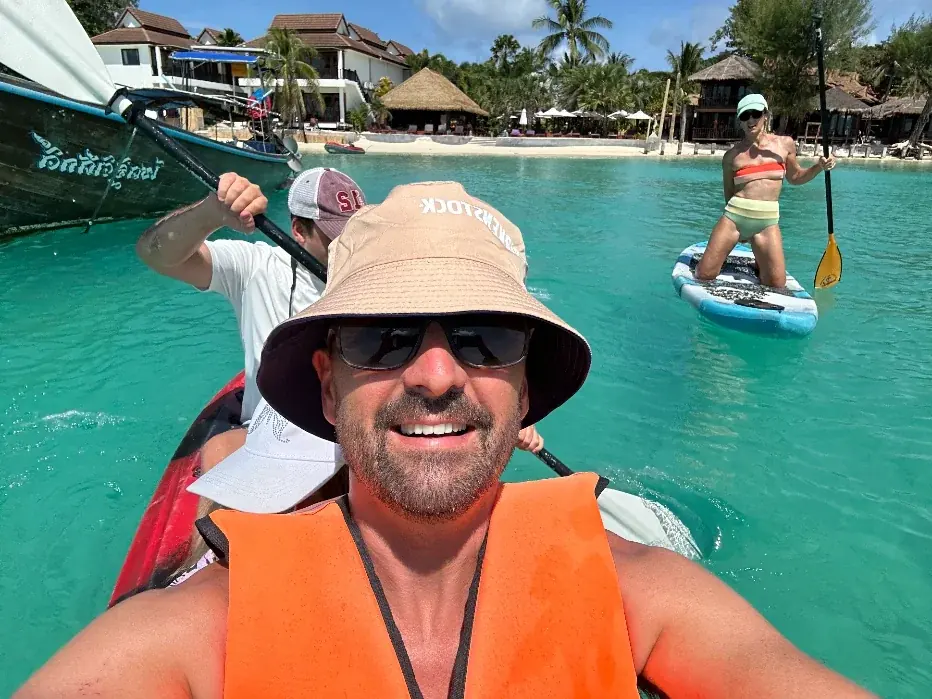
Koh Lipe suits people who want to seize the day. Most of the good stuff — diving, snorkelling, fishing trips, sunrise paddles — happens in the morning. The boats leave early. The reefs are calmest before lunch. If you’re up for an 07:30 pickup and on the water by 08:00, the island delivers. If you’d rather party until 4am every night and sleep until midday, you’re going to miss the best part of why people come here.
Koh Lipe doesn’t suit late-night clubbers. The island is small enough that noise complaints from hotels and resorts force most bars to wind up by midnight. There’s no real club scene — and there can’t be, geographically. If you want sprawling Thai nightlife, Phuket or Koh Phangan is the better call.
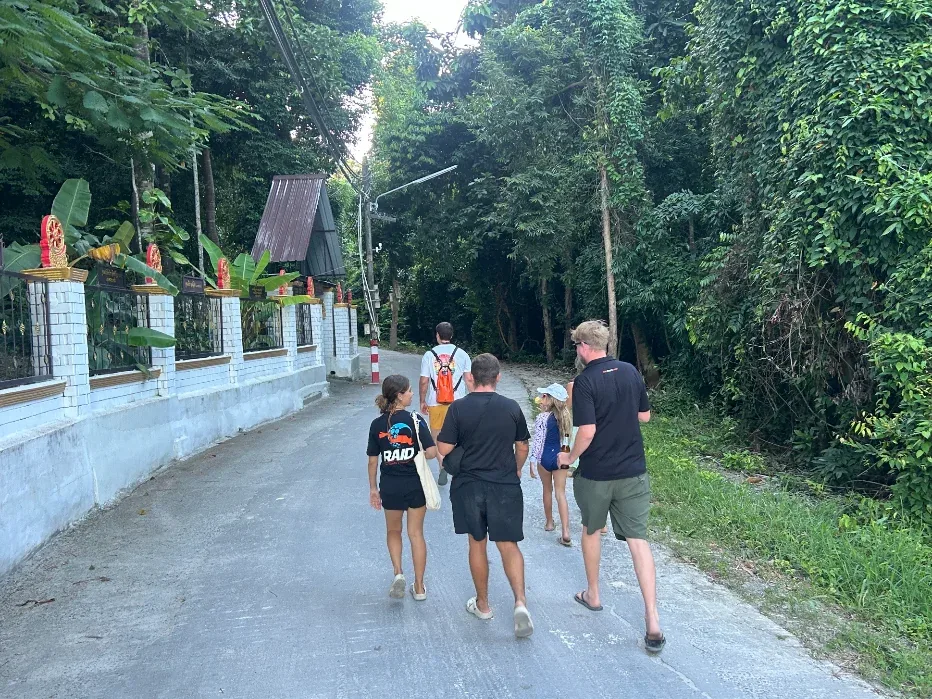
It suits couples, families with older kids, divers, snorkellers, and slow-travel solo travellers. The community is collaborative and easy to drop into.
It doesn’t suit families with toddlers and young kids. I’ll be honest about this because I’ve raised my own daughter partly across these islands. Children can’t scuba dive until they’re 10, and beyond ocean-based activities — snorkel, kayak, paddleboard — there’s not much specifically for small children to do. There’s no soft play, no theme park, no kid-focused activity centre. If your kid loves the beach and the water, they’ll be happy. If they need stimulation beyond that, three days starts to feel long.
It suits trips of 3–7 days. A week is enough to dive, snorkel, fish, work through the bars and restaurants, try a Muay Thai class or cooking class, and still have a couple of slow beach days. Beyond seven days, you really need to be the kind of person who’s happy doing nothing — and there are some of those, but it’s not most travellers.
A typical day on Koh Lipe
The island has its own rhythm, and it’s worth understanding before you book your accommodation.
Morning, before 11am. Quiet. The streets are empty. Most visitors are eating a slow breakfast at their hotel, divers and snorkellers are already on the water, and the cafes are open but unhurried. If you want a peaceful walk along the beach or a coffee without queues, this is the window.
Late morning to mid-afternoon, 11am–4pm. This is when the beaches fill up. People wander down for a swim, the cafes get busier, the day-trippers from Langkawi arrive on the late-morning ferry. Walking Street is still relatively quiet — too hot to wander.
Late afternoon to evening, 4–6pm. The boats start coming back. Divers and snorkellers wash off, head for sunset drinks, or nap before dinner. The light softens. This is when Sunset Beach earns its name.
Evening, 6–11pm. Walking Street comes alive. The temperature drops to walking-around comfortable, the BBQ seafood spots fire up the grills, the bars fill, the families come out. This is the busiest stretch of the day on the main strip.
After 11pm. Most places start to close. Bars wind up, kitchens stop taking orders, the last seleng taxis make their final runs. The exception is Maya Bar, which is tucked off the main back road from the pier — far enough from accommodation to stay open late. It’s where local workers and dive instructors gravitate after their shifts. If you want to mix with the people who actually live and work on the island, this is where you’ll find them.
The Sports Bar full moon party. Once a month, around the full moon, the Sports Bar runs its own version of the famous Thai full moon party. Live music followed by DJs, going until around 4am. It’s a tamer, more contained version than the Koh Phangan original — which is part of its charm. If your trip lines up, it’s worth a late one.
On 7-Eleven: yes, Koh Lipe has them, and they’re 24-hour. But unlike the 7-Elevens in Thailand’s bigger party towns, they aren’t full of drunk tourists at 2am. They’re more of a haven for ice-cold air conditioning and the rare late-night snack run.
The community
The social texture on Koh Lipe is one of the better things about the island, and it’s not what most visitors expect.
There’s a large expat community — a real mix of cultures. People from across Europe, the Middle East, and the Americas. Some are business owners (dive shop owners, restaurant operators, hotel managers), some are seasonal workers passing through, some have settled in for the long haul.
There’s a large Thai community too — both people born on Koh Lipe and people from the mainland who’ve come for tourism work. The traditional Chao Lay (sea gypsy) community has been here longest, and elements of their culture still shape the island’s character.
The general vibe is collaborative. When I set up my dive operation here, both Thai locals and expats went out of their way to make me feel welcome — sharing contacts, explaining how things work, helping with practical problems. That’s not a universal experience setting up a business in Thailand, and it speaks to the character of this particular island.
Solo travellers find their crew through diving. This is the most reliable route into the social scene if you’re travelling alone. The dive centres each have their own little post-shift social scene, and the staff and customers tend to mix freely. You arrive on Tuesday for a try dive, you’ve got 10 new acquaintances by Wednesday evening. Hostels are also good for this, but with diving you’ve already got common ground.
Seasonality matters. The vibe in high season (December to April) is different from low season. In high season, people are busy — locals are working, businesses are at full tilt, no one has much time for a long chat. In low season, the year-round residents are more relaxed and have more time for conversation. If you specifically want to get to know the island’s permanent community, the shoulder months are better for it.
The activities — what to actually do
Muay Thai — Bonus Muay Thai with Kru Mai
If you do one fitness activity on Koh Lipe, make it this. Bonus Muay Thai with Kru Mai is one of the most rewarding training experiences I’ve had on the island, and I’ve taken Muay Thai classes elsewhere in Thailand to compare against.
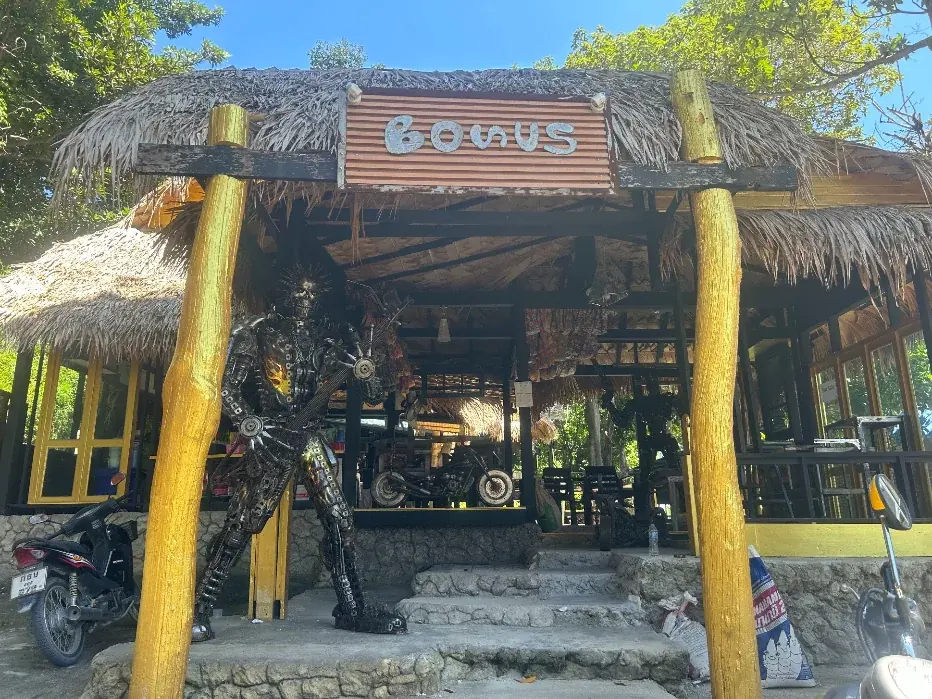
What makes Kru Mai stand out:
- Expert instruction. He knows exactly when to push and when to ease up — the kind of read on a student you’d expect from a Bangkok gym, not a small-island trainer.
- Personalised approach. He adapts every session to your fitness level and experience. Beginners get welcomed and supported; experienced students get challenged.
- Authentic technique. Traditional Muay Thai, not watered-down tourist boxing.
- The setting. Training with ocean views in the background.
What impressed me most was his ability to read students and adjust accordingly. He pushed me when I needed motivation and recognised when I was approaching my limits. It’s the kind of expert instruction you’d expect at a serious mainland camp, not on a small island.
Suitable for: complete beginners (one-off class, see what it’s about), fitness travellers (multi-session blocks), and serious practitioners (proper training).
Thai cooking class — Pirate Kitchen
Thai cooking classes are everywhere in Thailand, and most are perfectly fine. The one at Pirate Kitchen on Koh Lipe is more comprehensive than I expected, and worth doing here rather than waiting until Bangkok or Chiang Mai.
What makes it work:
- Menu-based learning. You cook three actual dishes from the restaurant’s menu — not a tourist demonstration plate.
- Hands-on instruction. Active participation, not watching a chef show off.
- Authentic techniques. Traditional Thai methods, not shortcuts.
- Take-home skills. You leave with recipes and the technique to actually make them at home.
- Pricing. 2,500 baht minimum for two people, with the per-person cost dropping for larger groups.
What I appreciated most was learning the reasoning behind ingredient combinations — why fish sauce works with palm sugar, why lime juice goes in last, what each curry paste is actually trying to do. It’s not just following recipes; it’s understanding Thai flavour profiles enough to cook properly after you leave.
Paddleboard and kayak
Paddleboarding is genuinely popular on Koh Lipe and worth a session even if you don’t have a specific destination in mind. Sunrise Beach is the main launching spot — boards and kayaks are easy to rent from spots along the sand.
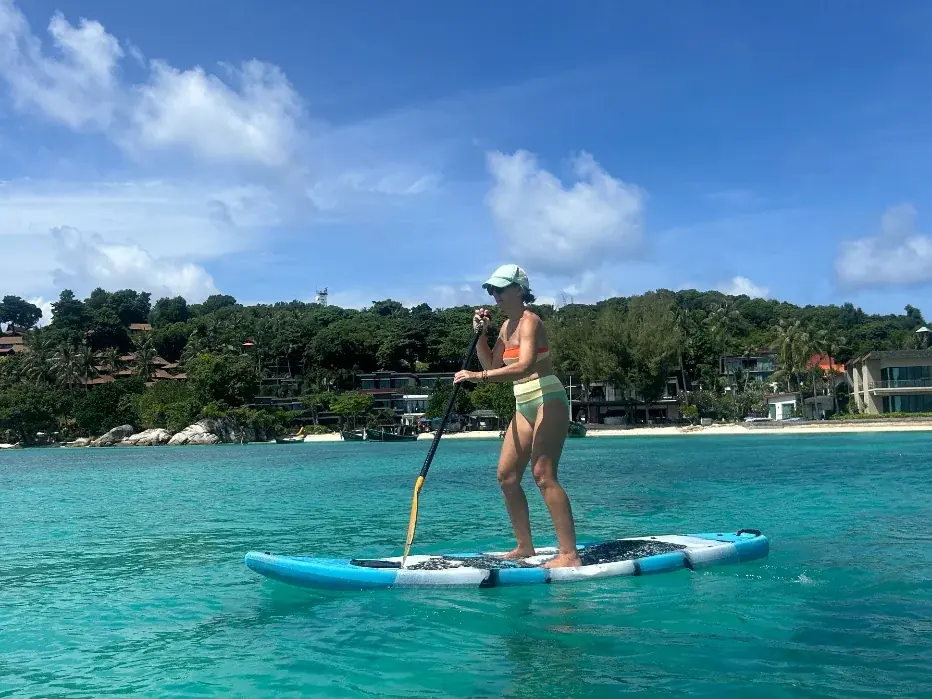
The standout move, as covered in the snorkelling article, is paddling out to the small uninhabited islands off the east end of Sunrise Beach (past Mali Resort) for the snorkelling around them. Take a mask, snorkel, and fins, watch the currents, go in the morning.
For just-paddling sessions without snorkel kit, longer cruises along the shoreline of Koh Adang are a beautiful slow-morning option. Calm water, no boat traffic, big island scenery.
Island hopping — two different versions
“Island hopping” on Koh Lipe means one of two genuinely different things, and it’s worth knowing which one a tour is offering before you book.
Version 1 — Tarutao National Park snorkel tour. This is what the full-day snorkel trip is doing in practice — visiting uninhabited islands within the marine park (Koh Adang, Koh Rawi, Koh Hin Ngam, etc.). It’s labeled “island hopping” by some operators, but it’s really a snorkel tour with shore stops.
Version 2 — Inhabited-island Andaman hopping. A genuinely different concept. You build a multi-island itinerary by speedboat: starting in Langkawi, heading up to Koh Lipe, then on to Koh Kradan, Koh Lanta, the Phi Phi Islands, and Phuket — with a few smaller stops in between. The whole route is connected by speedboat, and it lets you sample the full Andaman archipelago on a single trip rather than committing to one island.
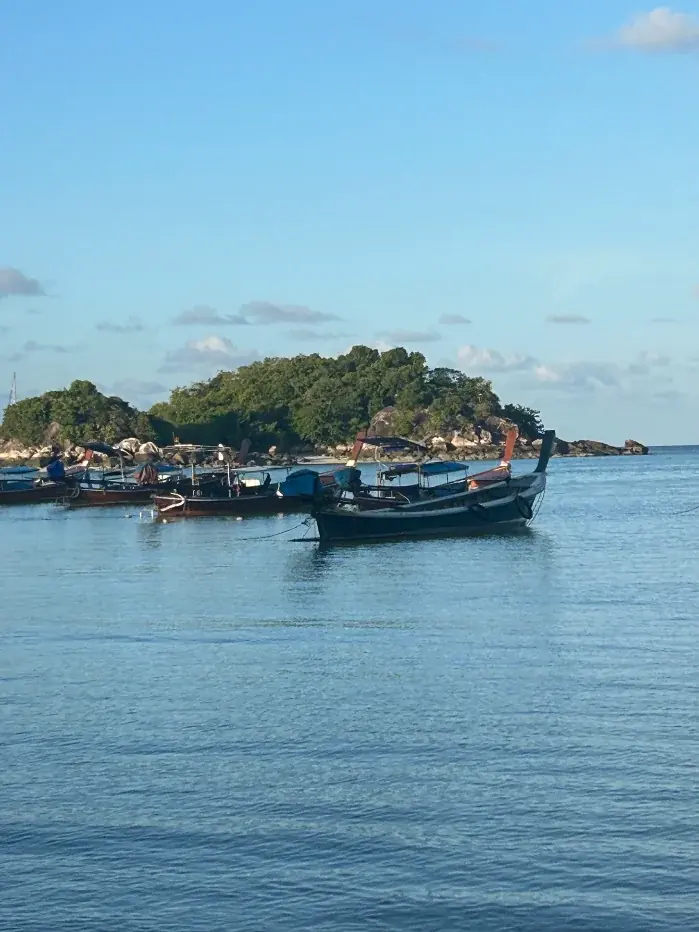
This version of island hopping is one of the great Southeast Asian travel itineraries, and Koh Lipe is genuinely one of the highlights of it. Worth thinking about if you’ve got two weeks rather than five days.
Wellness — yoga, gym, and spa
Koh Lipe has a wellness scene, but it’s not a wellness destination in the way Koh Phangan is. If retreats and 21-day cleanses are what you’re after, this isn’t your island. If you want a few good yoga classes, a competent gym session, and a genuinely excellent spa during a wider holiday, you’re well covered.
Yoga — Castaway Resort
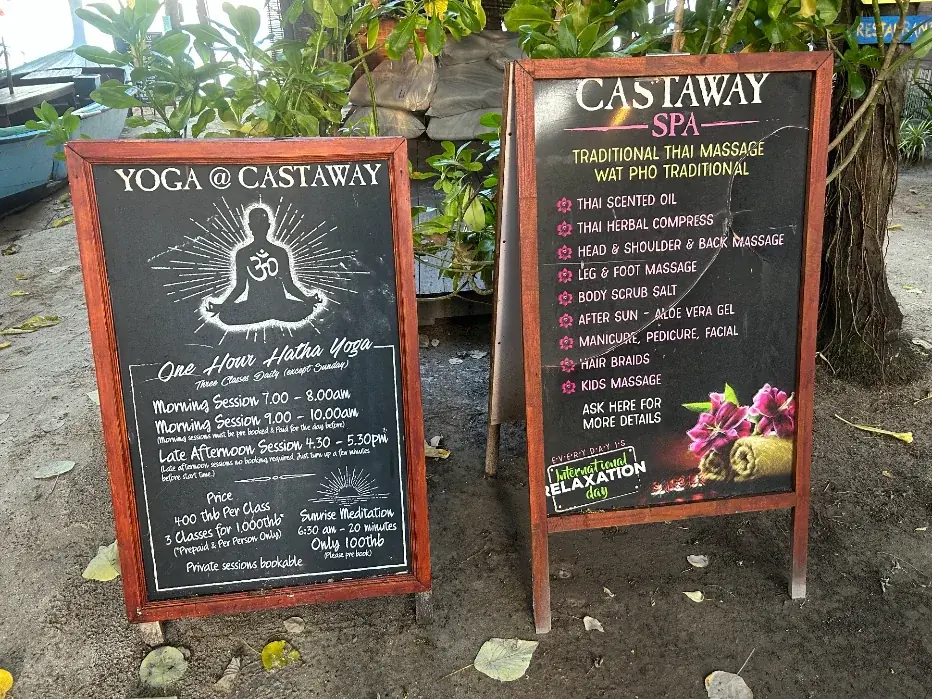
Morning yoga at Castaway Resort on the north of the island is the call. The location matters: it stays cool until around 10am because of the position, which makes the morning practice properly enjoyable rather than a sweaty endurance test. Walk-in classes are available without staying at the resort.
Gym — Idyllic Concept Resort
For a proper gym session, Idyllic Concept Resort has the best-equipped facility on the island. Day passes are available without being a guest. Air-conditioned, well-maintained equipment, the kind of space that makes you want to actually train rather than tick a box.
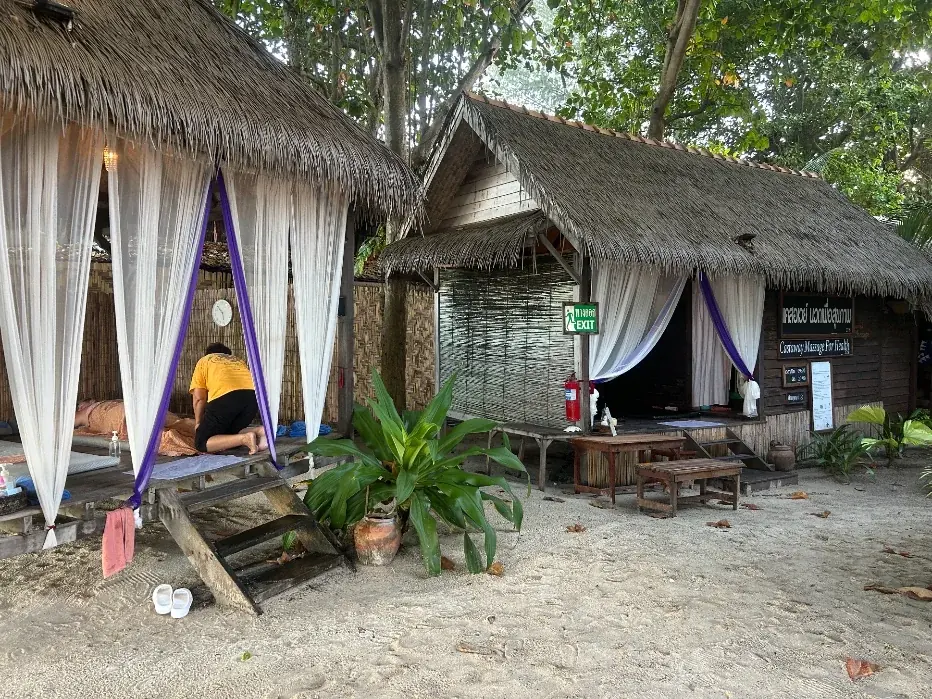
Spa — Irene Spa at Idyllic Concept Resort
My favourite spa experience on Koh Lipe is Irene Spa, also at Idyllic Concept Resort. What makes it special isn’t just the treatments — it’s the entire setting:
- Jungle setting. Tucked away in tropical surroundings, properly serene rather than hotel-corridor-with-treatment-rooms.
- Atmosphere. Chillout music, natural sounds, the kind of environment that drops you into the right headspace before the therapist even starts.
- Couples packages. Synchronised treatments — facial and foot massage combinations — in private settings. Genuinely well-designed, not just two beds in one room.
- Professional treatments. Skilled therapists, proper products.
- Pricing. Massages start around 800 baht, packages from 1,500 baht. Premium for Thailand, fair for the quality.
The couples package is the standout. You and your partner get a private experience that feels worlds away from the beach crowds — and on a small island, that kind of separation is harder to find than you’d think.
Working from Koh Lipe — the honest take
I’ll give you the realistic version because too many Southeast Asia “digital nomad guides” oversell this island.
Koh Lipe isn’t a great digital nomad base. I wouldn’t recommend it as somewhere to set up for a month of remote work. The reasons are practical:
- Cafe options are limited. Lipe Lab, the best coffee on the island, isn’t air-conditioned and isn’t the laptop-for-three-hours kind of space. The only air-conditioned cafe outside the resorts that I can think of is Harmony Cafe, and even that doesn’t have the comfortable settle-in-and-work atmosphere most digital nomads want.
- WiFi is patchy. Most accommodations have it, most of it works most of the time, but you wouldn’t plan on serious video calls.
- The infrastructure isn’t built for nomads. Compared to Chiang Mai, Bangkok, or even Koh Phangan, Koh Lipe doesn’t have coworking spaces, nomad meet-ups, or the support systems that make full-time remote work easy.
If you do need to work while you’re here, the best move is to set up in your resort room. Most have a desk; most have decent WiFi inside the room; if it gets too warm indoors, sit on the balcony under a fan. Treat it as “able to clear urgent emails for an hour or two” rather than “remote-work-capable for the duration.”
The right way to think about Koh Lipe and work is as the island where you take a few days off work, not the island where you take work to. That’s where it shines.
Longer-stay practicalities
If you do want to stay on Koh Lipe beyond the typical 3–7 day trip, here’s the honest breakdown.
Long-term accommodation is expensive and hard to find. Prices are noticeably higher than most of Thailand for monthly rentals, and inventory is genuinely limited — most properties are configured for short tourist stays rather than monthly tenants. June to October is the better window if you’re hunting for long-term rentals — once the seasonal workers leave the island, more options open up at more reasonable rates.
Visa runs and extensions. The Koh Lipe immigration office handles 30-day extensions on tourist visas (1,900 baht, around half a day’s process). For more substantial visa work, you’ll need to head to the mainland — typically Hat Yai or further afield.
Gym access. Day passes at Idyllic Concept Resort work for one-off sessions; ask about monthly arrangements directly with the gym if you’re staying longer.
Groceries. The 7-Elevens cover the basics. Beyond that, the small island shops carry fresh produce, meat, and fish at slightly higher-than-mainland prices. Variety is limited compared to Bangkok or even Krabi — don’t expect a full Western supermarket.
Medical and dental. Limited — Koh Lipe has a clinic and a dentist, but for anything substantial you’ll need to travel to Hat Yai or back to the mainland. The hospital page has the details.
Schools. This is where it gets genuinely difficult for expat families. There are no international schooling options on Koh Lipe — which means if you’re considering settling here with school-age children, you’re looking at sending them to a Thai school. My own daughter Olivia spends most of her time on Koh Tao with her mother, where she goes to school, and only joins me on Koh Lipe for a few weeks at a time. That’s the realistic picture for foreign families.
Family-friendly side — the realistic version
I want to be honest about this because I’ve raised my own daughter across these islands.
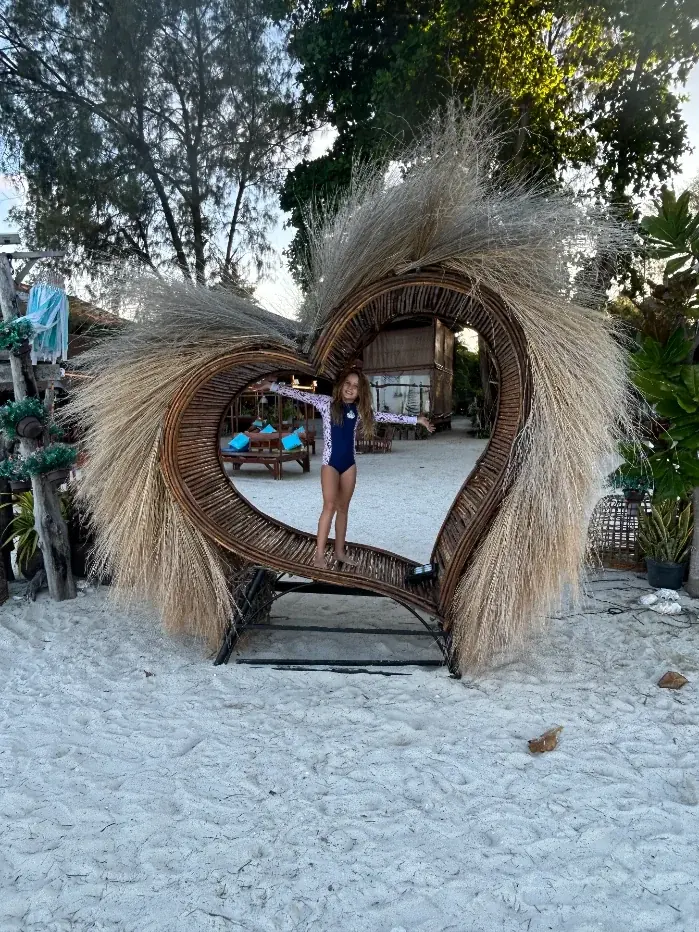
Koh Lipe works well for families with kids who love the water. If your kid is happy snorkelling, swimming, kayaking, or learning to scuba dive (from age 10 with Junior Open Water or Cadet Try Dive earlier), Koh Lipe is genuinely brilliant. The water is warm, the marine park reefs are healthy, the operators are used to working with children, and the no-cars rule means you can let kids walk around in safety you’d never get on a Phuket high street.
It’s harder for younger kids who don’t yet love the water. There’s no soft play, no theme park, no kid-focused activity centre. Beyond ocean activities, the entertainment is limited. Three days is fine. Seven days starts to feel long if your kid isn’t ocean-keen.
Restaurant scene is family-welcoming. Most Walking Street places are happy to accommodate kids, the food is generally child-friendly, and the no-traffic strip means you can let them roam a few metres ahead without panic. The BBQ seafood places are particularly relaxed about families.
Beach safety. Generally good. The main beaches are gentle and shallow at low tide. Watch for boat traffic close to shore (the same issue I flagged in the snorkelling article applies to kids in the water), and watch for currents at the channels between islands.
The seasonal personality shift
The vibe on Koh Lipe in high season is genuinely different from the vibe in low season, and it’s worth knowing which version you’re signing up for.
High season (December to April). Packed with tourists. Locals and expats are working flat-out. Restaurants are full, bars are busy, the streets are alive every evening. People don’t really have time to stop and chat — everyone has a shift to get to or a boat to load. Excellent if you want energy, atmosphere, and the full range of operators running at full tilt. Less good if you want to actually get to know the people who live here.
Low season (June to October). A different island. Most seasonal workers have left. The year-round residents — local Thai families, the expats who’ve committed to the place, the dive shop owners who stay open all year — are far more relaxed. They’ve got time for a longer conversation, time to sit and have a beer with you, time to actually exist outside the work cycle. Many businesses are closed, which is a downside. But if your goal is to understand Koh Lipe rather than just visit it, low season is when the island shows itself most honestly.
The shoulder months (October–November and May–early June) are the sweet spot — most operators still running, prices coming down, crowds thinning. I covered this in the Koh Lipe overview article, and it’s still my honest recommendation.
A final thought
The version of Koh Lipe most people experience is the one that fits into a 3–4 day stop on a wider Thailand trip — beach, snorkel, dinner, repeat. That version of the island is great, and it’s why most visitors come.
But there’s a deeper version, and you find it by leaning into the lifestyle rather than the activity menu. Train Muay Thai at Bonus a few mornings a week. Cook a Thai meal at Pirate Kitchen and learn why the flavour profile works. Take a couples spa session at Irene Spa. Drink a takeaway cocktail from Lipe Lab on the beach as the sun goes. Talk to the dive instructors at Maya Bar after midnight. Join a Save Koh Lipe beach clean-up on a Monday morning.
You’ll come back with a different sense of why people stay here. That’s worth a few extra days, in my view.