
The honest truth about getting to Koh Lipe
Koh Lipe is a small island in the far south of Thailand, almost on the Malaysian border. It’s nowhere near Bangkok. It’s nowhere near Phuket. There’s no airport, and there can’t be one — the island is too small.
That geography defines every trip in. Whatever route you take, it’ll involve at least one mode of transport you weren’t expecting (a minivan dropping you on a highway shoulder, a longtail boat ferrying you the last 100 metres to the beach, a passport check at a folding table in the sand). It’s not a hop. It’s a journey.
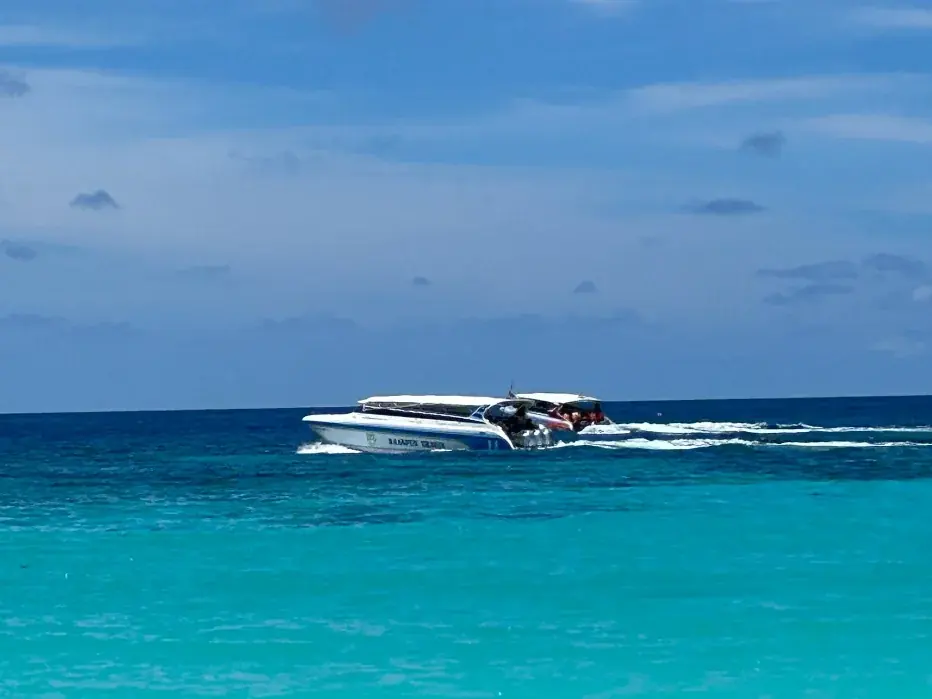
Here’s a story to set expectations. I travel regularly between Koh Tao and Koh Lipe — both islands I run dive operations on. I’ve actually calculated, with the timing right, that I can get from Koh Tao to Scotland faster than I can get to Koh Lipe. The Koh Tao trip involves a night ferry, a minivan that drops you on the side of a highway, what looks like a private car (an old man driving slowly) to Pak Bara, and a final speedboat to Lipe. The funny thing is they make it work — they take a photo of you in Surat Thani and WhatsApp it to the highway driver who’s coming to collect you. It looks thrown together. But you do arrive.
That’s Koh Lipe travel in one sentence: looks held together with string, somehow gets you there.
So my real first piece of advice for any of these routes: if you have the time to break the journey somewhere in the middle — do it. Koh Lipe rewards a fresh arrival, not a 14-hour ordeal arrival.
From Bangkok — the most common route
Most international visitors fly into Bangkok, so this is the question I get asked most. Two real options: fly to Hat Yai, or take the overnight train.
Option 1: Fly to Hat Yai (recommended)
The simplest route is a domestic flight from Bangkok to Hat Yai International Airport (HDY), then a 2-hour minivan transfer to Pak Bara pier, then a 1.5-hour speedboat to Koh Lipe. Multiple airlines fly the Bangkok–Hat Yai route — AirAsia, Thai Lion Air, Nok Air, Thai Airways. Tickets typically run 1,000–2,500 THB depending on how early you book.
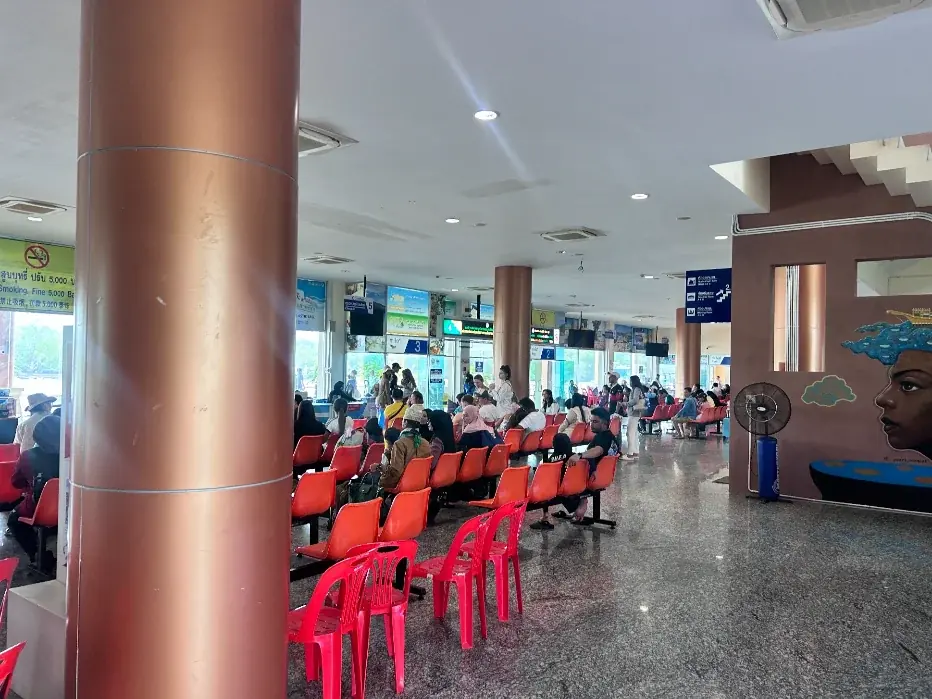
The critical timing rule for this route:
The last ferry from Pak Bara to Koh Lipe leaves around 3pm. The transfer from Hat Yai to Pak Bara takes about two hours. You need to land in Hat Yai by midday to make the last ferry comfortably — earlier if you want any margin for delays.
If your flight lands at 2pm or later, you’re not making it to Koh Lipe that day. Best case: stay overnight in Pak Bara (basic options) or back in Hat Yai (better choice — better food, more comfortable accommodation). Worst case: missed connection panic, paying through the nose for an emergency private speedboat charter, or sleeping at the pier.
Book the earliest flight you can. A 6:30–7:00 AM Bangkok departure puts you in Hat Yai by 8:30 AM, giving you plenty of buffer for the road transfer and the 11:30 AM or 1:30 PM ferry slots.
Full Bangkok to Koh Lipe page →
Option 2: Overnight sleeper train to Hat Yai
If you’d rather not fly — or you’re travelling on a smaller budget — the overnight sleeper train from Bangkok to Hat Yai is genuinely fine. Trains depart from Krung Thep Aphiwat Central Terminal (formerly Bang Sue Grand Station). The journey takes 14–16 hours on a sleeper berth, and second-class sleeper tickets are a fair bit cheaper than flying.
The catch: the train arrives in Hat Yai around 5am, before the minivan transfer services to Pak Bara start running (most go from 8am to coincide with ferry departures). You’ll have a 2–3 hour wait at Hat Yai station with limited food options.
Upside of this scheduling, though: zero risk of missing the ferry. You roll into Pak Bara by mid-morning, easily making the 11:30 AM speedboat. For travellers who like the slower pace, the train route is genuinely pleasant — better sleep than a budget flight, no early-morning anxiety, and you wake up in southern Thailand.
What you don’t want to do
Don’t take the overnight bus. Possible, much cheaper than other options, but Thai overnight buses are unreliable, the seats are uncomfortable for 14 hours, and you’ll arrive shattered. Save the money on the train instead.
Don’t try to combine multiple stages with no buffer. Tight connections in Thailand fail more often than they don’t. Build in slack.
From Langkawi (Malaysia) — the international route
If you’re coming from the south — already in Malaysia, or planning a Thailand–Malaysia combo trip — Langkawi is genuinely the best route in terms of speed. International flights into Langkawi International Airport, then a direct ferry to Koh Lipe.
The ferry takes about 90 minutes. Two departure piers in Langkawi: Telaga Harbour Marina (closer to the airport, recommended) and Kuah Jetty (closer to Kuah town). Both arrive at Pattaya Beach on Koh Lipe, where you clear Thai immigration on the sand right at the beach.
The immigration process is genuinely streamlined for an international border crossing — your passport is collected on the ferry and stamped by Thai officials when you reach the beach. You’ll also pay the 200 THB Tarutao National Marine Park fee at the same checkpoint.
Critical: this route is seasonal. Ferries operate from late October to end of May. Outside that window, the direct ferries stop entirely.
Critical buffer rule for Langkawi: if you’re connecting to or from a flight at Langkawi airport, allow at least 4–5 hours of buffer between the ferry and the flight. The Andaman crossing is weather-dependent and can run late.
Full Langkawi to Koh Lipe page →
One important update for 2026 — the immigration situation
Heads up: there’s an unresolved development that could change the Langkawi route. I heard this year that authorities were considering removing the immigration facility from Koh Lipe. If that goes ahead, anyone travelling from the south would have to transit through mainland Thailand (Satun) first — adding significant time and expense. The immigration office consulted with island businesses at a meeting in mid-April 2026. As of writing this, it’s not 100% confirmed either way — but it’s something to verify before you book if you’re planning a Langkawi route.
The historical pattern is already worth knowing: the Koh Lipe immigration office only operates while the Langkawi ferries are running (October to end of May). In low season, foreign arrivals from Malaysia have always had to come via Tammalang Pier in Satun and then drive to Pak Bara — a much longer day. So even without any changes, low-season Langkawi-to-Lipe travel has always been more complex than the high-season direct route.
From Phuket — high season only
Direct boats from Phuket to Koh Lipe operate November to April only and take 7–9 hours including stops at intermediate islands (Phi Phi, Koh Lanta). It’s a long day on a boat, with multiple transfers.
Honest verdict: unless you’re already in Phuket and committed to a multi-stop Andaman island tour, this isn’t the most efficient route. If you’re flying internationally to Phuket and only have Koh Lipe in mind, fly onward to Hat Yai or Langkawi rather than booking a 9-hour boat day.
If you do take this route, treat it as a half-holiday — bring snacks, take seasickness medication before boarding, accept that you’ll be tired when you arrive.
Full Phuket to Koh Lipe page →
From Koh Lanta — the scenic option
Direct boat from Koh Lanta, November to April only, around 5 hours. More scenic than the Phuket route (it stops at smaller islands like Koh Ngai and Koh Kradan), and a reasonable choice if you’re working your way down the Andaman coast.
Honest verdict: if you’re already on Koh Lanta with a few days to spare, the route is genuinely enjoyable as part of an island-hopping trip. If you’re trying to get to Koh Lipe efficiently from elsewhere, it’s not the right starting point.
Full Koh Lanta to Koh Lipe page →
Coming from Koh Tao or other Gulf-side islands — be realistic
A surprising number of people try to hop directly from Koh Samui, Koh Phangan, or Koh Tao to Koh Lipe. Don’t underestimate this trip.
I do this regularly between my two operations, and the reality is harsh: it’s genuinely one of the longest island-to-island trips in Thailand. From Koh Tao, you’re looking at a night ferry to Surat Thani, a minivan transfer that drops you on the side of a highway (yes, really), a transfer car to Pak Bara, and finally the speedboat to Koh Lipe. Something like 20–24 hours door-to-door if everything connects.
The transfer in Surat Thani is the funniest part of all of this — they photograph you on arrival and WhatsApp the photo to the driver coming to pick you up on the highway. It looks completely thrown together. The driver is sometimes an older gentleman in an unmarked car driving fairly slowly. But somehow, every time, they make it work.
My honest recommendation: if you’re on Koh Tao, Phangan, or Samui and want to get to Koh Lipe, don’t try to do it in one go. Stop overnight somewhere in the middle — Surat Thani, Hat Yai, or even build in a couple of days to break up the journey with another destination. You’ll arrive in Lipe rested rather than wrecked.
At Pak Bara — what to expect
Whatever route you take, you’ll likely pass through Pak Bara pier, since it’s the only year-round connection point.
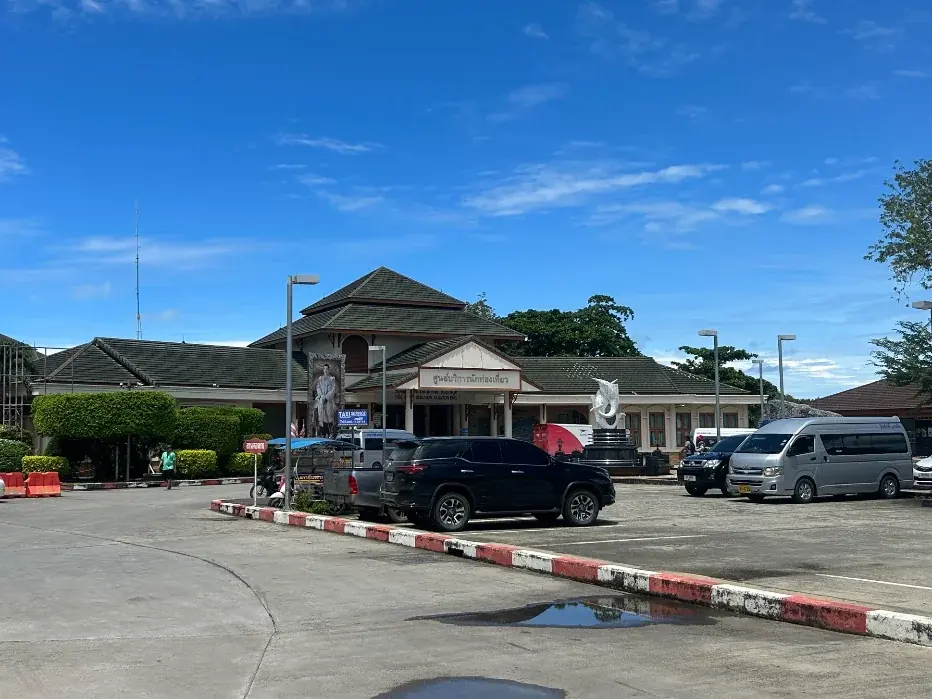
It’s a small, functional pier in Satun province. Don’t expect much — basic food stalls, a few small shops, very limited accommodation. If you arrive too late for the last ferry, you can stay overnight in Pak Bara village (basic, run-down options) or, better, head back to Hat Yai for proper hotels and food.
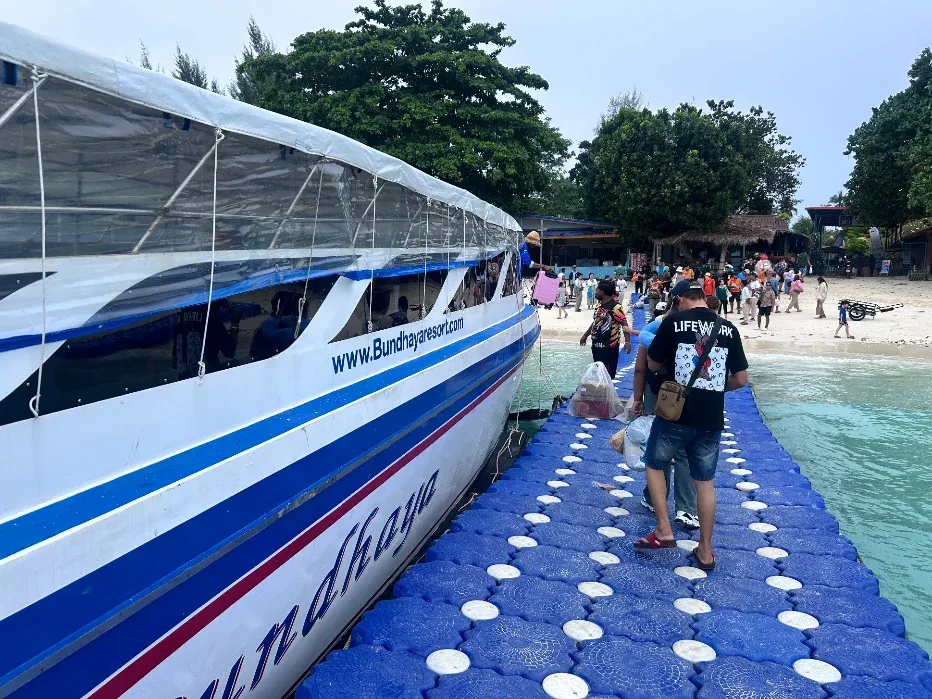
Multiple ferry operators run the same route: Bundhaya Speed Boat, Tigerline Ferry, Satun Pakbara Speed Boat Club, Ploysiam Speedboat. Service quality is similar across operators — pick on schedule rather than brand.
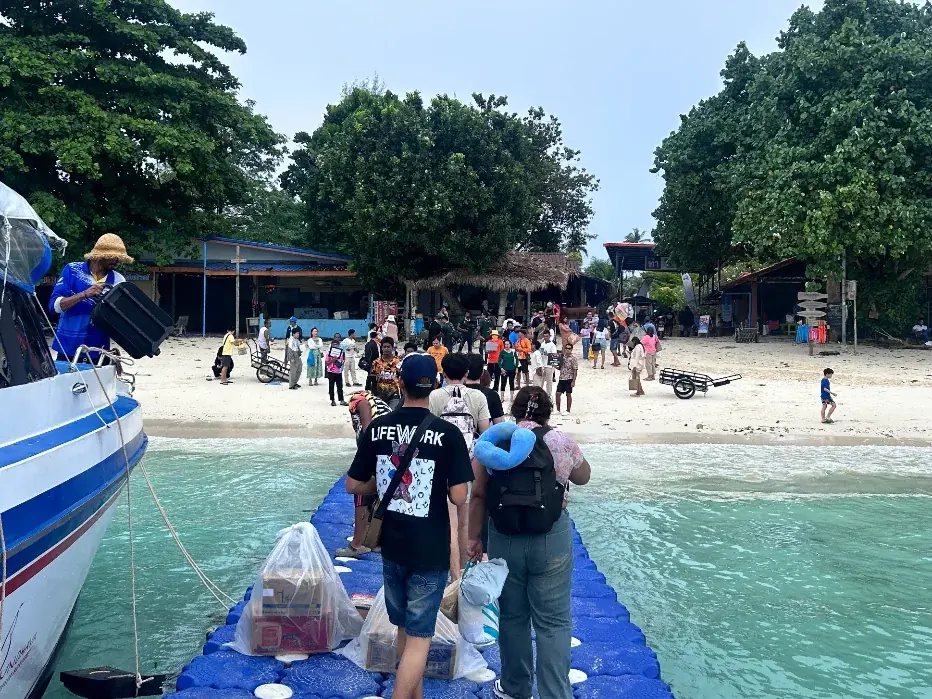
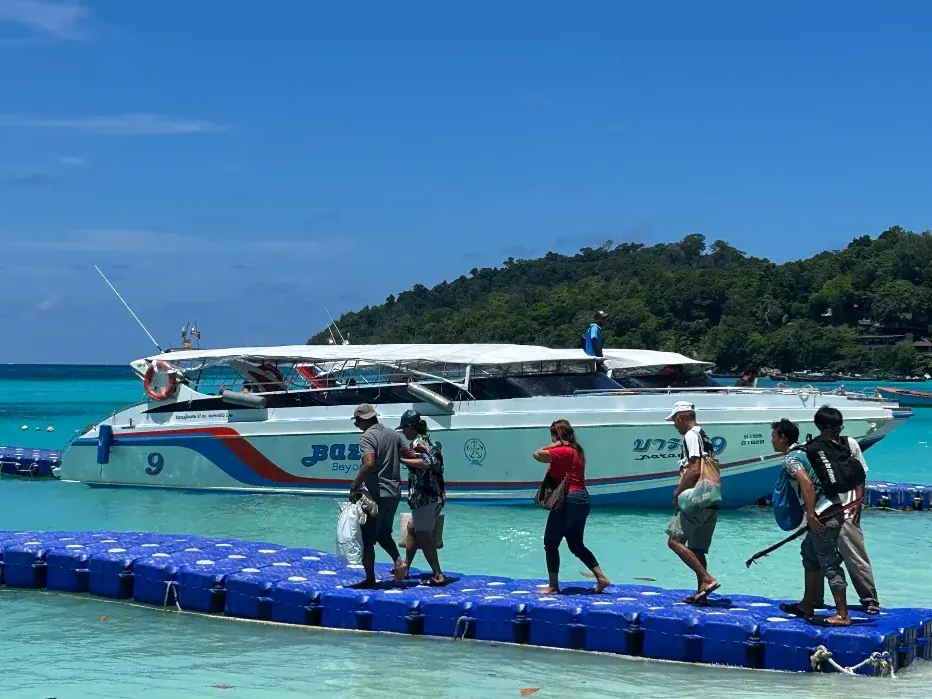
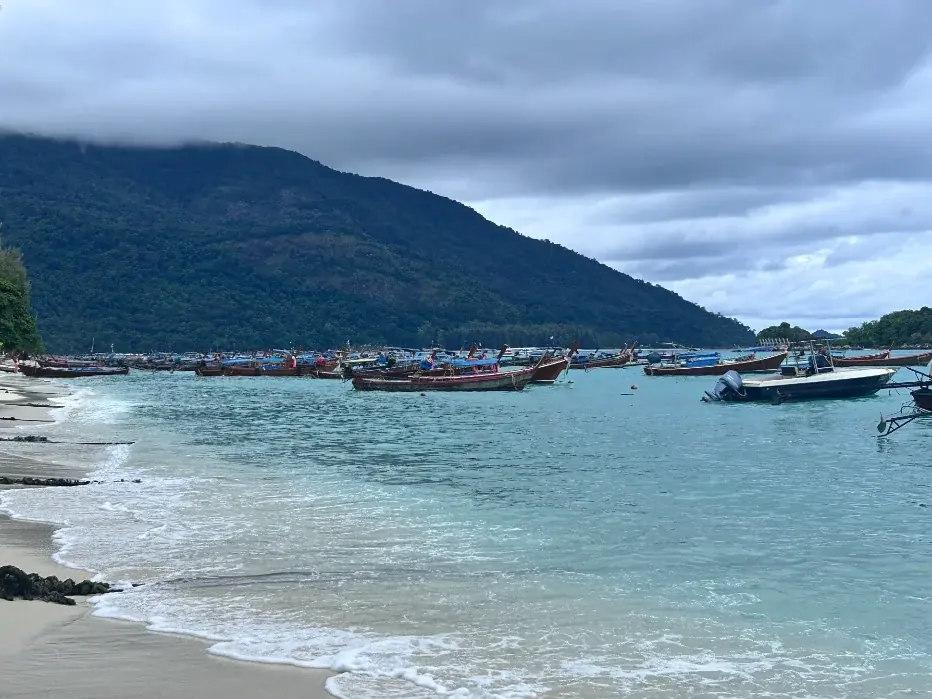
On arrival at Koh Lipe: there’s no permanent pier, so the speedboat anchors offshore at a floating platform near Pattaya Beach. You’ll transfer the last 100 metres in a longtail boat to the sand. Pay the 200 THB national park fee at the small kiosk on the beach — keep the ticket, it’s valid for several days and you’ll need to show it if you visit other islands and come back. Then walk up to your accommodation, or grab a seleng taxi for 50 baht.
What to do on the boat
A few practical things that genuinely matter:
- Take seasickness medication before boarding, especially in shoulder season. The Andaman can be choppy, the speedboats are fast, and being sick on the floor for 90 minutes ruins your arrival.
- Skip the heavy breakfast if you’re prone to motion sickness.
- Sit toward the back of the speedboat for less bouncing. Front seats look fun, but they’re brutal in chop.
- Waterproof your phone and electronics. Spray comes over the side regularly. A dry bag for the journey is worth it even if your bag is “water-resistant.”
- Wear sandals or flip-flops, not closed shoes. You’re walking through ankle-deep water from the longtail to the beach at the end.
- Bring small change for the longtail ferry (some operators charge separately) and the 200 THB park fee.
Outbound — getting off Koh Lipe
The outbound routes mirror the inbound ones, but with a couple of differences worth knowing.
The first speedboat off Koh Lipe leaves around 9:30am, with subsequent departures through the morning and early afternoon. Most outbound services depart from Pattaya Beach in high season, switching to Sunrise Beach in low season when surface conditions on the Pattaya side get rough.
The earliest outbound is generally too late to catch same-day onward connections to Bangkok or international flights — you’ll usually overnight in Hat Yai. Build that into your plan rather than fighting it. Hat Yai is fine for a night, with proper hotels and excellent food.
The full outbound route pages cover the specifics:
- Koh Lipe to Bangkok
- Koh Lipe to Hat Yai
- Koh Lipe to Langkawi
- Koh Lipe to Phuket
- Koh Lipe to Koh Lanta
Outbound immigration to Langkawi runs the reverse process: arrive at the Koh Lipe immigration point on Pattaya Beach 1.5–2 hours before your ferry departs. Bring your printed ferry voucher, complete the Malaysia Digital Arrival Card (MDAC) online in advance if returning to Malaysia, and keep your passport in hand throughout the longtail transfer to the main ferry.
The recurring travel disasters
These are the things I see go wrong over and over:
Booking the wrong combination. People book a flight, a transfer, and a ferry separately and miss connections because the timings don’t actually work together. Book combined tickets through 12Go Asia or similar — the operators coordinate the connections, and if your van is late, the boat waits.
Wrong pier in Langkawi. Telaga Harbour and Kuah Jetty are 27km apart and the wrong taxi from your hotel will cost you the ferry. Confirm which pier your ticket is for before you leave for the airport.
Cutting it too close on Bangkok timings. The 2pm Bangkok flight that lands in Hat Yai at 3:30pm sounds fine on paper. It isn’t. You’ll miss the ferry. Take the early flight.
Underestimating low-season disruption. Ferries cancel, schedules drop, and the route options narrow dramatically. If you’re travelling June to September, double-check every leg before you fly.
Not bringing cash. ATMs at Pak Bara are unreliable. ATMs on Koh Lipe are unreliable. Bring at least a few thousand baht in cash before you start the journey. The 200 THB park fee is cash-only.
Trying to do too much in one day. I’ve said it three times in this article. Worth saying a fourth.
A final thought
Koh Lipe is the Thai island that takes the longest to get to, and that’s part of why it’s the way it is. The journey filters out the casual day-trippers who’d otherwise overrun the place. The people who make it here are people who genuinely wanted to come.
Plan the trip in. Don’t try to do it all in one day if you don’t have to. Land somewhere comfortable for a night halfway, eat a proper meal, sleep, and arrive on Koh Lipe in the right state of mind. The island repays that approach.