How to use this page
The six courses below progress from total beginner (Try Dive, no certification) to first professional qualification (Divemaster). Read the card for the course that fits where you are, then click through for the full breakdown.
If you’re still deciding whether to dive at all, the main scuba diving page covers what Koh Lipe diving is actually like. If you’re already certified and just want to dive, fun diving is the right page. This page is for choosing a course.
The 6 courses worth knowing about
Beginner courses
Try Dive
1 day · ~2,870฿ · No certification · To 12 metres
A single supervised dive with an instructor, no pool training and no theory. The fastest way to find out whether you actually enjoy diving without committing to a full course. Suitable even if you’re not a strong swimmer — what genuinely matters is being comfortable in the water.
My honest recommendation: do the second dive as a bolt-on. It’s much cheaper as an add-on to the first one (~1,000฿ extra), and on the second dive you’ll be considerably more relaxed and able to actually enjoy the surroundings. The first dive is mostly your brain catching up to the fact that you’re breathing underwater. The second is when diving becomes fun.
→ Read the full Try Dive guide
Open Water
4 days · ~15,070฿ · Lifetime certification · To 20 metres
The foundational scuba certification — and the one most people should do rather than stacking Try Dives. The course covers four days of theory, pool/confined-water training, and four open-water training dives. At the end you get a certification that’s recognised worldwide and lasts for life.
My honest recommendation: if you can already swim well, skip the Try Dive and go straight to Open Water. It’s far more extensive, gives you a proper understanding of diving, and works out better financially in the long run — stacking Try Dives gets expensive fast, and you end the day with no certification. Look for an operator with a refund policy that lets you stop after any day if it turns out diving isn’t your thing — that protects you from committing the full payment to something you don’t enjoy.
Two extra advantages of doing the full course rather than Try Dives: you’re with a small group of fellow learners on the same trajectory rather than mixed in with complete beginners on a one-shot dive, and the certification means future trips only need a Refresher (not the full course again) even after years out of the water.
The certification is valid for life with no expiry. The standard depth limit established by major dive training agencies is 18 metres for Open Water graduates, though some operators on Koh Lipe certify to 20 metres through more extensive training.
→ Read the full Open Water guide
Refresher
~3,500฿ · Flexible duration · For certified-but-rusty divers
A short course for divers who already have certification but haven’t been in the water for a while. Covers a refresh of the core skills (mask clearing, regulator recovery, buoyancy) in confined water before getting back to fun dives. Typically takes half a day.
My honest recommendation: don’t skip this if it’s been more than a year or two since your last dive. It’s not just regulatory — it’s about your own comfort and safety. Skills that felt automatic when you last dived will feel rusty enough to add stress to the first dive back, and Koh Lipe diving (with the currents) is not the place to relearn fundamentals.
That said, most rusty divers who come to Koh Lipe have already done their refresher elsewhere on a longer trip — typically in Phuket, Langkawi, or Koh Lanta on a previous stop. If Koh Lipe is your first dive destination of the trip, build the refresher into day one rather than treating it as a checkbox.
→ Read the full Refresher Course guide
Intermediate courses
Advanced
4 day dives · ~12,500฿ · Includes 1 night dive · To 30 metres
The natural next step after Open Water — extends your certification depth from 20 metres to 30 metres and introduces you to five different specialty disciplines through dedicated training dives, including a night dive. Opens up the deeper, more current-driven sites that Open Water alone can’t reach.
My honest recommendation: Koh Lipe is a great place to do the Advanced course because of the currents. You can add a drift dive specialty as one of your elective dives — and Lipe’s currents will give you real-world experience that lighter-current destinations can’t match. The peak performance buoyancy dive is mandatory, and Koh Lipe will properly test your skills there. The macro marine life means your buoyancy needs to be on point to spot — and not destroy — the small stuff. By the end of the course you’ll know whether your buoyancy is actually solid or just “okay.”
The Advanced certification is genuinely required for the signature sites — 8 Mile Rock, Stonehenge, and the Yong Hua wreck all sit beyond Open Water depth limits. If you’re planning a Koh Lipe diving trip with the pinnacles in mind, factor the Advanced course into your itinerary.
→ Read the full Advanced Course guide
Professional and pre-professional courses
Rescue Diver
4 days · ~17,500฿ · 4 training dives
A safety-focused course covering rescue techniques, emergency response, and scenario management. Realistic simulations of common dive emergencies — panicked divers, unconscious divers, missing divers, dive accident scenarios.
My honest recommendation: I don’t actually recommend this course unless you’re going on to do the Divemaster. The reason: all dive professionals must have rescue training, so if there is an emergency on a recreational dive, the professionals on board would naturally take over. The skills you learn on Rescue are essential if you’re going to work in the industry, but if you’re staying recreational, they’re skills you’re unlikely to use in real life.
That said, two genuine reasons to do it anyway: if you frequently dive with non-professional buddies (informal trips, dive clubs, solo charters) where you’re effectively the most experienced person in the group, the training is valuable. And if you’re considering eventually going professional, doing Rescue earlier in your diving career means more time to internalise the skills before Divemaster.
The course also typically includes first aid training as part of the curriculum — CPR, scene safety, and primary care — bundled into the broader Rescue qualification rather than sold as a standalone course.
→ Read the full Rescue Diver guide
Divemaster
2 months · ~40,000฿ · Unlimited dives · First pro qualification
The first professional-level qualification — and a serious commitment. Two months on the island, unlimited diving, intensive training in dive leadership, group management, briefings, navigation, equipment maintenance, and the practical realities of running dive operations.
My honest recommendation: even if you don’t want to be a dive professional, this is an amazing course. You get the most dives for your money of any course on the menu (unlimited diving across two months), you get a genuine professional certificate at the end of it, and the immersion of training daily on the same dive sites builds a depth of local knowledge no shorter course can replicate. Some divers do Divemaster as a personal challenge rather than a career step and walk away delighted.
For people who do want to go professional, Divemaster is the gateway to instructor training (the Instructor course is the next step beyond) and the first step toward a career in the industry.
A practical note: two months is a meaningful commitment of time and money. Make sure you genuinely like the operator before signing up — you’ll spend a lot of time with them. Most operators offer a “trial week” or shorter introductory period before committing to the full course.
→ Read the full Divemaster Course guide
Why Koh Lipe is a strong place to learn
A few honest reasons Koh Lipe stands out as a course destination:
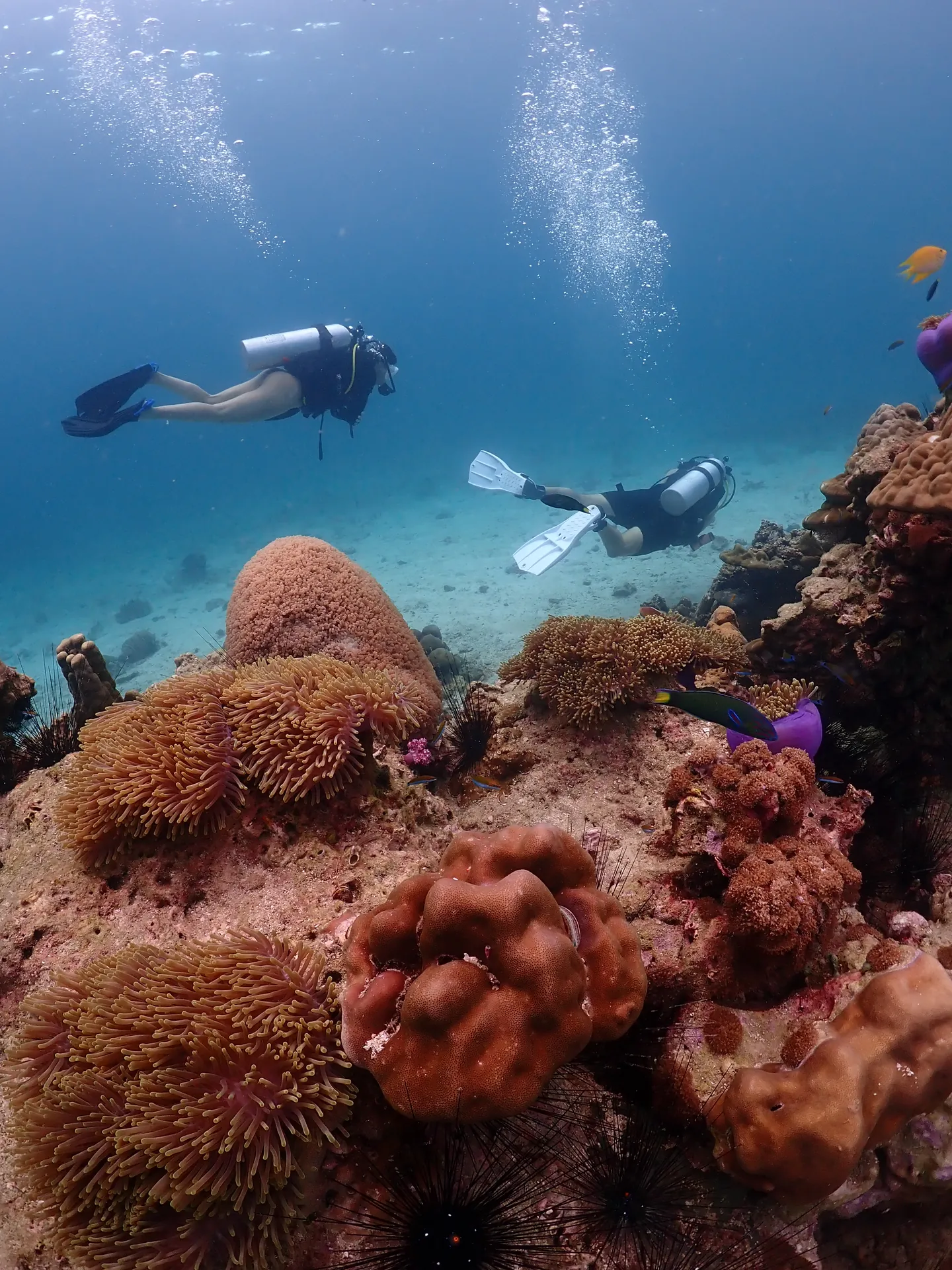
The marine park reefs make a better classroom than most. Tarutao National Marine Park — established as Thailand’s first marine national park on April 19, 1974 — is the protected ecosystem your training dives happen in. Healthier reefs mean better marine life sightings on your earliest dives, which makes a real difference to motivation and the lasting memory of the course.
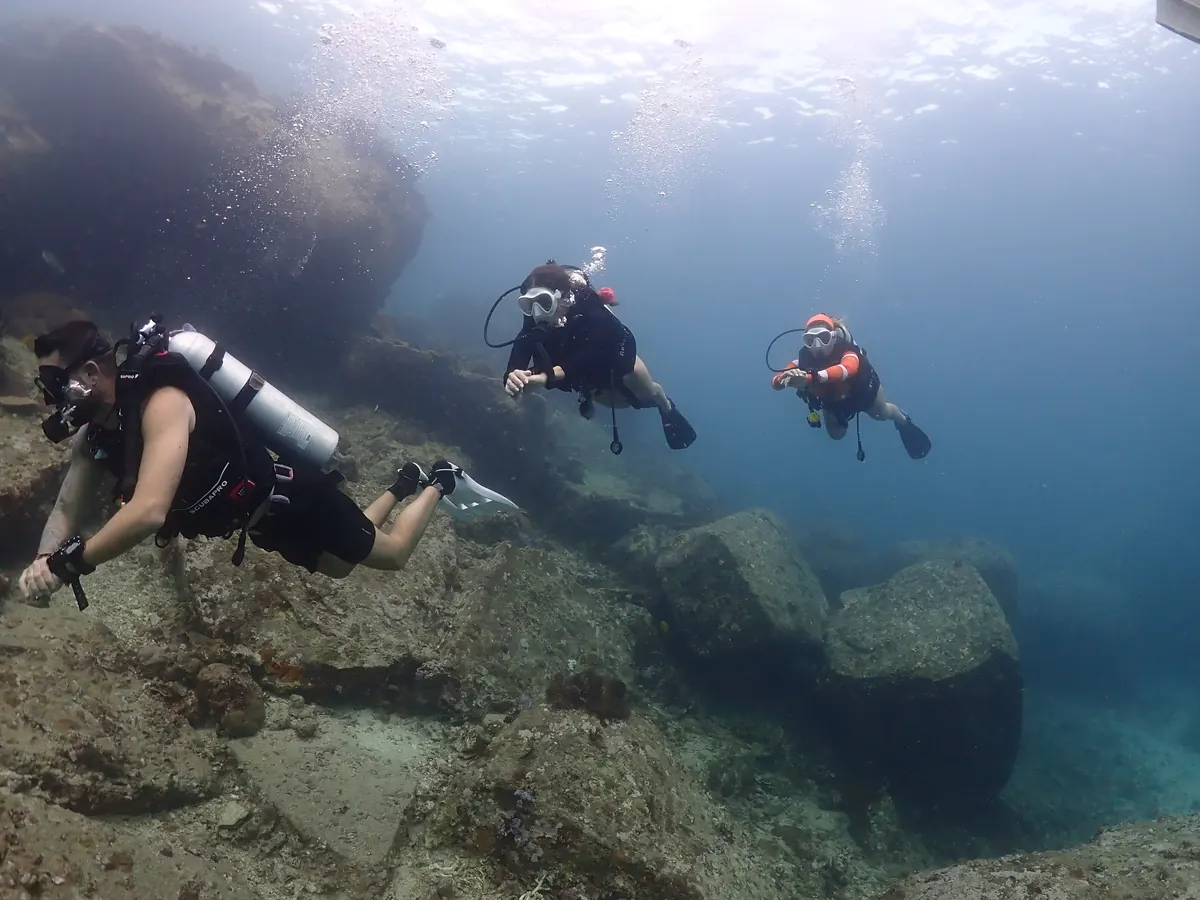
The variety of sites supports the full progression. Easier reefs like Honeycomb Reef and Hin Ngam are gentle enough for Open Water training. The currents at Stonehenge and the pinnacles give Advanced students real-world current handling experience. The macro sites force students to develop genuine buoyancy. You can build a serious skill base here that you wouldn’t get on a smaller, more homogeneous island.
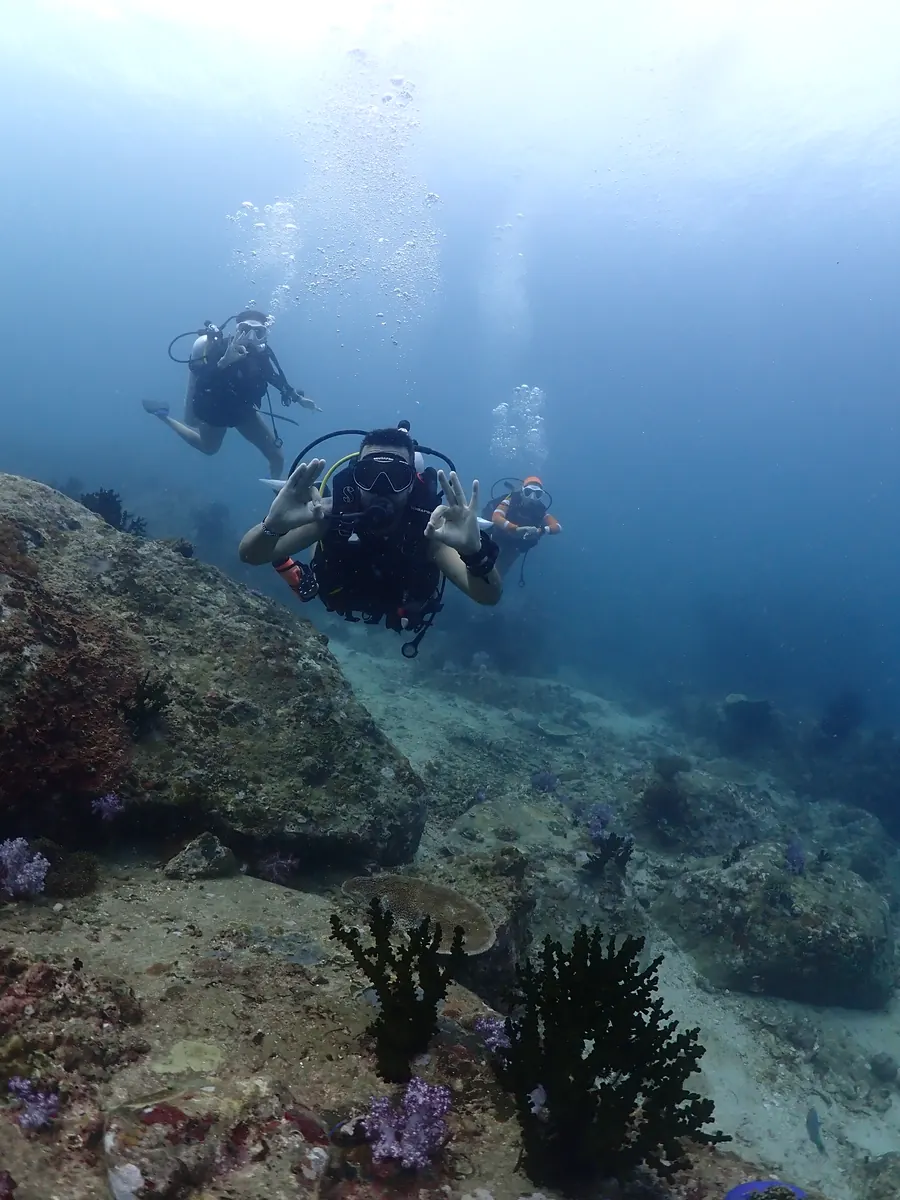
Small groups are the local standard. Reputable Koh Lipe operators run at a maximum of two students per instructor for training courses, in line with marine park guidelines. That ratio compares favourably with the larger group sizes you’ll find on cheaper-course islands like Koh Tao.
Genuine multilingual instruction is available. The Koh Lipe operator scene tends to attract European instructors as well as Thai locals, and several operators have multilingual teams (English, Spanish, French, German). Worth asking when you book if English isn’t your first language.
The honest red flags when choosing an operator
This matters more than which specific course you book. Do not just pick the cheapest offer. The overheads for a dive centre running this properly are very high, and a too-cheap price almost always means corners are being cut somewhere that affects your safety or experience.
When you walk into a centre, check three things:
The equipment. It should be in good condition with no leaks or bits hanging off, relatively new-looking rather than old and faded. Frayed straps, mouldy mouthpieces, sun-damaged BCDs, regulators that look 15 years old — these are red flags. A good operator is happy to walk you through their kit room.
The instructors’ experience. Ask how long the instructors have been on Koh Lipe specifically — not just how many years they’ve been instructors generally. Koh Lipe is a challenging place to dive because of the currents, and you want someone who knows how to read the local conditions across multiple seasons. Long-tenured instructors are the single best signal that a dive centre is run properly.
The boat. Already covered in the main scuba diving article but worth restating: a purpose-built dive boat with shade, toilet, and a marine ladder is significantly better than a longtail boat, especially for the longer trips to the advanced sites.
The main scuba diving page has the full operator-selection checklist.
A final thought
The course you book matters less than the operator you book it with. A well-run Open Water course on Koh Lipe — with a good instructor, properly maintained gear, small group size, and a sheltered training bay on day one — will set you up to be a confident, safe, lifelong diver. A poorly-run course at the cheapest operator on the island will set you up to be the diver who never quite got it.
Spend an extra hour walking into two or three centres before you book. Look at the gear. Ask the instructor how long they’ve been on Koh Lipe. Trust your gut on whether the place feels professional. The right operator costs slightly more and pays you back across every dive of the rest of your life.