
The honest truth about snorkelling on Koh Lipe
Most people arrive on Koh Lipe, drop their bags, and head straight to Pattaya Beach with a snorkel and mask. Then they wonder why they didn’t see much.
Here’s the honest take, before we go any further: the snorkelling directly off the three main beaches — Pattaya, Sunrise, and Sunset — is okay, but it’s not why people come to Koh Lipe.
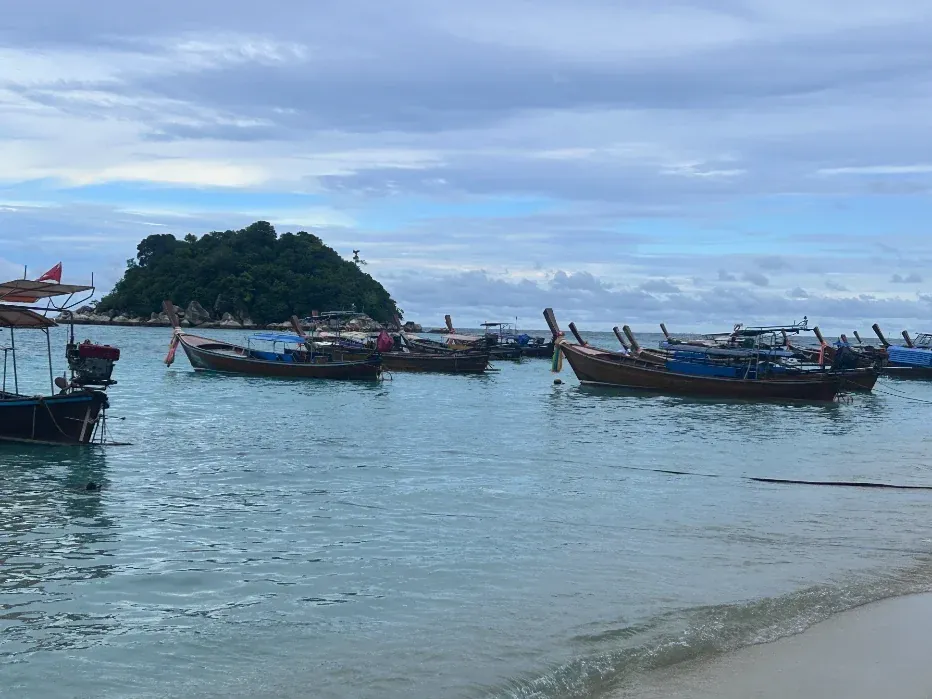
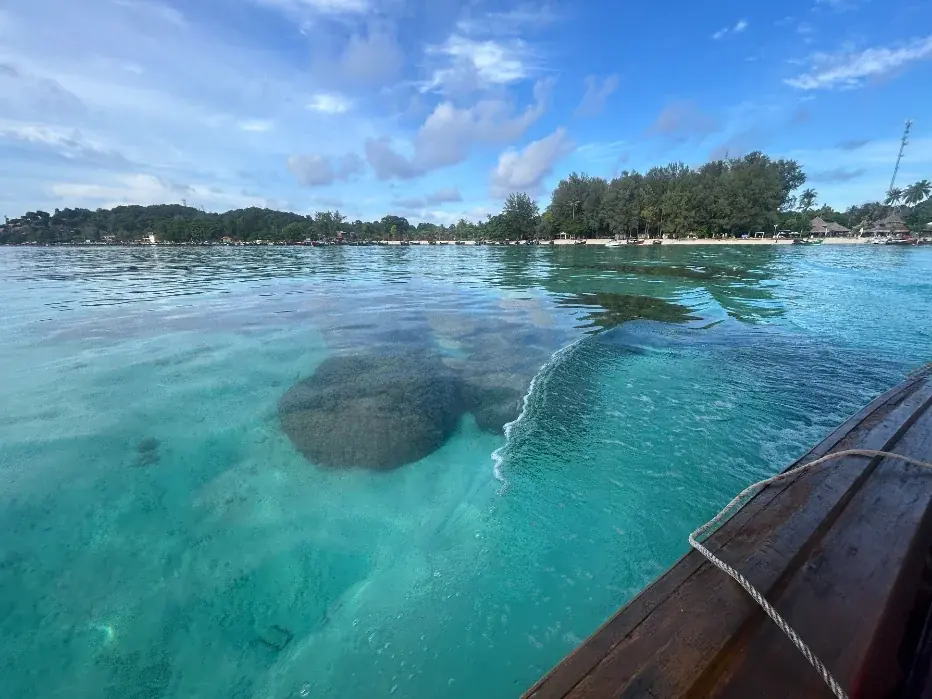
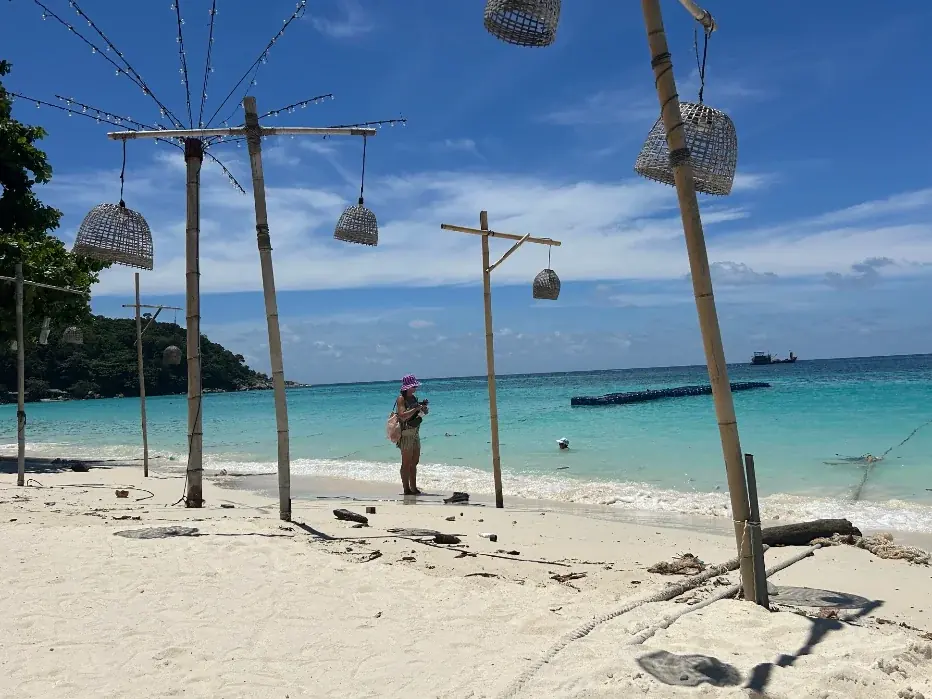
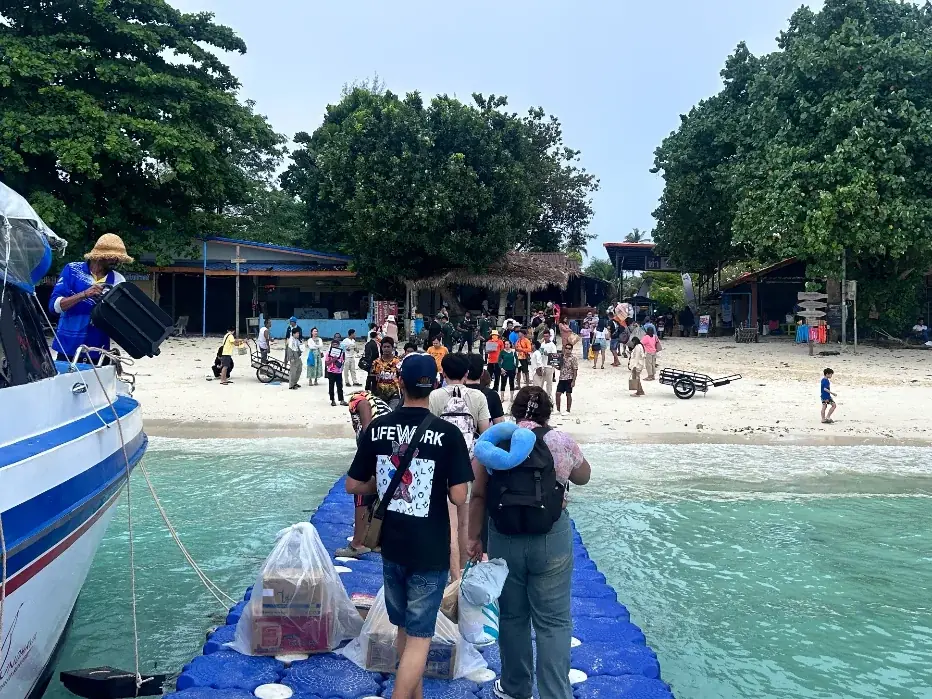 Pattaya at midday — there’s always a speedboat on the move. Pretty for swimming, less for fish-spotting.
Two reasons. First, the main beaches have constant boat traffic — longtails, speedboats, taxis to the surrounding islands. That’s both genuinely dangerous to snorkel through and noisy enough underwater to scare away most of the marine life. Second, those beaches are sandy. There’s not much coral, and where there’s no coral, there are no fish to speak of.
The good snorkelling on Koh Lipe is somewhere else. There are three places worth your time, in roughly increasing order of effort:
- Talang Steps — accessible from the shore, my personal favourite spot.
- The small uninhabited islands off the east end of Sunrise Beach.
- The full-day or half-day boat trips to the surrounding park islands.
Let’s go through them properly.
Talang Steps — the under-the-radar shore spot
Talang Steps is my personal favourite snorkel on Koh Lipe, and most visitors miss it entirely. You can reach it from the shore, the soft corals are beautiful, and on top of the usual reef fish you tend to see at the other spots, the structure here is genuinely something different.
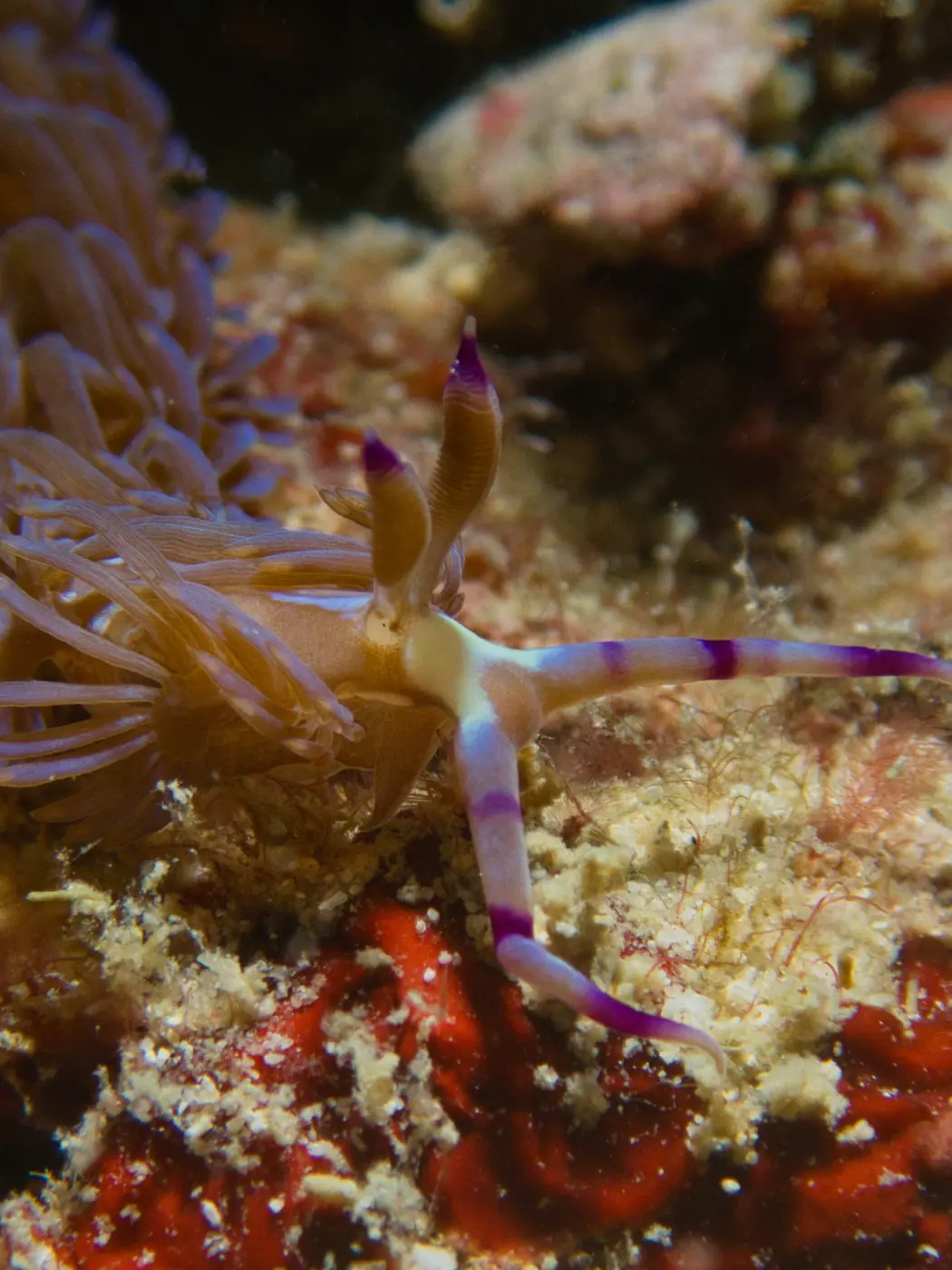 The kind of soft-coral life you get at Talang Steps — current-exposed reefs grow this kind of structure.
It’s also a recognised dive site — see the Talang Steps dive page for more — but the shallow shore-side section is plenty for a snorkeller. Soft coral, tropical reef fish, calmer water than the boat-traffic beaches.
If you only do one shore-access snorkel on Koh Lipe, do this one.
The small islands off Sunrise Beach
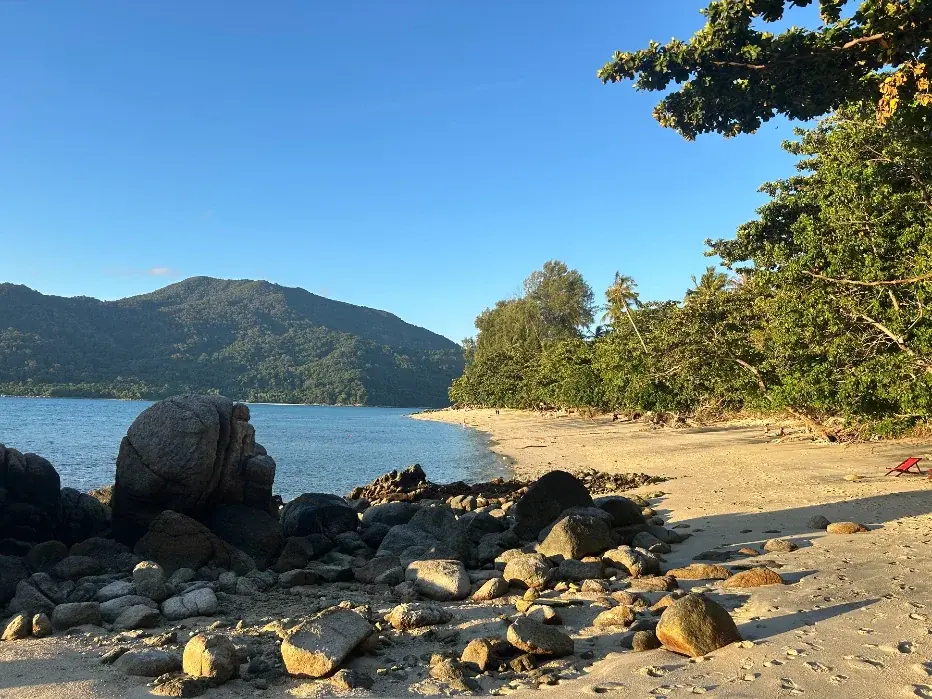
Walk to the east end of Sunrise Beach, past Mali Resort, and you’ll see a small island just off the coast. I’m not actually sure of its official name, but it’s close enough that you can see the marine life on the way over. The snorkelling around it is genuinely incredible — far better than anything off the main island.
A few practical things you need to know before you go:
Don’t swim it. Take a kayak or paddleboard. It’s possible to swim across, but the current between the islands can get fierce, especially on a shifting tide. Kayaks and paddleboards are easy to rent from spots along Sunrise Beach. Paddle out, anchor up, snorkel around, paddle back.
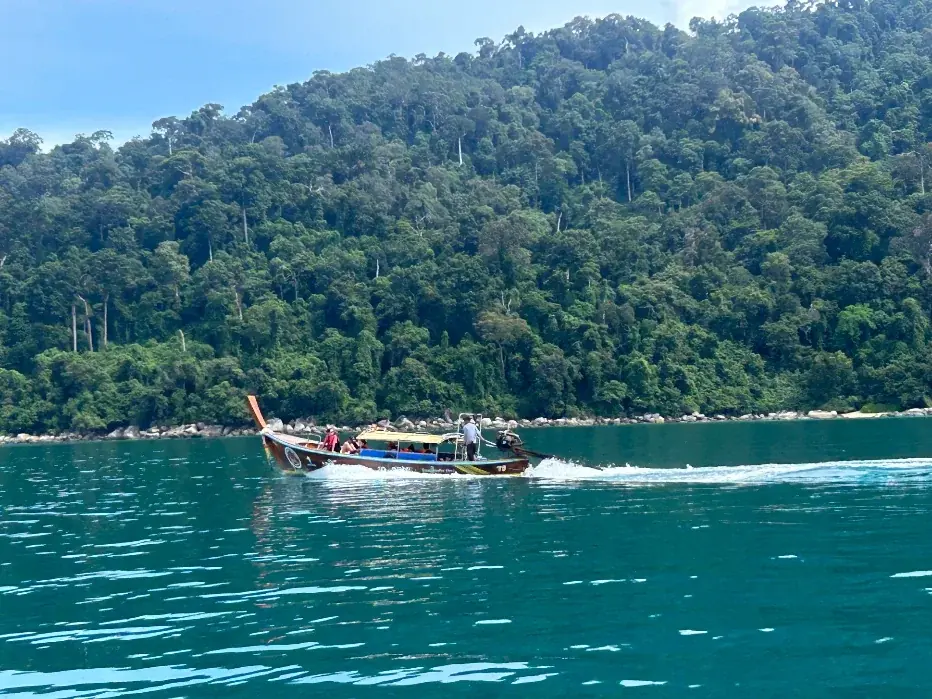
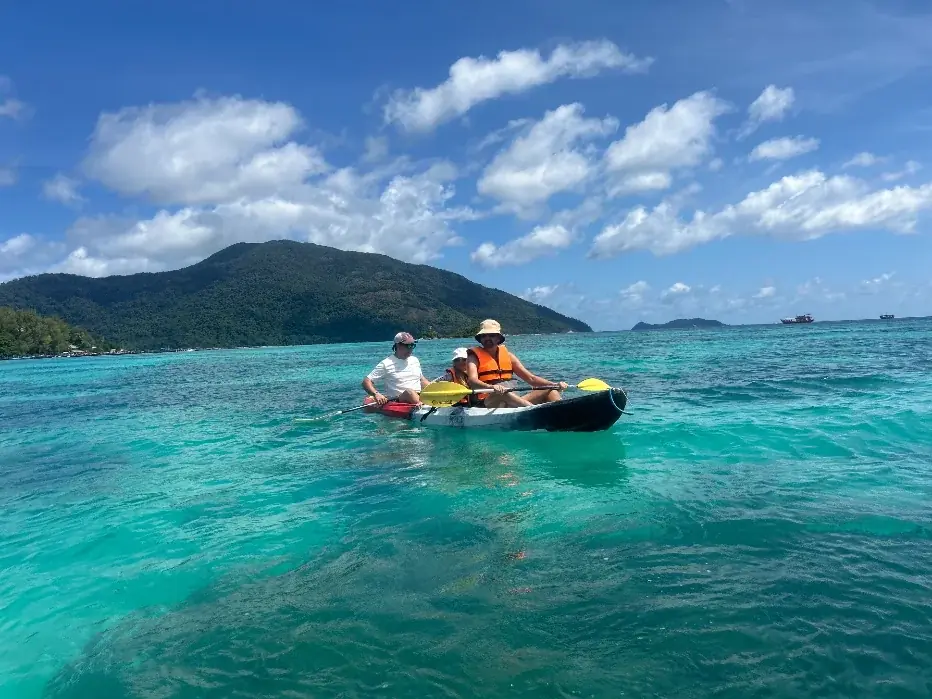 Out from Sunrise toward the small island — kayak or paddleboard, not a swim. The current between the islands gets fierce on a shifting tide.
Be careful of the rocks. The rocks around the island are very sharp. Don’t touch them — both for your skin and for the marine life that lives on them. Stay a sensible distance.
Go in the morning. The water is calmer, the sun is softer, and the visibility is at its best. Late afternoon also works.
Bring proper kit. Take a mask, snorkel, and fins. Fins matter here because of the current — without them, you don’t have the propulsion to handle a strong outgoing tide.
If you only do one self-guided snorkel on the island, this is it.
The boat trips
Most people want to be told which boat trip to book. Here’s the breakdown.
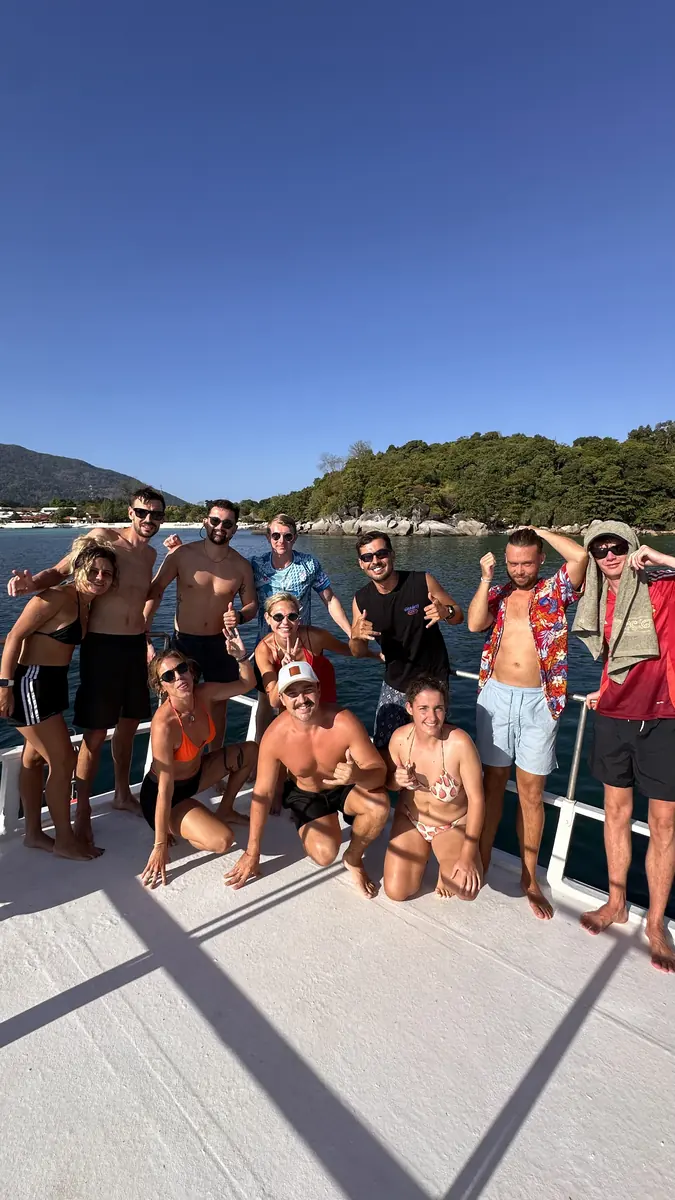
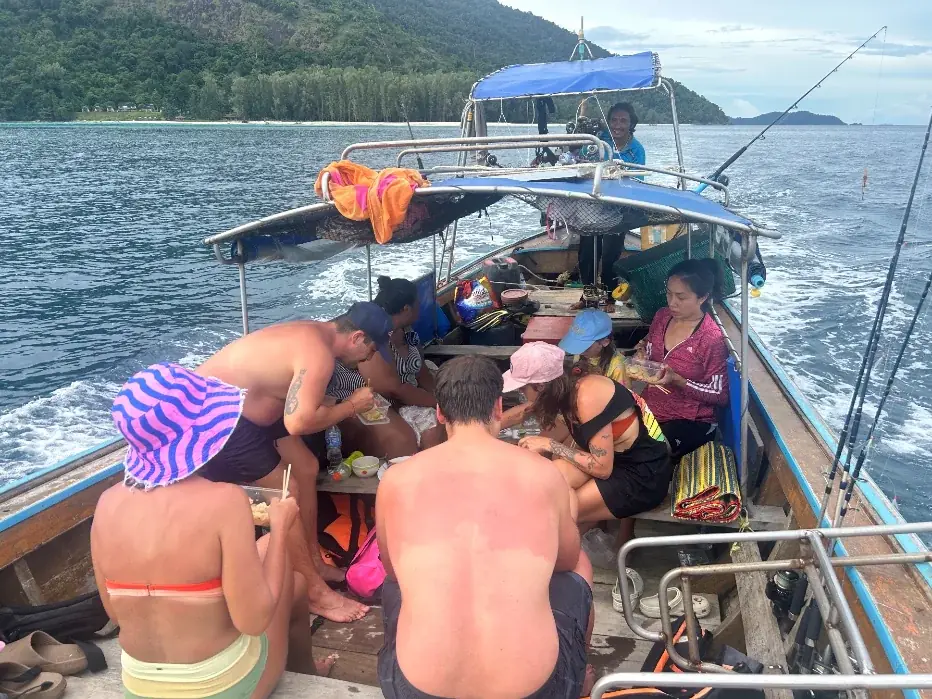 Mid-trip break, somewhere near Koh Adang. Boats vary — ask what you’ll be on before you book.
Half-day snorkel trip
The half-day trip hits three or four reefs around the closer park islands, with multiple stops at uninhabited spots that have far more abundant marine life than anywhere off Koh Lipe itself. Less people in the water means less stressed marine life, which means more fish, more variety, and better behaviour.
Best for: most snorkellers, most of the time. Especially good for families with kids and anyone who gets restless on long boat trips.
Full-day snorkel trip
The full-day trip covers six reefs across the Adang–Rawi archipelago, with lunch on Koh Adang or a similar shore stop.
Here’s my honest take: for me, the full-day trip can be a bit much. Snorkelling is snorkelling — once you’ve been to two or three good spots, the variety drops off. After the third reef, the kids will likely be ready to be done.
What the full-day trip actually is, in my opinion, is more of an island tour with snorkelling included. You’re getting time on shore at a couple of the islands, you’ll see places like the natural beauty of Hin Ngam and other spots that the half-day doesn’t reach, and you’ll get a sense of the broader marine park beyond the closer reefs.
Best for: adults who want the full park experience and are happy on a boat all day. Couples. Solo travellers. People who specifically want to see the further-out islands.
Less ideal for: families with young kids (the snorkelling does get repetitive for them), people prone to seasickness, anyone with a tight schedule.
What about “snorkel safari” trips?
Some operators sell a “snorkel safari” as a premium option. In my opinion, this is mostly a gimmick — the name lets some operators charge more for what’s effectively the same trip as the standard full-day. The stops are similar, the boats are similar, the marine life is the same.
If you want something genuinely different, ask about a private boat charter or a dedicated snorkel-only itinerary. Otherwise, save your money and book the standard trip.
The question to actually ask the operator
Don’t ask about the route — most trips visit similar islands. Ask what type of boat they’ll be on.
Some operators run their trips on small longtail boats. Longtails are atmospheric and cheap, but on a full day they get uncomfortable: minimal shade, no toilet, hard wooden seating, and a lot of engine noise. On a rough sea day, they’re worse.
Better operators run from larger boats with proper shade, a toilet on board, and a chill-out space. The price difference is often modest. The comfort difference, especially over six or seven hours, is significant.
What you’ll actually see
Realistic expectations, based on what I see when I’m in the water here:
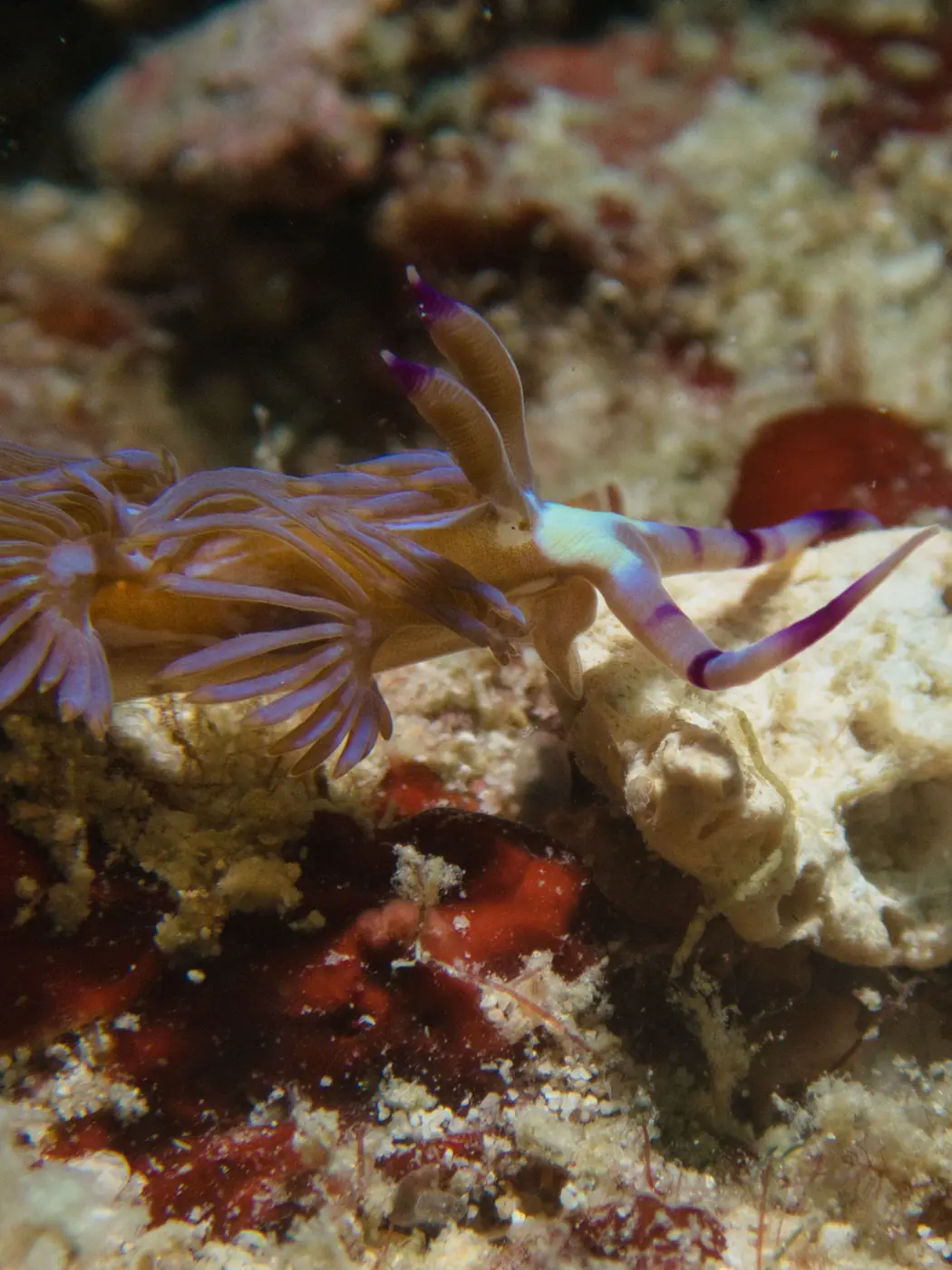 The macro scene — vivid soft coral and the small things that live on it. Slow down and you’ll find more than you expect.
Common sightings: schooling tropical reef fish, parrotfish (often in colourful little schools — keep an eye out, they’re rainbow-coloured and a real highlight), butterflyfish, damselfish, surgeonfish, the occasional pufferfish.
Around the rocks: small crabs, sometimes hermit crabs, blennies, and other small reef life. Worth slowing down for.
On a good day: stingrays in the sand patches, the odd reef shark passing through (usually a blacktip or whitetip), and at the better sites — Talang Steps especially — proper soft coral that you don’t usually associate with shallow snorkel-depth water.
On a great day: turtles. They’re around but they’re not guaranteed — you can’t book a turtle.
What gets oversold: “swimming with whale sharks” advertising. They do show up at the further dive sites in season, but you’re not going to encounter one on a standard snorkel trip. If you see one, count it as a lottery win.
The reefs sit inside Tarutao National Marine Park, which protects this whole area — and the protection is what’s kept the marine life as healthy as it is.
What to bring (and what to skip)
For organised tours: you don’t need to bring anything. Mask, snorkel, fins, and life jackets are provided. Show up, get wet, get back on the boat.
If you want to snorkel independently — at Talang Steps, off Sunrise Beach, or on a longer trip — invest in your own gear. Specifically:
- A decent mask. This is the one piece I’d actually spend money on. Skip the cheap convenience-store sets — they’re uncomfortable, leak constantly, and ruin the experience. A properly fitted mid-range mask will mould to the shape of your face, never let in water, and last for years. Worth the investment if you snorkel anywhere ever again.
- A snorkel. Comes with the mask usually, but check it has a proper purge valve.
- Fins. Important if you’re going anywhere with current — and most of the good spots on Koh Lipe have current.
- A UV-rated rash guard. The water is genuinely warm year-round, so you don’t need a wetsuit. But sun protection is important — you’re floating face-down for an hour or two and the sun on your back is brutal. A UV-rated rash guard is far better than reapplying sunscreen, and it doesn’t wash chemicals into the reef.
- A hat for the boat. Shade isn’t always available.
Phone protection. A lot of shops on Koh Lipe sell little plastic phone pouches. They’re fine for protecting against splashes — drink spills, rain, sand — but I wouldn’t take one in the water unless your phone is genuinely waterproof. Most of these pouches are splash-proof, not submersion-proof. If you want to take photos underwater, get a proper waterproof case rated for it, or rent an action camera from a dive shop.
What to avoid buying on the island: cheap mask-and-snorkel sets at convenience stores. They’re badly fitted, the silicone is hard, and they’ll let in water no matter how much you adjust them.
You can buy properly fitted mid-range gear at dive centres on the island, including La Bombona Diving and other reputable operators.
Safety, currents, and tides
The honest version of snorkel safety on Koh Lipe.
The currents are real. Especially between the islands and on a shifting tide. If you’re not a strong swimmer, do not try to swim across to the small islands off Sunrise Beach. Take a kayak or paddleboard. If you’re not a strong kayaker either, book an organised trip — the operators know the conditions and route around the worst of the current.
Always wear a life vest on boat trips. Operators provide them. Wear it even if you’re a confident swimmer — they protect you in the boat traffic that’s everywhere around the snorkel sites, and they let you float without effort if you tire out.
If you do get caught in a current, don’t panic. There are boats everywhere on Koh Lipe — fishing boats, longtails, snorkel boats, dive boats. If you’re floating and you raise an arm or wave, someone will see you. The single most important rule is to stay floating. A life vest does that for you. Don’t fight the current trying to get back to where you started — let it carry you, raise an arm, get picked up.
The locals know what’s happening with the tides. This is a genuine advantage of organised trips — the boat captains have decades of experience reading the conditions. If a trip gets cancelled or rerouted, that’s a sign of a good operator, not a bad one. Trust the call.
Non-confident swimmers should stick to organised trips with life vests and clearly briefed guides. Avoid solo shore-snorkelling at spots with current. Talang Steps and the calmer end of Sunrise Beach are reasonable places to build confidence.
Reef-safe sunscreen — this is mandatory
This isn’t a polite suggestion. Reef-safe sunscreen is mandatory under Thai marine park law. Thailand’s Department of National Parks bans sunscreens containing oxybenzone, octinoxate, 4-methylbenzylidene camphor, and butylparaben in all marine national parks, with fines of up to 100,000 baht (around $3,000 USD) under Sections 20 and 47 of the National Park Act 2019. Park rangers can and do conduct spot checks at piers and on beaches.
Practically:
- Check the back of the bottle before you fly. If your sunscreen contains any of the four banned chemicals, don’t bring it into the marine park. Most major-brand sunscreens still contain at least one of them.
- Buy reef-safe on the island. You can pick it up at multiple outlets on Koh Lipe, including La Bombona Diving and Dive Ventures, plus most of the larger pharmacies and beach shops. Look for “Reef Safe,” “Reef Friendly,” or zinc-oxide / titanium-dioxide based formulations.
- Cover up instead. A UV-rated rash guard plus reef-safe sunscreen on the exposed bits is the cleanest option — both for the reef and for the bottle of cream you’re not buying.
There’s a full guide to reef-safe sunscreen on the conservation section of the site if you want the deeper read.
While we’re on the subject — the rest of the marine park rules also apply: don’t touch coral, don’t stand on it, don’t feed the fish, don’t take anything home from the reef. A two-metre buffer from coral is the standard. The reefs here are healthy because people generally respect this. Keep that going.
A final thought
The mistake most snorkellers make on Koh Lipe is to set their expectations from the main beach view — clear water, white sand, postcard backdrop — and then be quietly disappointed when there’s not much swimming around their feet.
That’s the wrong frame. The good snorkelling is just slightly out of sight, around the corners and across the small straits to the islands you can see from the beach. Get on a boat, paddle out, or walk to Talang Steps — and the marine park starts showing what it actually has.