
The site, physically
8 Mile Rock — the name tells you the first thing you need to know. It sits eight nautical miles west of Koh Lipe, well out into the open Andaman Sea. That distance shapes every other aspect of diving it.
The site itself is a submerged pinnacle — a single oval-footprint structure rising from a sand floor at roughly 38 metres to a top plateau at around 14 metres. Vertically it covers roughly 24 metres of usable diving from top to base. The steepest walls run along the north and west faces. A secondary ridge runs southeast at around 22 metres — often overlooked but consistently one of the most rewarding sections of the site for schooling fish.
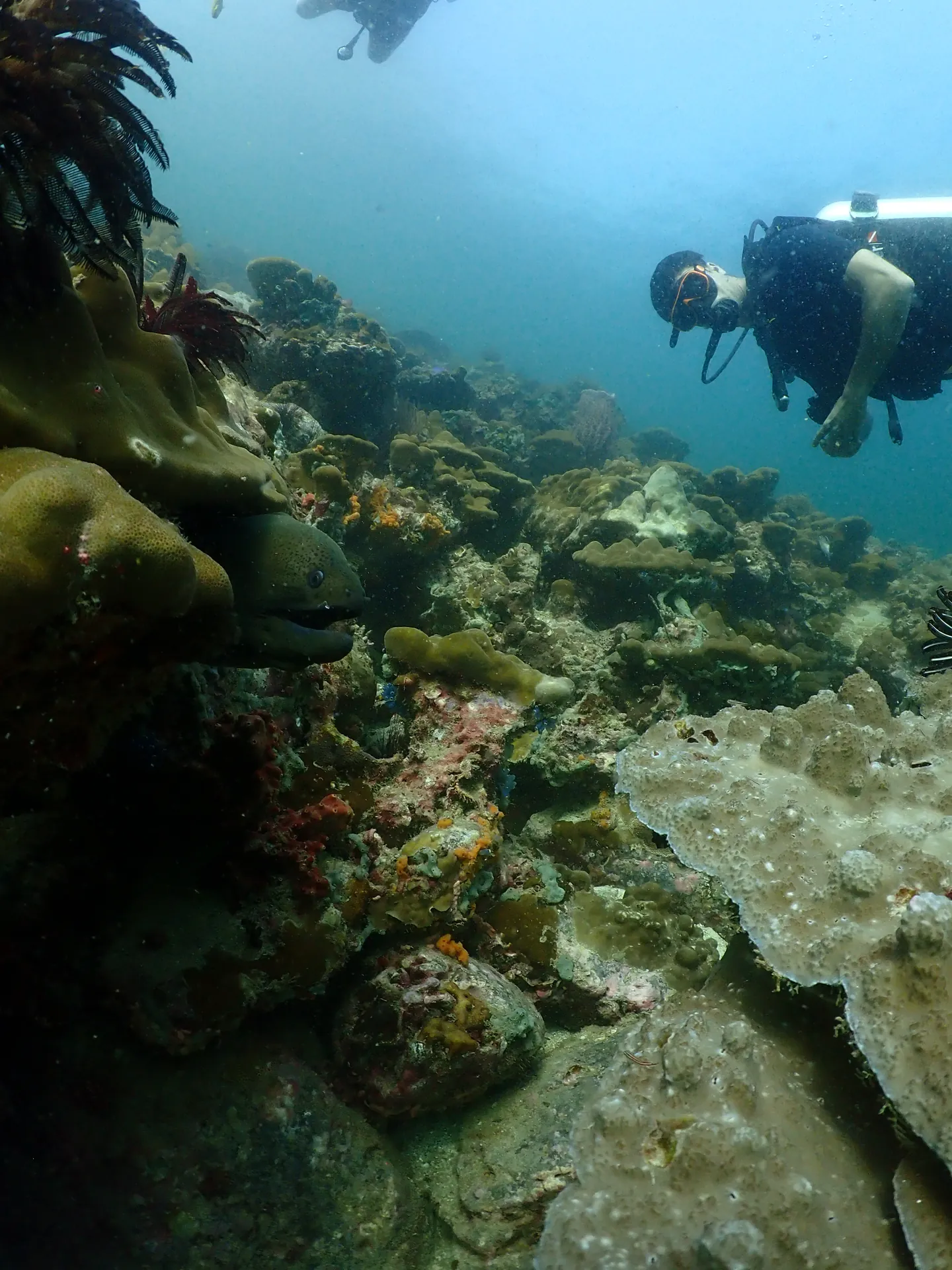
What it looks like as you descend depends on visibility. On a good day, the pinnacle materialises out of the blue as you drop down the buoy line — first the top plateau resolving below your fins, then the walls opening out beneath you. On a low-visibility day, you can be six metres from the rock before you see it. The descent itself usually takes 1–2 minutes depending on the line.
The site has a different perspective at every depth. This is why most operators do two dives here when they go — descending on different sides of the pinnacle on each dive gives you two genuinely different experiences of the same structure. Top plateau on dive one, deeper wall and ridge on dive two — or vice versa depending on current.
The east-side creel — the spot most divers walk past
One detail experienced divers know to look for: there’s an abandoned fishing creel on the east side of the pinnacle that small reef fish have hijacked as a refuge. They can pass through the netting, but bigger predators can’t — so the small fish use it as a permanent safe house. The result is that larger predators patrol the outside of the creel constantly, waiting for an unwary small fish to venture out.
It’s a great spot to hover and watch. The predator-prey behaviour at this single point on the dive is more concentrated than anywhere else on the site. Most dive briefings won’t mention it. Ask your guide.
Why it’s an advanced site — the currents
The reason 8 Mile Rock is classed as an advanced site has nothing to do with the depth in isolation. It’s the current.
The current at this site ranges from gentle to genuinely strong. I remember being out there last year struggling to swim against the current at the worst of it — and watching how streamlined the fish are, almost unaffected by water moving fast enough to make me work for every fin kick. That’s also why the marine life on the Andaman is bigger than what you see on the gulf-side islands. Dealing with strong currents builds muscle mass. The trevallies at 8 Mile Rock are monsters compared to anything you’ll see at Koh Tao.
For a diver, the current does two things:
- It demands proper buoyancy and trim. You can’t drift around hoping to figure it out at depth. If your buoyancy is still a work in progress, the current here will burn through your air faster than you expect.
- It defines the dive plan. The whole strategy of an 8 Mile dive is built around the current — where to descend, which side of the pinnacle to shelter on, when to drift, when to drop back.
Strong current is also what makes the site biologically productive — it brings nutrients, feeds the soft coral, and pulls schooling fish in to feed. The current is both the obstacle and the reason this is a world-class dive.
A note on getting there
The 8-mile distance from Koh Lipe means the boat trip out is 30–45 minutes in good conditions, longer if it’s choppy. The Andaman can change quickly — a flat calm morning can turn into 1m+ swells within an hour. Be honest with yourself about seasickness; take medication before you board, skip the heavy breakfast on rough days, and sit toward the back of the boat for less bouncing.
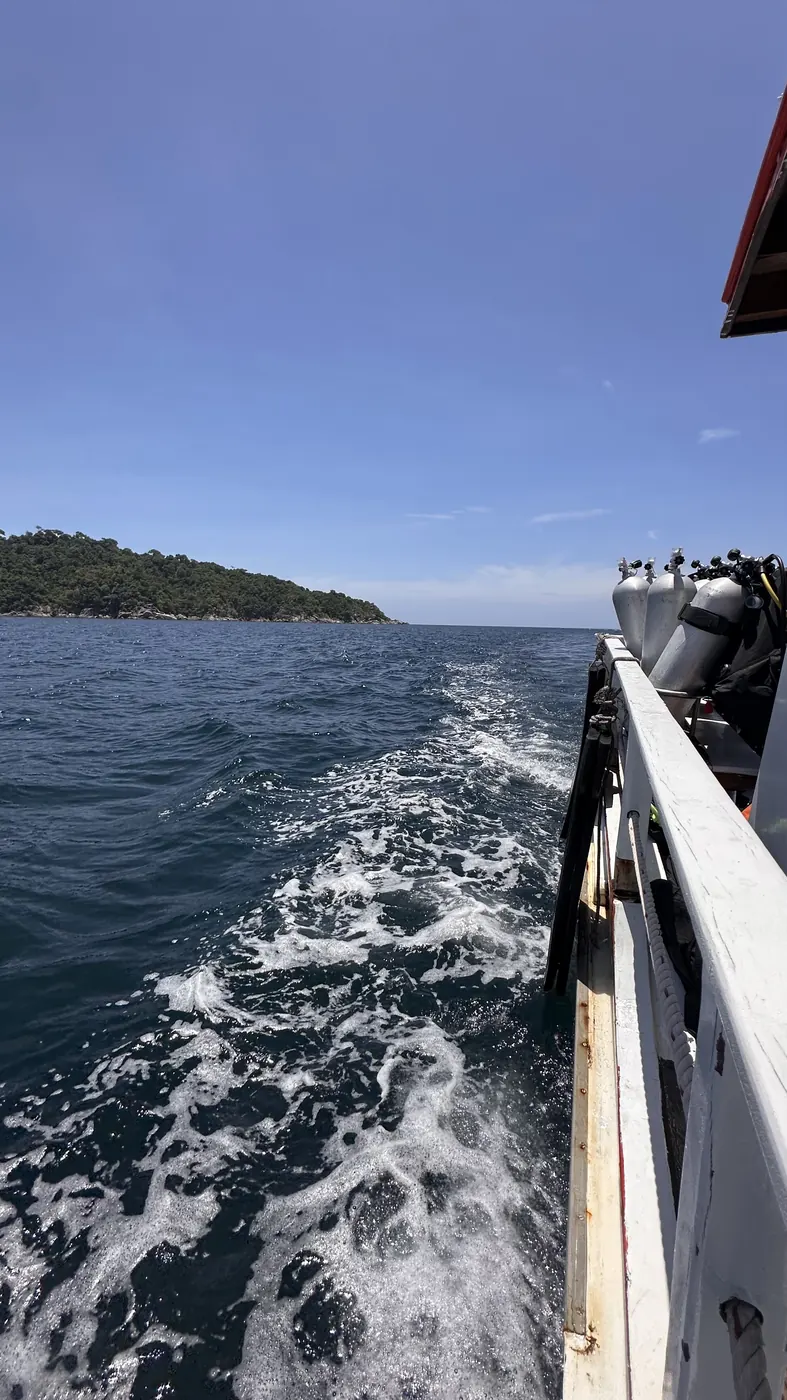
This is also why your choice of operator matters more than for closer sites. Some Koh Lipe dive operations run their trips from longtail boats. Longtails are atmospheric and inexpensive — but they’re not the right boat for a long open-water trip. If conditions turn while you’re 8 nautical miles offshore, a longtail with no toilet, no shade, and no protected interior is genuinely uncomfortable. Some operators that run from longtails simply don’t go to 8 Mile Rock. Pura Vida and DJL are examples of dive schools that operate from longtails and don’t make the trip.
Look for an operator running from a proper purpose-built dive boat for any 8 Mile day — see the main scuba diving article for the broader checklist.
What you’ll actually see
The honest version of marine life expectations at 8 Mile Rock.
What’s reliable
Schooling fish are essentially guaranteed. Most days you’ll see:
- Chevron and sawtooth barracuda in proper schools
- Big-eye trevally hunting through fusilier clouds
- Schooling jackfish patrolling the deeper sections
- Yellowstripe and yellowtail fusiliers in clouds around the top plateau
The southeast ridge at 22m is particularly reliable for schooling barracuda and trevally. The creel area for predator-prey activity.
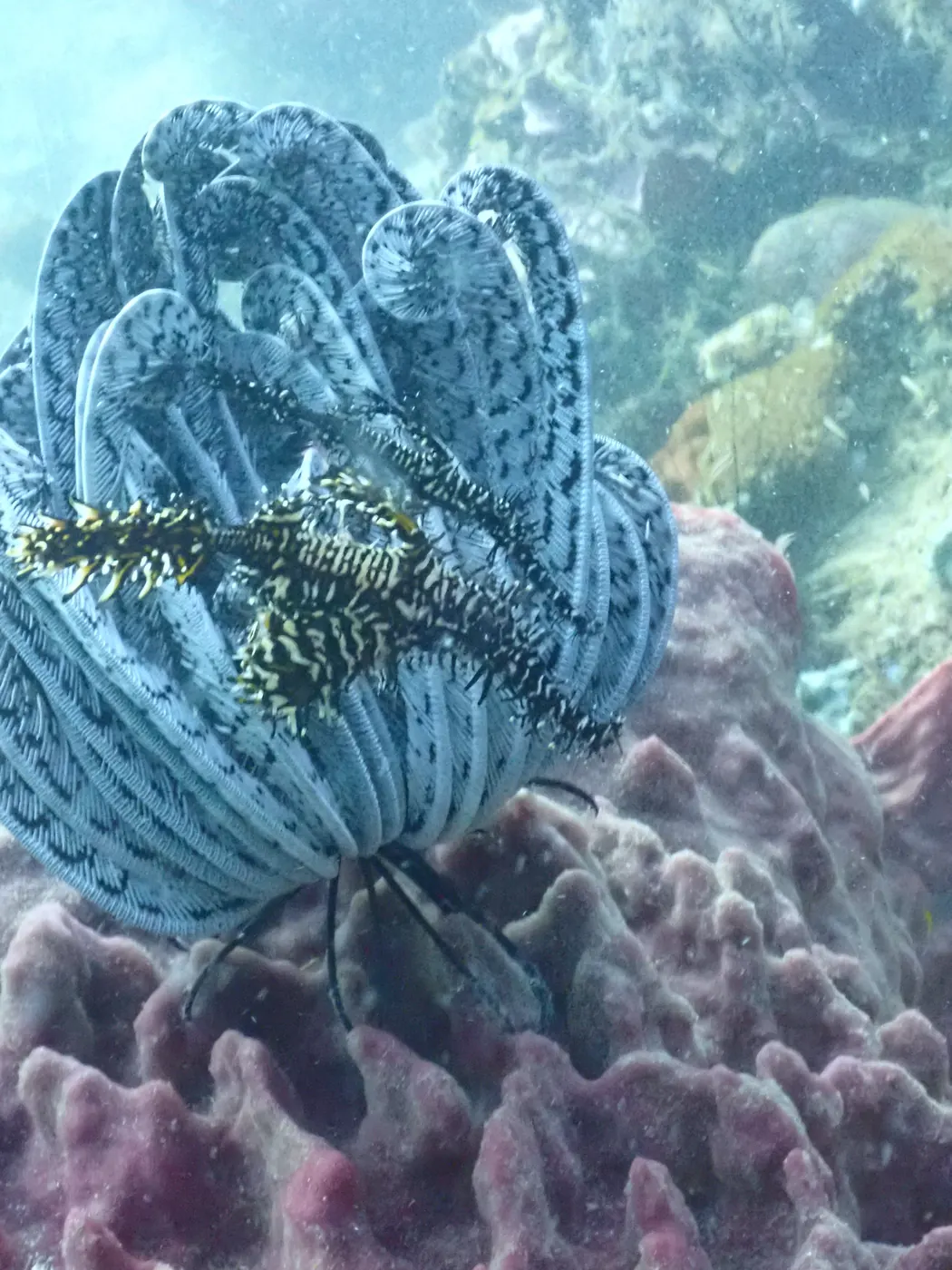
Reef life on the structure:
- Whitetip reef sharks resting in the sand channels at the base
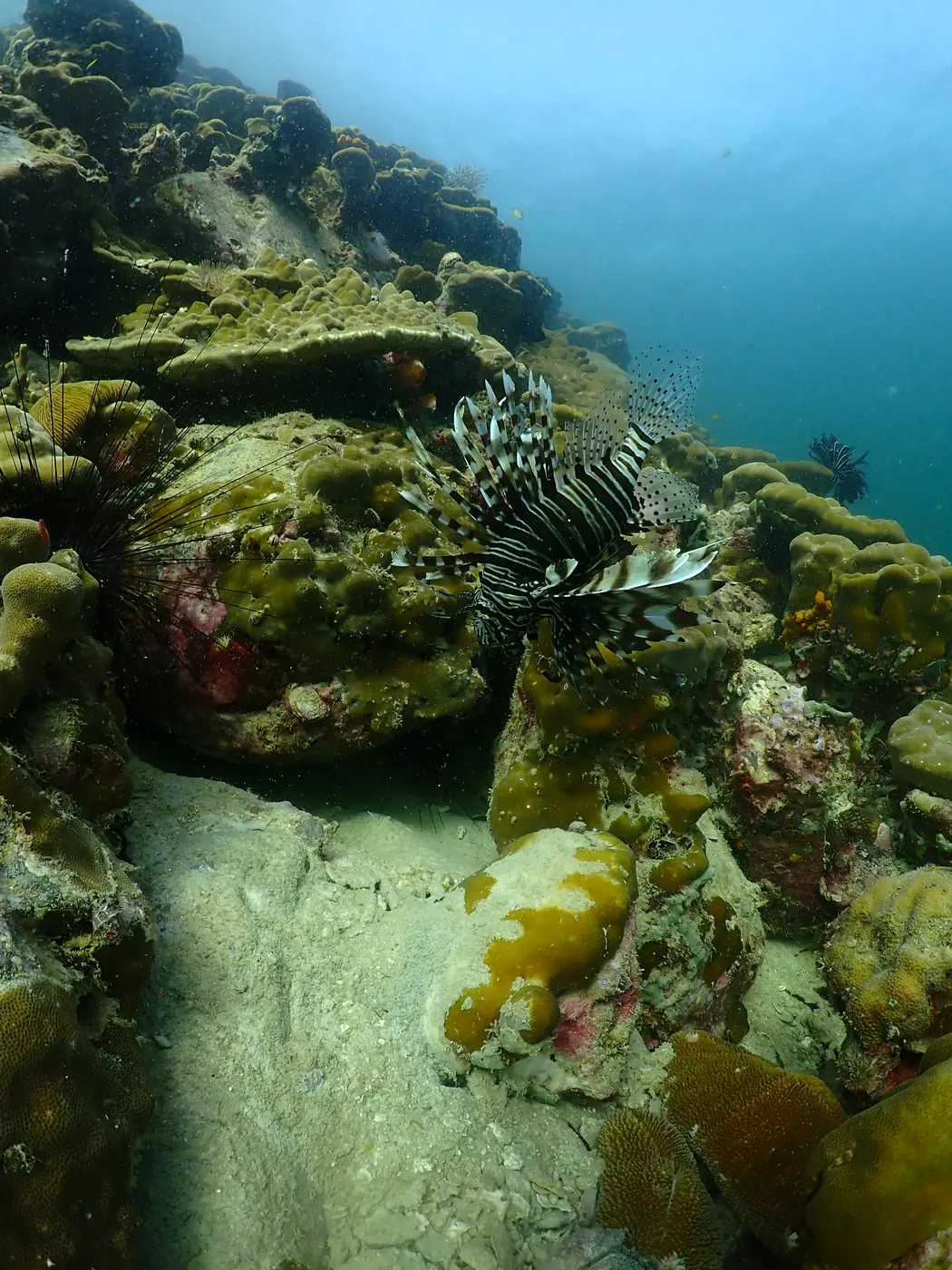
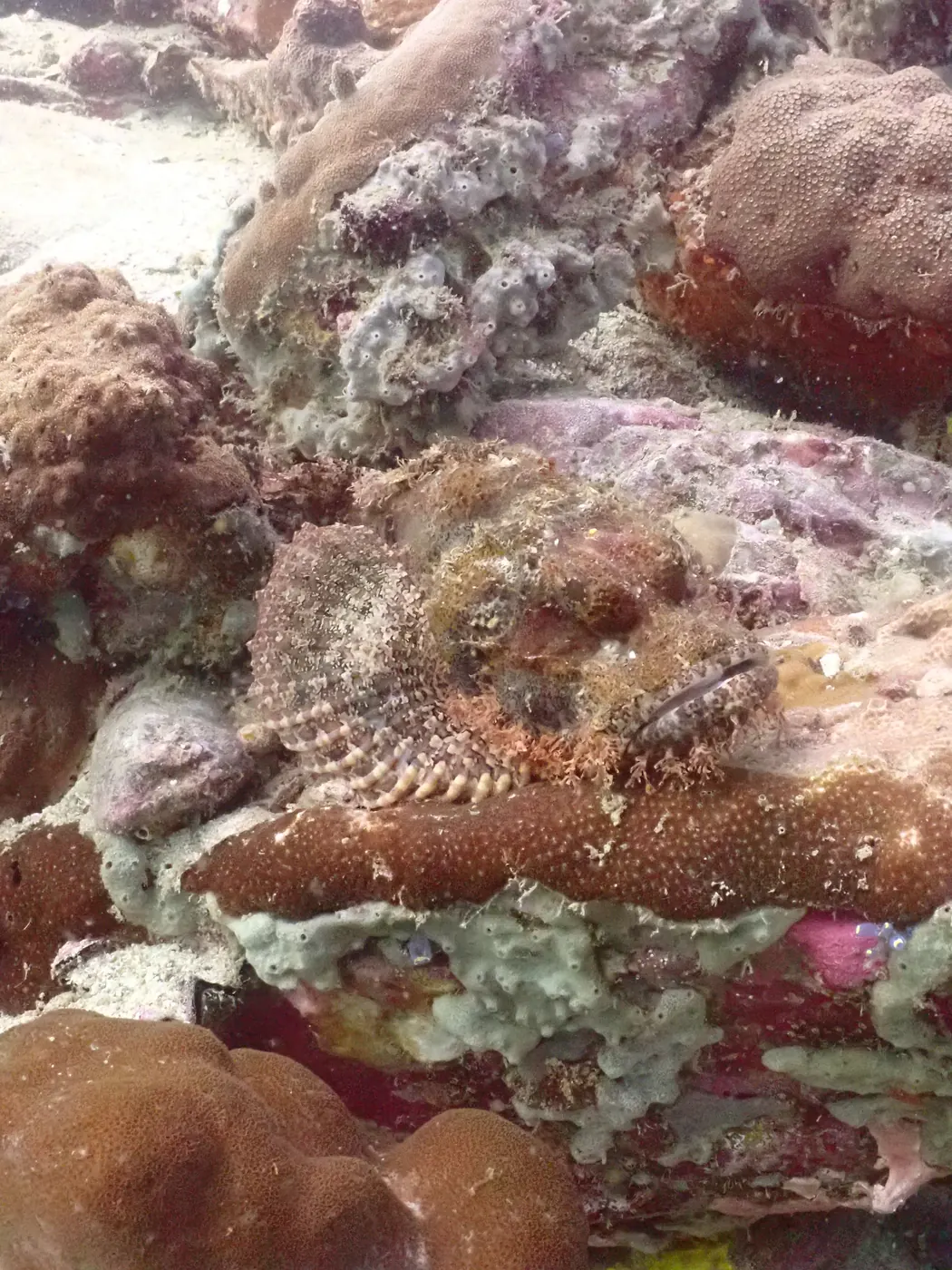
- Lionfish and scorpionfish on the walls — properly cryptic, look carefully
- Healthy hard coral on the top plateau
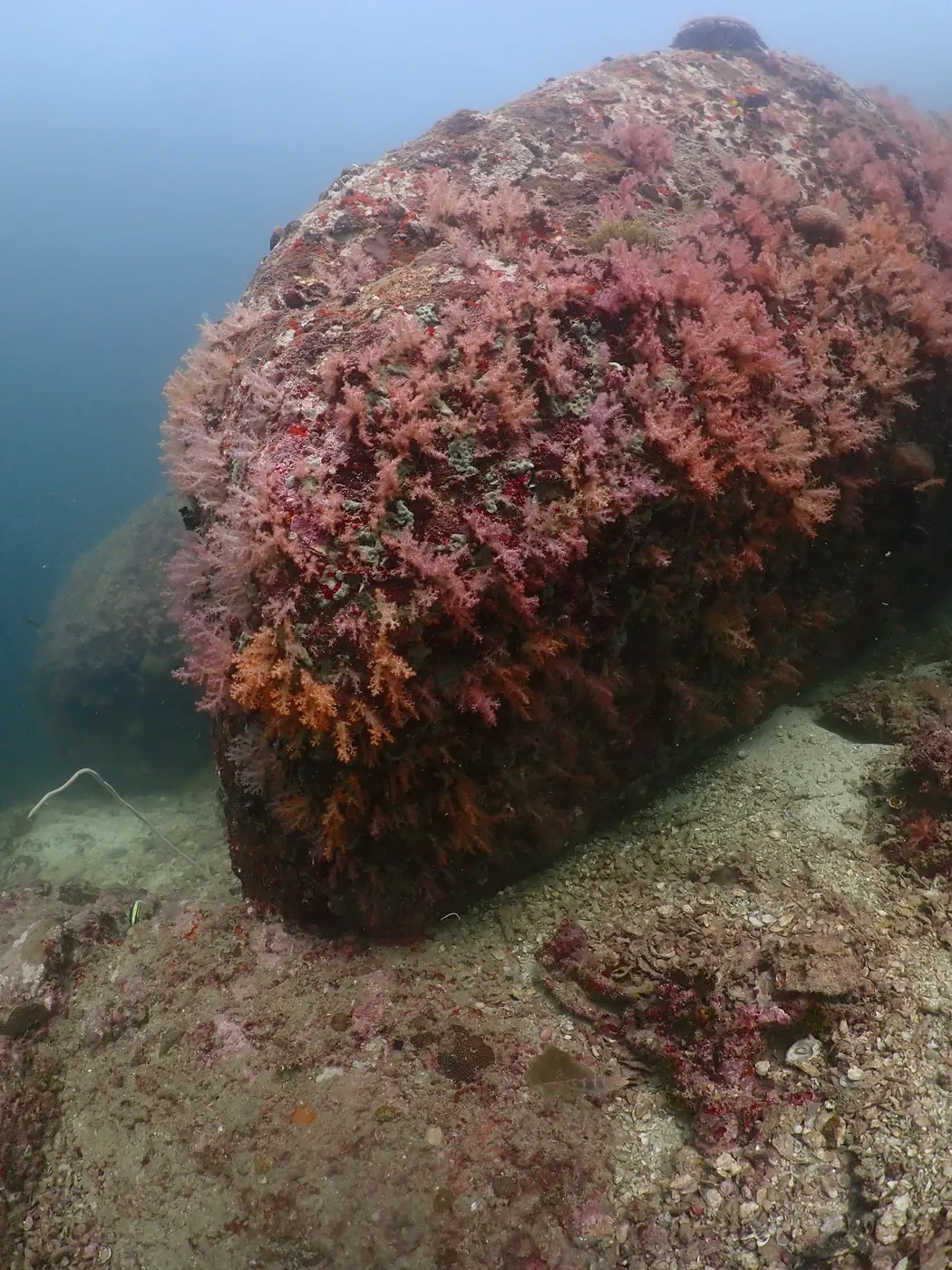
- Dense soft coral on the current-exposed faces, particularly the north and west walls
- Sea fans the size of small cars on the deeper sections
What’s a coin flip
Whale sharks. This is what people ask about most. The honest pattern I’ve noticed across the years: whale sharks seem to be around at the beginning of the season (around October) and at the end (June). They’re not at all guaranteed even in those months.
An important quirk that nobody mentions: when a whale shark does show up, it tends to hang around for a few days at the same site. Word gets out fast. If you weren’t the diver who first spotted it, the dive site will be packed for the next few days — every operator on the island heading to 8 Mile Rock for a shot at the encounter. Nobody likes a packed dive site, and even the whale shark will eventually move on to avoid the attention.
Mobula ray schools. I’ve seen them at 8 Mile. They’re not predictable — pure luck of being in the right place at the right time.
Marlin. I’ve spotted one here. Once. Across years of diving the site. Don’t book the trip hoping for a marlin.
Sharks beyond whitetips. Bull sharks show up occasionally — also a coin flip, also unpredictable.
What rewards a careful look (macro)
The shallower depths around the top plateau are surprisingly good for macro:
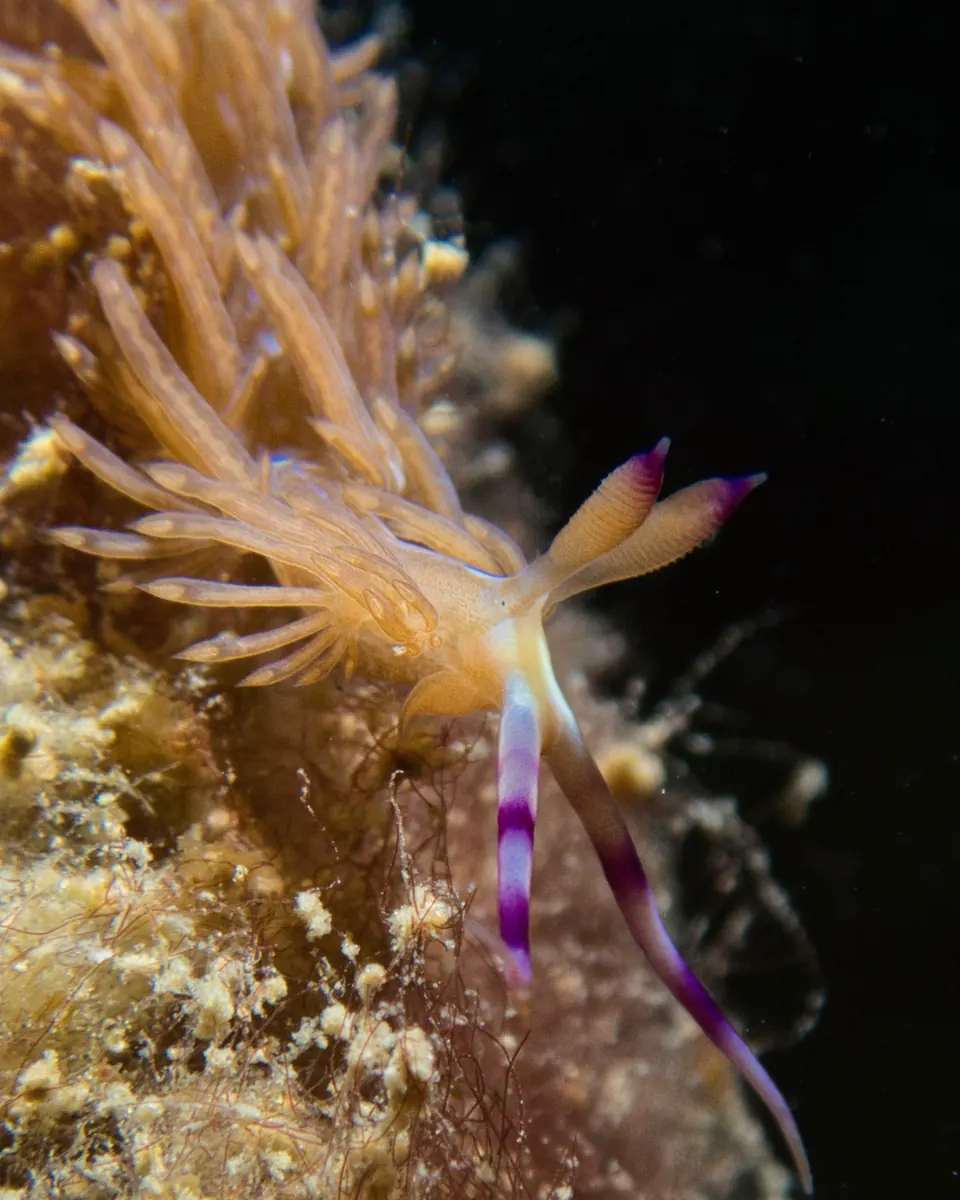
- Nudibranchs in serious colour variety
- Small crabs and hermit crabs around the rock structure
- Frogfish if you’re patient and the guide knows where to look
- Ghost pipefish on the more sheltered sections
The macro scene at 8 Mile doesn’t get the press — most people come here for the big stuff — but on a day when the visibility is poor and the pelagics are absent, the macro alone can rescue the dive.
The blue water — keep your eyes off the rock
One specific piece of advice from years of diving here: keep glancing into the blue water surrounding the pinnacle, not just at the structure. This is where the pelagics show up. Whale sharks, marlin, mobula schools — none of them are going to come hug the rock. You see them by scanning the deep blue beyond the wall.
It’s also where unexpected things turn up. Tuna passing through. Schooling fish at a distance. Even the structure itself is more dramatic when you look from a few metres out rather than always pressed against it.
8 Mile vs. Stonehenge — which to pick
The other named advanced pinnacle near Koh Lipe is Stonehenge. Both are AOW-required, both have similar depth ranges, both reward divers who can handle current. So which?
The honest difference: 8 Mile Rock is more likely to deliver the big pelagic species. Stonehenge is structurally beautiful, dense with soft coral, and a genuinely world-class dive — but if you’re chasing whale sharks, mobula rays, or unexpected pelagic encounters, 8 Mile is the higher-probability site.
If conditions only allow one dive at one of the two pinnacles, my answer would be 8 Mile — for the pelagic potential and because it’s the signature site of the area. If you have time for both, do them both. They feel different even though they’re geographically close.
La Bombona’s “8 Mile Monday”
At La Bombona Diving we run “8 Mile Monday” — we try to go to 8 Mile Rock every Monday if conditions allow. It’s a ritual built into the weekly schedule, partly because the site demands enough advance planning that having a regular slot makes it easier, partly because Monday tends to be quieter on the site than the weekend rush.
If you’re planning your Koh Lipe diving trip around 8 Mile specifically, build your visit around a Monday or a weekday when you know operators are running the site. Booking a check-out dive at a closer site on day one (Koh Yang or Hin Ngam for buoyancy and weight calibration) and the 8 Mile trip on Monday or Tuesday is a sensible structure.
Choosing your operator for 8 Mile specifically
Beyond the general dive shop checklist (small groups, proper boat, well-maintained equipment, briefings — covered in the main scuba diving page), there are 8 Mile-specific considerations.
Local current expertise. The currents around Koh Lipe are a science, and only people who’ve been on the island for a few years properly understand them. Look for operators with long-tenured staff — captains and instructors who have read the conditions across multiple seasons. If the dive shop manager you’re talking to is new to the island, that’s not necessarily a deal-breaker — pretty much every dive centre on Koh Lipe has some experienced staff in the team — but you want to know your guide has the local knowledge.
Boat type. Already covered above, but worth restating: a proper dive boat, not a longtail, for any 8 Mile trip. Comfort, safety, toilet, shade — all of which matter for a long open-water day.
Group size. Two divers per guide maximum is the standard on Koh Lipe, in line with marine park guidelines. For an advanced site with real current, this matters even more than for the easier sites. A guide trying to manage four or more divers in current at depth isn’t giving anyone proper attention.
A proper 8 Mile briefing — what should be covered
The pre-dive briefing for 8 Mile Rock should be noticeably more detailed than the briefing for a closer site. Here’s what a proper briefing covers:
- Descent procedure and equalising. The divemaster should explain the descent plan and ask whether you’d prefer to use the buoy line or do a free descent. If you have any history of equalisation issues, the buoy line is the right answer — it lets you stop and clear at your own pace.
- Current strategy. What to do if the current is strong. Typically: descend along the line until you reach the bottom, then move behind the rock to the side sheltered from the prevailing current. The pinnacle creates a downcurrent zone where you can rest, photograph, and observe before continuing.
- Hand signals and signs. Standard signals plus any site-specific ones. Especially the “swim into the current” and “current is strong” signs.
- Lost diver procedure. What to do if you get separated from the group. Standard: look around for one minute, then ascend slowly to the surface and wait for the boat.
- Air check timing. Specifically when and at what depth the divemaster expects you to signal your air pressure.
- Ascent procedure. At what point you should start to ascend, where the safety stop will be (typically on the buoy line at 5 metres), and the surface procedure.
- Marine life expectations. What you’ll likely see, what’s possible, where to look — including specifics like the creel area and the southeast ridge.
If your briefing skips two or more of these, ask about the gaps before you get in the water. A short, casual briefing isn’t appropriate for this site.
Skills you actually need
Beyond the AOW certification on paper, the practical skill list for 8 Mile:
Buoyancy must be solid. Not “okay” — solid. You need to be neutral and stable without conscious effort, because the current will demand all your attention. If you still bump into things or kick up sand, do a check-out dive at Koh Yang or Hin Ngam first and get your weight and trim properly calibrated before the 8 Mile day.
Air consumption awareness. The current will increase your breathing rate. At depth, that compounds. Know your typical surface consumption rate (SAC rate) and what that looks like at 20–25 metres. Plan conservatively.
Equalisation must be reliable. Descent at 8 Mile can be quick, especially if there’s some surface chop. If you have any equalising issues, manage them by using the buoy line and descending slowly.
Current handling. If you’ve never dived in current before, 8 Mile Rock is not the site to learn. Build up via a current-exposed Koh Yang dive first. Get comfortable feeling water move past you, holding position behind structure, and using gentle finning rather than panicked sprints.
Composure when something unexpected happens. Visibility drops, current shifts, gear acts up — all of these are things you should be able to manage calmly without reaching for the surface immediately.
Realistic dive planning
Air vs. nitrox. Both are used. Nitrox extends your no-decompression time at the deeper sections, which can matter if you want to spend longer on the southeast ridge or the deeper walls. Worth asking your operator about nitrox availability if you’re certified.
Two-dive structure. Most operators that run 8 Mile do two dives at the site — one descent on one side of the pinnacle, the second on the opposite side, giving you two distinct perspectives. A typical structure:
- Dive 1: Deeper descent, work the walls and the deeper ridge, end on the top plateau for the safety stop.
- Surface interval: Around an hour on the boat.
- Dive 2: Shallower profile, the top plateau, the creel area, finishing with the macro on the shallower sections.
No-deco limits and safety stops. Standard 5-minute safety stop at 5 metres at the end of each dive, ideally on the buoy line where you can hold position properly. If you’re pushing no-deco limits at depth, watch your computer carefully — and remember the closest hyperbaric chamber is in Hat Yai (the information page covers the medical context).
When conditions are wrong
The Andaman is open ocean and conditions can be variable. A few realities:
Visibility can change daily. What was 25 metres yesterday can be 8 metres today. Plankton blooms, weather shifts, runoff from monsoons — all of it changes what you see when you arrive. The dive can still be excellent in lower visibility; the structure is still there and the marine life is still there. You just need to be more comfortable with the unknown.
Rough surface conditions can cancel the trip. If the swell or wind is bad enough to make the 45-minute boat trip dangerous, operators will reroute to a closer site. A good operator makes this call early and clearly. If they’re pushing through conditions other operators are cancelling on, that’s a red flag, not a sign of toughness.
No refunds for weather reroutes. Refunds are not expected when conditions force a site change. Everyone who dives in the ocean knows the risks of variable conditions, and the dive centre is changing the plan to keep you safe and give you maximum enjoyment — not to inconvenience you. If you’ve specifically chosen 8 Mile for your trip and conditions push you to a closer site, the right response is to dive what you can today and try again tomorrow if your trip allows. Most operators will work with you to reschedule when possible.
What the best version of an 8 Mile day looks like
If conditions cooperate perfectly:
- Calm seas, smooth boat trip out. 35 minutes from Pattaya Beach to the site. Coffee and fruit on the boat, the briefing on the way out so you’re prepared by the time you arrive.
- Moderate current. Strong enough to bring the schooling fish in to feed, gentle enough to let you fly along the wall rather than fight every metre.
- 25–30m visibility. The pinnacle resolves out of the blue as you descend, the structure clear from 6m above the top plateau.
- A clean descent on the buoy line. Group settles together, current strategy executes as briefed.
- Schooling fish on cue. Barracuda massing on the southeast ridge, trevally hunting through fusilier clouds, jacks patrolling the deeper walls.
- The creel show. Predator-prey behaviour at the east-side creel, small fish flickering in and out, larger species circling outside.
- Something unexpected in the blue. A passing tuna. A pair of mobulas at 50m range. On a great day — a whale shark cruising past the wall at distance.
- A clean safety stop on the line. Boat picks everyone up in the right order. Lunch on the surface interval, then dive two on the opposite side.
- Back at Pattaya Beach by mid-afternoon. Tired, sun-burnt, slightly salt-crusted, sitting somewhere cold with a beer telling the story.
That’s the dive. Not every day delivers it. But when it does, you understand why people come back to Koh Lipe specifically to dive this one site.
A final thought
8 Mile Rock is the dive site that justifies Koh Lipe’s reputation as a dive destination. The currents, the depth, the distance — all of it filters out casual diving, and what remains is a site where serious divers can experience the kind of energy and life that’s getting harder to find elsewhere in Thailand.
Most days you won’t see a whale shark, a marlin, or a school of mobulas. Those are lottery wins. What you will see is a structure dense with healthy soft coral, fish that have grown to their proper size, and predator-prey behaviour you’ll be telling people about on the boat back.
Come prepared. Come with the right operator. Pick a Monday if you can. Keep your eyes on the blue beyond the wall.
It’s the dive of the trip.